
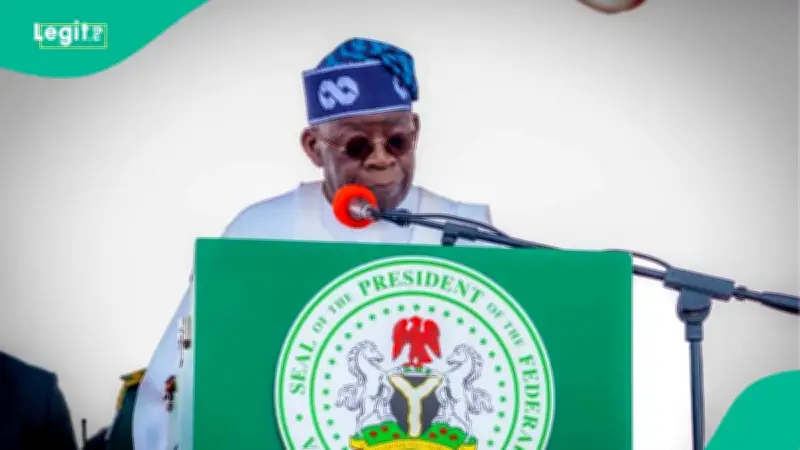
President Bola Tinubu has unveiled an ambitious plan to more than double the annual value of Nigeria's livestock sector, targeting a jump from roughly $32 billion to over $64 billion. This strategic move aims to transform the largely subsistence-based industry into a modern commercial powerhouse, as announced at the 9th All Africa Conference on Animal Agriculture in Abuja.
President Unveils $64bn Livestock Target at Abuja Conference
Speaking on Monday at the conference's opening, themed "Repositioning Animal Agriculture for Africa's Food Security and Global Competitiveness," Tinubu was represented by the Secretary to the Government of the Federation, George Akume. The president highlighted the sector's potential to drive economic growth and food security across the continent.
The administration outlined that the ambitious target would be pursued through comprehensive structural reforms. These include raising productivity, strengthening value chains, expanding commercial feed production, improving animal health services, enhancing livestock genetics, and promoting climate-smart farming practices. According to The Cable, these reforms are central to the government's strategy.
Key Reforms and Institutional Framework
Tinubu pointed to the creation of the Federal Ministry of Livestock Development in July 2024 as a pivotal institutional step. The government is also rolling out the National Livestock Growth Acceleration Strategy, which prioritizes dairy production, meat processing, leather, feed milling, and livestock infrastructure for investment and growth.
The president said the government is working to implement recommendations from its presidential committee on livestock reforms, covering governance, productivity, peaceful livestock production, and private-sector investment. On ranching, Tinubu emphasized that modern livestock production systems would be promoted to improve yields and reduce conflicts often associated with traditional herding practices across Nigeria.
Addressing Dairy Imports and Youth Empowerment
Nigeria's heavy reliance on imported milk was flagged as a concern. The government plans to support local dairy production through improved animal breeds, pasture development, milk collection infrastructure, and modern processing facilities. This initiative aims to reduce import dependency and boost local capacity.
Tinubu noted that the livestock sector holds strong potential to generate millions of jobs. Specific programmes are planned to increase participation of women and young Nigerians by improving access to finance, digital tools, and value-chain opportunities. The president urged delegates to view the sector not merely as a food source but as a fully integrated commercial industry spanning production, processing, transportation, technology, finance, and exports.
Regional Cooperation and Continental Trade
The president called on African nations to collaborate more closely on shared challenges such as animal diseases, climate change, food insecurity, trade barriers, and cross-border livestock movement. He reaffirmed Nigeria's commitment to stronger regional cooperation under the African Continental Free Trade Area framework to grow livestock trade across the continent.
Delegates at the conference were challenged to produce practical recommendations on animal health, disease control, climate-smart production, livestock genetics, youth and women empowerment, research, innovation, and investment before the conference concludes. The event underscores Nigeria's leadership in repositioning animal agriculture for Africa's future.




