
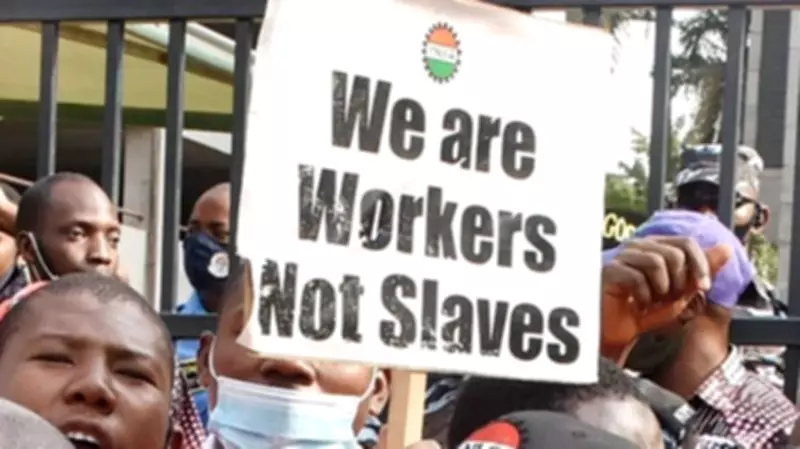
The Trade Union Congress (TUC) has declared that workers are enduring intensified economic hardship, rising insecurity, and persistent inefficiencies in the power sector. In a communiqué released after its National Executive Council (NEC) meeting in Abuja, the TUC called on the Federal Government to take decisive steps to prevent further deterioration in the living conditions of workers.
The labour union stated that the combined pressures of global tensions, domestic policy challenges, and structural inefficiencies are pushing workers and vulnerable citizens to the edge. The communiqué, jointly signed by TUC President Festus Osifo and General Secretary Nuhu Toro, expressed deep concern over the implications of the ongoing Iran-United States conflict. It noted that while Nigeria is an oil-producing nation, global oil price increases have historically translated into greater hardship rather than relief for its citizens.
According to the Congress, higher crude prices often trigger fuel price hikes, rising transport and freight costs, imported inflation, and increased pressure on the naira, all of which ultimately drive up the cost of goods and services. Describing the situation as both a foreign policy and a domestic economic emergency, the TUC urged the government to urgently implement measures to shield Nigerians from the fallout. These measures include strengthening local refining capacity, curbing profiteering, building strategic fuel reserves, and ensuring transparency in the use of additional oil revenues.
On the domestic front, the Congress painted a grim picture of insecurity across the country, linking it directly to economic decline and labour instability. It noted that widespread kidnappings, banditry, and communal violence have disrupted farming, crippled businesses, and restricted workers' mobility. The communiqué read in part: 'When farmers cannot access their land, food production drops and prices rise. When workers cannot travel safely, productivity suffers.' The labour centre called for a coordinated, intelligence-led, and community-based approach to security.
The NEC also decried the continued rise in fuel prices, describing it as a central driver of inflation and declining living standards. It proposed that the government channel excess crude revenue into subsidizing the supply of crude to domestic refineries as a transparent alternative to the controversial fuel subsidy regime. Additionally, the Congress demanded a 50 percent reduction in taxes for workers and manufacturing companies to ease economic pressure and stimulate productivity.
Electricity tariffs came under heavy criticism, with the TUC condemning what it described as unjustified price increases that did not correspond to improvements in service delivery. It accused distribution companies of imposing high costs on consumers despite unreliable supply and widespread estimated billing, insisting that Nigerians should not be coerced into paying for inefficiency. The TUC insisted on universal metering, improved service, and stakeholder engagement before any further tariff adjustments.
On workers' welfare, the TUC cautiously welcomed the Federal Government's N10 billion housing loan scheme for civil servants but warned that its success would hinge on transparency, accessibility, and effective implementation. It also urged state governments to replicate similar initiatives and to extend benefits to a broader segment of the workforce, including private-sector employees and retirees.
The Congress further expressed concerns about the growing trend of casualization in the private sector, urging the government, particularly the Ministry of Labour, to take urgent steps to protect vulnerable workers from exploitative employment practices. It also intervened in ongoing tensions within the food and beverage sector, urging authorities to resolve disputes between regulatory agencies and industry players through dialogue to safeguard jobs and industrial harmony.
The NEC reviewed reports from affiliates and state councils, commending ongoing efforts to strengthen union structures and advocacy. It reaffirmed its positions on leadership matters within its ranks and directed compliance with constitutional provisions, particularly those concerning financial membership and eligibility for office.
Looking ahead to the 2026 May Day celebration, the TUC said the event would serve as a platform to highlight pressing demands around decent work, economic justice, job security, and social protection. While reiterating its commitment to dialogue and national development, the Congress issued a clear warning that it will not hesitate to mobilize workers if policies continue to worsen hardship.




