
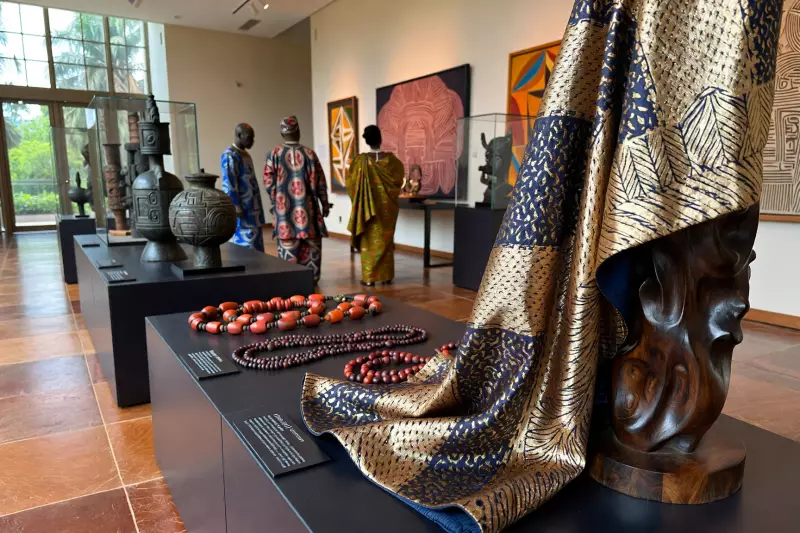
As a journalist who has spent months investigating Nigeria's cultural and economic landscape, I can tell you that the question of which culture is the richest in our nation is both fascinating and complex. The answer is not as straightforward as many might assume, requiring us to distinguish between cultural richness and pure economic power.
The Fundamental Distinction: Cultural Wealth vs. Economic Wealth
First, we must separate two key concepts. Cultural wealth encompasses a group's artistic heritage, historical depth, language, and traditions. Think of the ancient bronze heads of Ile-Ife or the profound influence of Yoruba religious traditions across the Atlantic. Economic wealth, however, is measured in naira and kobo: billionaire counts, business dominance, and GDP contribution. Nigeria's three major ethnic groups—Hausa-Fulani, Yoruba, and Igbo—alongside 368 minority groups, excel in different areas, creating a national mosaic of prosperity.
For instance, the Yoruba possess extraordinary cultural assets, with a language spoken by over 45 million people. Yet, in Kano, I witnessed Hausa-Fulani commercial dynasties whose wealth, built on trans-Saharan trade routes, spans centuries. Meanwhile, the Igbo model is one of remarkable resurgence. Following the economic devastation of the Civil War and the discriminatory "20 pounds" policy, they rebuilt entire commercial networks within a generation. An elderly trader in Onitsha Market once told me, "We learned that when you start from zero, you become fearless about taking risks." This entrepreneurial mindset is itself a form of immense wealth.
Measuring Economic Power: Beyond the Billionaire Lists
If we look purely at billionaire rankings in 2025, the data presents a mixed picture. The wealthiest individual is Aliko Dangote (Hausa-Fulani) with a net worth exceeding ₦22.5 trillion. He is followed by Mike Adenuga (Yoruba) at approximately ₦15 trillion and Abdulsamad Rabiu (Hausa-Fulani) at around ₦9 trillion. Femi Otedola (Yoruba) and Tony Elumelu (Igbo) also feature prominently.
However, wealth concentration at the very top tells only part of the story. The real economic engine lies in small and medium enterprises. Research indicates that the Igbo operate an estimated 70% of Nigeria's small businesses despite comprising about 18% of the population. This statistic reveals a deeply ingrained entrepreneurial culture that benefits a broad swath of the population, not just a privileged elite. In Nnewi and Aba, I've met mechanics and traders who started with nothing and now own factories and footwear empires employing hundreds.
The Yoruba wield significant economic power through control of Lagos, Nigeria's commercial capital, which generates roughly 30% of the nation's GDP. Their dominance in banking, professional services, and real estate in high-value areas like Ikoyi creates substantial, intergenerational wealth. Northern businessmen, predominantly Hausa-Fulani, command essential but less-visible sectors like agricultural commodities, livestock trading, and cross-border commerce, with trust-based deals worth tens of millions of naira sealed on a handshake.
Sectoral Dominance and Cultural Drivers of Success
Each group's economic strength is rooted in history and distinct cultural attitudes. The Hausa-Fulani inherited governance and trade systems from the Sokoto Caliphate. The Yoruba kingdoms had sophisticated urban economies centuries before colonial contact. The Igbo acephalous society fostered decentralized networks and fierce individual competition.
Today, this translates into clear sectoral patterns:
- Igbo businesspeople dominate pharmaceuticals (about 70% of Nigerian drug companies), spare parts trading, and light manufacturing.
- Yoruba entrepreneurs control much of the banking sector, media, entertainment, and are strong in technology.
- Hausa-Fulani businessmen lead in agricultural commodities, real estate in the North and Abuja, and Sahelian trade networks.
Cultural institutions amplify these advantages. The Igbo Igba-Boi apprenticeship system sees masters train and fund apprentices to start their own businesses, creating a cascading effect of wealth creation. Yoruba families utilize traditional savings schemes (Ajo/Esusu) and family trusts to pool and preserve capital. Hausa traders rely on expansive, trust-based credit networks that function across West Africa.
Conclusion: Diversity as Nigeria's Greatest Economic Strength
So, which is the richest culture in Nigeria? The definitive answer is that there isn't one. Nigeria's economic resilience lies in its diversity. The Igbo demonstrate the broadest entrepreneurial penetration, the Yoruba control key financial and professional sectors, and the Hausa-Fulani maintain generational wealth in land and traditional commerce.
This tripolar structure means when one sector stumbles, others provide stability. It fosters competition and innovation. Reducing the success of individuals like Aliko Dangote, Mike Adenuga, or Tony Elumelu solely to their ethnicity ignores their immense personal talent and effort. While ethnic networks provide starting advantages, individual drive ultimately determines outcomes.
Instead of seeking a single "richest" group, we should celebrate this multifaceted economic ecosystem. It is Nigeria's insurance policy and the source of its dynamic, if complex, potential for growth. The true wealth of our nation is found in the combined and complementary strengths of all its peoples.




