
The European Union has initiated a formal investigation into the Czech Republic's substantial financial support plan for building two new nuclear reactors. This move by the European Commission places a major energy security project under regulatory scrutiny to determine its compliance with bloc-wide rules on state aid.
Details of the Czech Nuclear Support Scheme
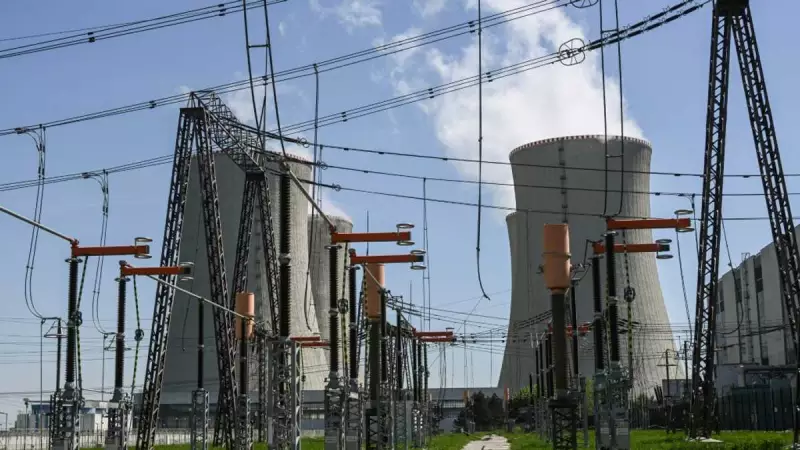
According to an official statement released on Monday, the Commission confirmed it is examining the support framework submitted by Prague in October. The Czech government's plan involves providing a low-interest loan ranging from 23 billion to 30 billion euros (approximately $27 to $35 billion) to cover the construction costs of two new units at the existing Dukovany Nuclear Power Station in the south of the country.
Beyond the loan, the proposed aid includes a two-way contract for difference (CfD) mechanism. This contract would guarantee a minimum price for the electricity generated by the new reactors for an extensive period of 40 years. The stated goal is to ensure stable, predictable revenue for the plant's operator, the EDU II consortium, in which the Czech state holds a dominant 80-percent stake.
EU Concerns and the Path Forward
While the European Commission acknowledges that the state aid "facilitates the development of an economic activity," it has raised specific concerns. The regulatory body indicated that the guaranteed price mechanism may not be "fully in line" with EU state aid regulations. The in-depth investigation will now assess whether the support constitutes undue market distortion, giving the project an unfair advantage over other energy producers or technologies within the single market.
This probe comes after a significant milestone for the project. In June, the Czech Republic signed a 16-billion-euro contract with South Korea's Korea Hydro & Nuclear Power (KHNP) for the actual construction of the two reactors. The current timeline, pending regulatory approval, sees construction beginning in 2029, with the first unit scheduled to commence operations in 2036.
A Strategic Energy Shift for Central Europe
This project represents a historic investment for the Czech Republic, a nation of 10.9 million people. It is a cornerstone of the country's strategic energy pivot, moving away from coal dependency and strengthening its energy sovereignty. Notably, the Czech Republic has already achieved full independence from Russian oil and gas, making the development of domestic, low-carbon nuclear capacity a critical priority for its long-term energy security and decarbonisation goals.
The outcome of the EU investigation will be closely watched, as it will set a precedent for how large-scale nuclear energy projects, deemed vital for climate and security objectives, can be financially supported by member states within the confines of the European Union's competitive market rules.




