The Federal Government has confirmed that electricity tariffs will not rise in the immediate term, even as it sets the year 2027 as the target for the complete removal of power subsidies. The assurance was given by the Minister of Power, Joseph Tegbe, during a media roundtable on the reset of Nigeria's electricity industry held in Lagos on Friday.
No Immediate Tariff Increase
Minister Tegbe stated that the current administration has no policy to increase electricity tariffs beyond existing levels. He said the government's focus is on improving service delivery, ending estimated billing, and expanding access to prepaid meters across the country.
“There is no policy by this administration to increase electricity tariffs beyond the current level. Our priority is not tariff increase in the immediate term. Our priority is service improvement, universal metering and ensuring Nigerians pay only for the electricity they actually consume,” Tegbe said.
The minister added that the government would continue to protect vulnerable electricity users while gradually restoring the financial health of Nigeria's electricity market.
Subsidy Removal Phased Out by 2027
Although the government ruled out an immediate tariff hike, Tegbe made it clear that subsidies would eventually be phased out. He explained that the removal would be tied to improvements in service delivery, wider metering coverage, and a more financially sustainable electricity market — not through sudden tariff increases.
According to him, the broader reform agenda is designed to strengthen electricity generation, transmission, and distribution while restoring investor confidence in the sector.
5,000 Youths to Install Prepaid Meters
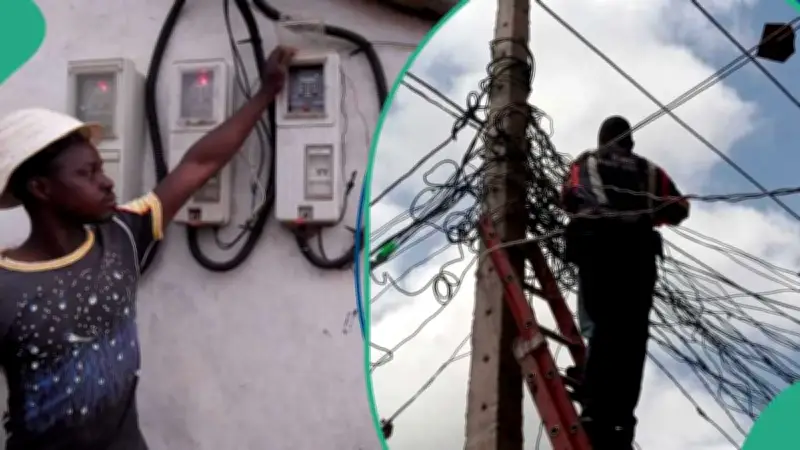
A central pillar of the reform programme is the Presidential Metering Initiative, aimed at achieving universal metering and eliminating the long-standing challenge of estimated billing. To support this, the government has launched the Power Force Initiative, which will engage 5,000 Nigerian youths in installing electricity meters nationwide.
The initiative will provide technical training through the National Power Training Institute of Nigeria, creating employment opportunities while addressing the country's metering gap.
Electricity Generation Hits 5,000MW
Tegbe disclosed that Nigeria has consistently generated about 5,000 megawatts of electricity over the past two weeks, describing this as evidence that reforms are beginning to yield results. He attributed the improvement to better coordination among power sector operators, improved plant availability, and stronger collaboration across the electricity value chain.
However, he noted that increasing generation alone would not solve Nigeria's electricity challenges. Improvements must also extend to transmission infrastructure, distribution networks, and payment systems.
Stronger Grid Within Three Years
As part of its long-term strategy, the Federal Government plans to conduct a comprehensive technical audit of the national transmission network, harmonise electricity regulations between federal and state governments, invest in key transmission corridors, and implement a Super Grid Programme to strengthen the national grid.
The minister expressed optimism that Nigerians would begin to experience noticeable improvements in electricity supply within the next few months, while broader reforms are expected to deliver a stronger grid, lower technical losses, improved market discipline, and expanded electricity access over the next two to three years.
48 Mini-Grid Projects Underway in 19 States
In a related development, the Rural Electrification Agency (REA) has commenced construction of 48 interconnected mini-grid projects across 19 states. The move aims to expand electricity access to underserved communities under Nigeria's updated off-grid power framework.
The projects are being developed under the Nigerian Electricity Regulatory Commission's (NERC) new interconnected mini-grid regulations, which allow significantly larger renewable energy systems than previously permitted. Abba Aliyu, managing director of the REA, disclosed this on Thursday, July 23, 2026, in Abuja while hosting a benchmarking delegation from the Zanzibar Utilities Regulatory Authority (ZURA).