
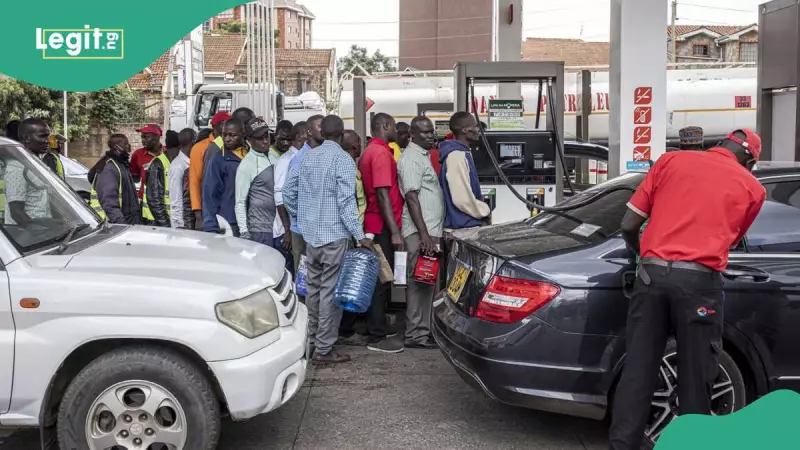
A fierce competition for customers has erupted in Nigeria's downstream petroleum sector, with several filling stations now selling Premium Motor Spirit (PMS), commonly known as petrol, for less than the N739 per litre price point championed by the Dangote Petroleum Refinery. This aggressive undercutting signals a deepening price war that is fundamentally altering market dynamics.
Stations Slash Prices, Igniting Fierce Local Competition
Recent market surveys conducted over the weekend revealed that retail prices have dipped below the Dangote-backed rate in several areas, including parts of Lagos and Ogun States. This move directly challenges the strategy of MRS Oil Nigeria Plc, the primary retail partner endorsed by Dangote to implement its December price reduction to N739 per litre.
Specific examples highlight the intensity of the competition. As of Sunday, NIPCO was selling petrol at N738 per litre, while SAO filling stations offered it at N735. Akiavic outlets priced PMS at N737. In a clear example of hyper-local competition, an AP filling station in Mowe, Ogun State, located near an MRS outlet, reduced its pump price to N736 per litre. Marketers are now in a constant state of vigilance, frequently adjusting prices to match or beat rivals and retain customers.
Motorists Chase Savings as Market Logic Prevails
The impact of these price cuts on consumer behavior has been immediate and pronounced. Nigerian motorists, demonstrating high price sensitivity, are flocking to stations with the lowest prices, leaving outlets selling at higher rates with significantly reduced patronage. Industry analysts confirm that brand loyalty has diminished, replaced by a straightforward pursuit of the cheapest available fuel.
This shift is occurring against a challenging economic backdrop. Data from the Major Energies Marketers Association of Nigeria (MEMAN) indicates that the average landing cost for imported petrol remains around N762.38 per litre. Meanwhile, Dangote Refinery's ex-gantry price is set at N699. Despite this cost-price gap, which forces many players to absorb losses, the pressure to compete on price is overwhelming.
An anonymous marketer clarified the strategy to Punch newspaper, stating, "This is simply about market share. Nobody wants to be left behind. There is no war with any refinery or marketer, but competition is intense." Reports suggest both Dangote Refinery and fuel importers are incurring losses running into billions of naira to stay in the game.
Dangote's Strategy and the Evolving Market Landscape
The current price war has its roots in a dramatic move by Dangote Refinery on December 12. The refinery stunned the market by slashing its petrol gantry price by N129, from N828 to N699 per litre. Aliko Dangote, President of the Dangote Group, subsequently accused some marketers of keeping pump prices artificially high and vowed to enforce lower nationwide prices.
While this initially drove massive patronage to MRS stations, the competitive advantage has faded as rivals responded with even sharper cuts. Chinedu Ukadike, the National Public Relations Officer of the Independent Petroleum Marketers Association of Nigeria (IPMAN), emphasized the role of market forces. "Patronage is determined by pricing. Nobody is regulating you; the market regulates itself. Wherever fuel is cheaper, that is where customers will go," he stated.
Amid the competition, Dangote Refinery has outlined measures to bolster its market position. In a statement by Group Chief Branding and Communications Officer, Anthony Chiejina, the refinery disclosed escalating supply volumes: from 600 million litres in October 2025 to 1.5 billion litres in December 2025. It now loads between 31 million and 48 million litres daily. To encourage broader participation, the refinery has reduced the minimum purchase volume to 250,000 litres and introduced a 10-day credit facility backed by bank guarantees, aiming to improve liquidity for smaller operators.
The price war has also triggered a ripple effect further up the supply chain. Recent reports indicate that depot owners, facing intense pressure, have slashed ex-depot prices to as low as N710 per litre, a significant drop from earlier hikes. This follows reports of a strained supply agreement between Dangote Refinery and independent marketers. As the battle for Nigeria's petrol market continues, consumers are the short-term beneficiaries, but the long-term sustainability of these price levels remains a critical question for the industry.




