
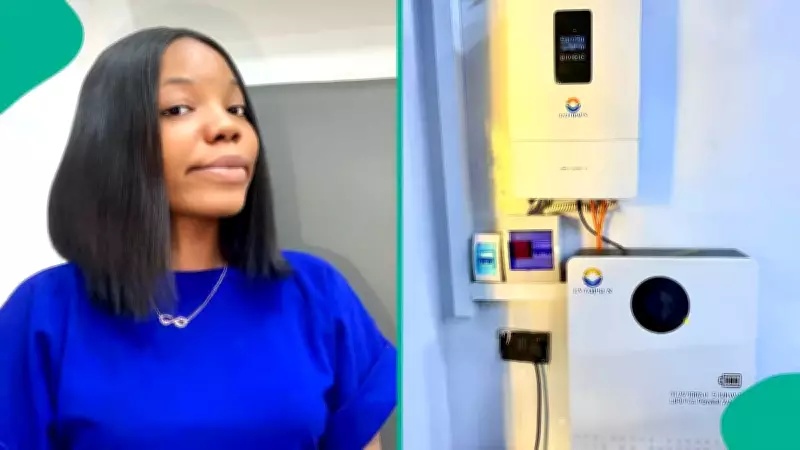
Nigerian Woman Shares Positive Experience with 5kVA Solar Inverter After Transformer Failure
A young Nigerian woman has publicly shared her testimony about purchasing and using a 5kVA solar inverter system, revealing the total cost and benefits after three months of operation. Her story emerged following a prolonged power outage in her community due to a faulty transformer, which left residents without electricity for months.
Initial Challenges and Decision to Invest in Solar
The lady, identified as Damilola Afolabi, explained that before the transformer failure, her family relied on a generator, but it struggled to power essential appliances like two freezers, air conditioning systems, and a water pumping machine. Frustrated by the unreliable power supply, she decided to explore solar energy as a solution.
In a viral social media post, Afolabi recounted how she initially believed that solar systems were prohibitively expensive, with estimates as high as 10 million naira. However, after conducting online research and consulting with a solar installer, she realized that a more affordable option was feasible.
Cost Breakdown and System Setup
Afolabi disclosed that she spent less than 3 million naira to set up a 5kVA hybrid inverter system, which included six solar panels and other necessary components. This investment was made in November, shortly after the transformer in her community broke down, leaving residents in darkness for an extended period.
She emphasized that the system was installed without any support from the national grid, allowing her household to operate fully on solar power for three consecutive months. The setup proved to be a game-changer, providing consistent electricity without the noise and fuel costs associated with generators.
Community Impact and Personal Benefits
Beyond her own household, Afolabi's solar system became a community resource. She installed an external socket and left a water tap running, enabling neighbors to charge their phones and fetch water. This gesture transformed her home into a small community hub, fostering goodwill and support among residents.
Afolabi highlighted the peace of mind that solar energy brought, noting that her parents now pray for her due to this decision. She also pointed out the efficiency of solar panels during peak sunlight hours, allowing her family to use electric cookers, fans, and freezers without interruption.
Practical Advice for Nigerians Considering Solar
In her post, Afolabi offered valuable advice to others interested in solar energy. She recommended starting with a small system and gradually expanding it, rather than feeling pressured to invest in a large setup immediately. Additionally, she stressed the importance of opting for lithium batteries, despite their higher initial cost, as they offer better longevity and reduce long-term stress compared to cheaper alternatives.
She concluded by encouraging Nigerians to consider solar as a viable alternative to generators, especially in areas with inadequate power supply. Afolabi described solar as a life-saving investment that has significantly improved her quality of life.
Public Reactions and Broader Context
The post garnered widespread reactions from social media users, many of whom shared their own experiences with solar energy. Comments ranged from praise for the cost savings and environmental benefits to practical tips on battery maintenance. Some users noted that solar systems can last for years with proper care, while others emphasized the importance of planning for battery replacements every few years.
This story aligns with a growing trend in Nigeria, where individuals and families are turning to renewable energy solutions amid persistent power challenges. Similar reports have highlighted cases of Nigerians installing larger solar systems, such as 15kVA inverters, and facing obstacles like landlord restrictions on rooftop installations.
Overall, Afolabi's testimony underscores the transformative potential of solar energy in addressing Nigeria's electricity deficits, offering a compelling case for more widespread adoption across the country.




