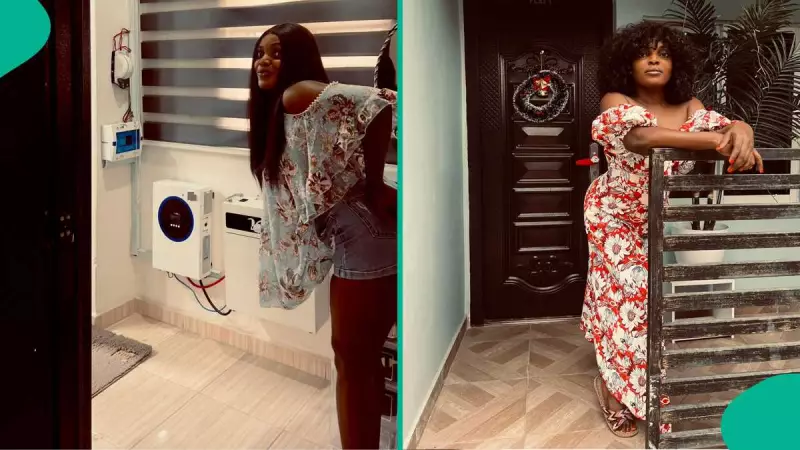
For many Nigerians, constant electricity remains a dream. But for Nsikak Effiong, a food plan creator based in Uyo, that dream became a reality in December 2025 after she made a life-changing switch to solar power.
From Months of Darkness to Constant Light
Nsikak Effiong's estate in Uyo had been without public power supply from July to November 2025 due to persistent transformer issues. The brief fix in early November failed within a week, plunging the area back into darkness. Frustrated and financially drained from spending approximately N800,000 on fuel for her generator during those months, she reached her breaking point.
"I was honestly tired. I was no longer in the mood to keep buying fuel or getting angry," Nsikak recounted in a detailed Facebook post sharing her journey. This frustration led her to contact a trusted friend who had been in the solar energy business for years, declaring, "My guy, I don ready."
The Solar Investment: A Detailed Process
The transition to solar was a calculated decision. Her solar provider asked for a comprehensive list of all appliances and electronics in her home, including their wattage. This included fans, televisions, air conditioners, refrigerators, freezers, washing machines, and even an air fryer.
Based on this total load assessment, an invoice was provided. While Nsikak did not disclose the final cost, she admitted "E choke, but… I transferred the money." A few days later, a team traveled to Uyo and installed her complete solar and inverter system.
A key part of her system was the choice of battery. Nsikak specifically opted for a lithium battery, citing benefits like space-saving, aesthetics, and superior performance based on her own research and advice from trustworthy businesspeople.
Life After the Switch: Uninterrupted Power and New Freedoms
The installation was completed on December 6, 2025. Since that date, Nsikak has enjoyed a complete transformation in her daily life.
Her light has not gone off once. She now has constant electricity from morning till night, completely independent of the unresolved transformer issues in her estate. This reliability has allowed her to use appliances freely, including running her treadmill every morning.
The proof of her new energy security is in the items she no longer needs. She has given away all her rechargeable fans and even her power bank. Her phone battery now regularly drops to 5% before she thinks to plug it in. Her refrigerator and freezer maintain a constant cold temperature.
"The other day, I heard there was National Grid darkness or whatever they called it. I didn’t even know because… I get light," she wrote, highlighting her detachment from the national power struggles. Her family enjoyed a Christmas with steady electricity for movies and cooling, making the investment feel like "money well spent and well utilized."
Public Reaction and a Growing Trend
Sharing her experience online, Nsikak's story resonated with many Nigerians who face similar power challenges. Reactions flooded in, celebrating her decision.
"This is the best decision ever," commented Afọma Ifechukwu, while another user, Valentine Chinedu Igolo, noted, "Giving out your power bank is a major flex! You’ve officially retired from Nepa wahala." Others, like Oghenekaro Mobor, were inspired: "Nothing sweet pass constant light for ds naija. Am getting mine ds year."
Her story aligns with a growing trend of Nigerians taking power supply into their own hands. In a related report, a Nigerian man installed a powerful solar system and even sells excess electricity to his neighbours, using a meter to track usage.
For Nsikak Effiong, the switch to solar was more than an alternative power source; it was a reclaiming of comfort, convenience, and financial predictability. Her experience stands as a testament for many considering the leap to sustainable energy in the face of unreliable public power supply.