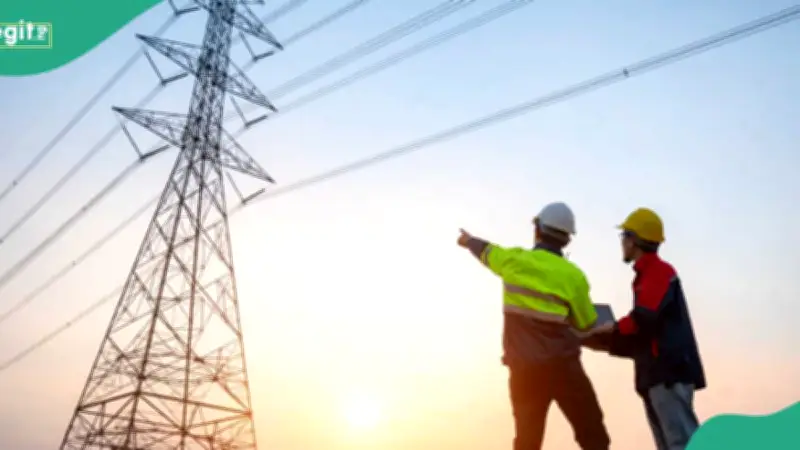
The National Bureau of Statistics (NBS) has released new data showing that the South East geopolitical zone has the highest share of households with electricity access in Nigeria, while the North East records the lowest figure. The data, drawn from the NBS General Household Survey Panel Wave 5 covering 2023 and 2024, was published on Saturday, August 15, 2026, by statistics platform StatiSense on X @Statisense. The post has since attracted over 34,700 views and sparked debate about what electricity access means in practice across different parts of the country.
Electricity Access by Geopolitical Zone
According to the survey, 74.6% of households in the South East have access to electricity, making it the best-performing zone in the country. The South West follows at 71.7%, with the South South at 65.7%. The three northern zones trail significantly, with North Central at 46.8%, North West at 32.1%, and North East at just 29.5%. The gap between the highest and lowest zones is 45.1 percentage points, a difference that reflects long-standing infrastructure disparities between Nigeria's north and south.
Nigerians React to Electricity Access Figures
Reactions to the figures raised questions about methodology and on-the-ground reality. @Pelham042 wrote: "Access doesn't mean they do; that probably only means they have the infrastructure to receive power. Unfortunately, that's not our reality." @phillipsoduaran challenged the South East figure directly, asking: "What do you mean SE is 74.6%? How many megawatts did they allocate to Enugu Disco?"
Others offered geographical explanations for the South South's lower ranking. @HopDeliz wrote: "South South can be understood, most of our Niger Delta lands are creeks and swamps that's difficult for the national grid to access due to very huge construction cost." @ogunseye_tosin questioned whether landmass was skewing comparisons, noting: "What is the landmass of South East compared to the other regions? NE might be 4 times the size of SE if not more."
Investment and Historical Perspectives
@emproree raised concerns about how population distribution affects the South East figure, arguing that a large share of South East residents live outside the region for business, leaving fewer households to count. @CallMeJossy noted with surprise: "You mean the only place that had a civil war fought in their soil since the inception of Nigeria has better electricity access than everyone else?"
One commenter pointed to the South East's standing as an investment signal, with @Ebeneze49169996 writing: "Considering cost recovery, South East is actually among the best regions to consider for investments relating to power generation and distribution. People there don't believe in the palliative economy. They are more likely to pay for their consumption."
Federal Government's Position on Tariff Increase
Meanwhile, Legit.ng reported that the federal government dismissed media reports of an impending electricity tariff hike, saying no increase is planned for any service band. Presidential adviser Sadiq Wanka said his comments at a Lagos policy event were taken out of context by some media outlets. The government pointed to the Power Consumer Assistance Fund as its tool for delivering targeted electricity support to vulnerable households.