
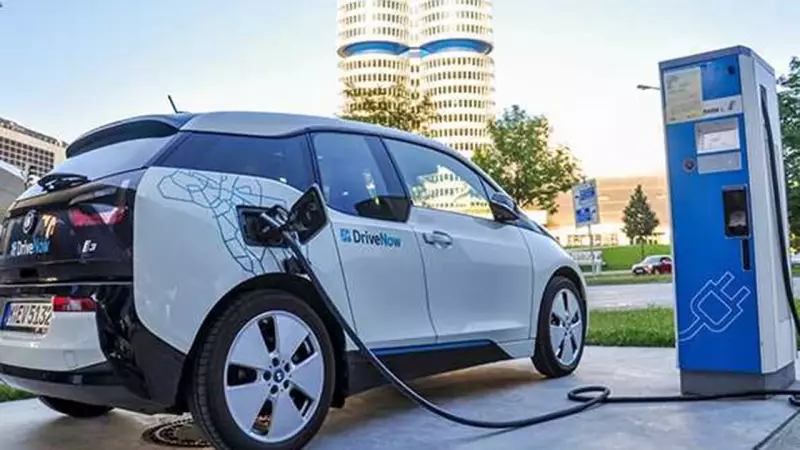
The successful transition of Nigeria to electric mobility is fundamentally tied to solving the nation's energy access challenges and building a robust network of renewable-powered charging stations. This was the central message from Suleiman Yusuf, the Chief Executive Officer of Bankrol Camel EV, during a major industry gathering in the capital.
Power Infrastructure is the Foundation for EVs
Speaking at the Electric Vehicle (EV) Fair organized by the Presidential Initiative on Compressed Natural Gas (PiCNG) at Eagle Square in Abuja, Yusuf emphasized that while Nigeria is slowly catching up with global low-carbon transport trends, sustained investment in power infrastructure is non-negotiable for large-scale EV adoption. The event attracted key figures from government and the private sector, highlighting the growing importance of clean mobility.
High-profile attendees included the Minister of State for Petroleum Resources (Gas), Ekperikpe Ekpo, represented by his Senior Technical Adviser, Abel Igheghe; the Executive Chairman of PiCNG, Ismaeel Ahmed; the Director-General of the National Automotive Design and Development Council (NADDC), Oluwemimo Joseph Osanipin; and the Chairman of IRS Group, Rabiu Isyaku Rabiu.
Solar-Powered Charging Networks on the Horizon
Yusuf described the shift to electric transport as an unavoidable result of global energy transition demands, climate pledges, and the need for cost-effective transportation. He pointed out that Nigeria's capacity to grow its EV market will be directly shaped by its ability to bolster power infrastructure, with a clear focus on clean and renewable energy solutions.
"Electric mobility cannot exist without energy access. As EV adoption grows, there must be a corresponding expansion in power supply, especially renewable energy, to sustain it," he stated clearly.
Acknowledging the persistent issues within Nigeria's electricity sector, Yusuf revealed that private companies are stepping up with decentralized, clean energy projects to fill the void. He announced significant plans for expansion, noting that solar-powered EV charging networks are set to grow substantially from early next year. The rollout will begin along strategic routes connecting Abuja to Maiduguri, eventually extending across parts of the North-East, North-West, and North-Central regions.
Tackling Skills, Finance, and Maintenance Barriers
Beyond power, Yusuf highlighted other critical hurdles that must be overcome. These include a shortage of technical skills, limited financing options for consumers, and concerns about long-term vehicle maintenance.
To address these, Bankrol Camel EV is focusing on a four-pillar strategy: charging infrastructure, human-capacity development, innovative financing, and reliable maintenance support. Initiatives already underway involve technical training programs to build a skilled workforce, job creation, and flexible payment plans. These plans allow potential customers to drive away an electric vehicle with a down payment as low as 15 percent and repayment terms stretching up to five years.
"At Bankrol Camel EV, our focus is on four key pillars: charging infrastructure, human-capacity development, financing and long-term maintenance to support the transition to electric mobility," Yusuf concluded.
The event also featured a facility tour, where participants inspected one of West Africa's largest EV super-fast charging stations and viewed a range of electric vehicles on display, offering a tangible glimpse into Nigeria's automotive future.




