
NLC Threatens Nationwide Strike Over Nigeria's Electricity Crisis and Grid Collapses
The Nigeria Labour Congress has issued a stern warning regarding potential nationwide industrial action in response to the recurring collapse of Nigeria's electricity grid. The union has launched a sharp critique of the power sector privatization that occurred over a decade ago, arguing that it has failed to deliver the promised improvements in electricity generation and distribution across the country.
Labour Leader Rejects Tariff Hikes and Consumer Classification
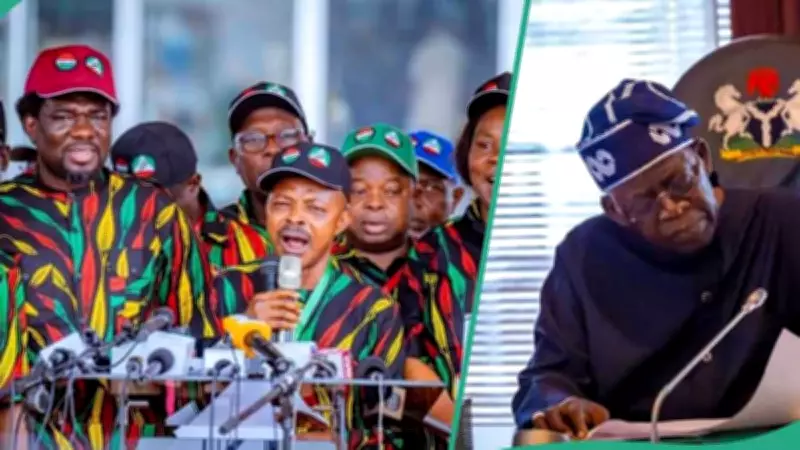
NLC President Joe Ajaero delivered the warning during his address at the National Union of Electricity Employees Annual Conference of Women and Youth held in Abuja. Ajaero stated emphatically that organized labour will actively resist any further increases in electricity tariffs or any policies that exacerbate economic hardship without corresponding improvements in power supply.
The labour leader specifically criticized the classification of electricity consumers into Bands A, B, and C, describing this system as exploitative. He argued that this classification places heavier financial burdens on Nigerian citizens without guaranteeing any meaningful improvement in service quality or reliability.
Decade of Privatization Failure and Stagnant Generation
Ajaero highlighted that more than ten years after the unbundling and sale of the defunct Power Holding Company of Nigeria, electricity generation has remained stagnant at between 4,000 and 5,000 megawatts. This output level is remarkably similar to what was recorded before the privatization exercise, despite Nigeria's growing population and increasing industrial demand for reliable power.
The NLC president argued that this stagnation reflects fundamental failures within the power sector and called for a comprehensive review of the entire electricity industry. He maintained that the privatization exercise has not delivered the expected improvements, alleging that many private operators lack both the financial resources and technical capacity required to manage electricity assets effectively.
Questioning Subsidy Plans and Calling for State Intervention
Ajaero raised serious questions about reports of a proposed multi-trillion naira subsidy or bailout plan for power companies. He argued that public funds should not be used to support private operators who have consistently failed to meet performance expectations and contractual obligations.
The labour leader called for the Nigerian state to resume a leading role in the power sector, describing electricity as an essential social service crucial for national development rather than a purely profit-driven commercial venture. While acknowledging that the new Electricity Act allows states to participate more actively in power generation and distribution, Ajaero cautioned that decentralization alone will not resolve systemic bottlenecks without a clear national roadmap and strategic direction.
Demand for National Stakeholders Summit
The Nigeria Labour Congress has demanded the convening of a national stakeholders' summit that would bring together labour unions, manufacturers, industry experts, and government representatives. The objective of this summit would be to develop a new national strategy focused on delivering affordable and stable electricity supply to all Nigerians.
Industry Response and Liquidity Challenges
Meanwhile, power generation companies have responded to these criticisms by highlighting the severe liquidity constraints affecting the sector. Under the umbrella of the Association of Power Generation Companies, operators have pushed back against claims of exploitation, arguing that the industry faces significant financial challenges that have hampered operations.
APGC Chief Executive Officer Joy Ogaji recently urged the Federal Government to extend its proposed N3.6 trillion subsidy payment framework beyond the current 2026-2028 timeline. She questioned whether a three-year subsidy plan would be sufficient to resolve the industry's deep-seated financial challenges and called for sustained financial support alongside structural reforms.
Persistent Electricity Crisis Despite Reforms
Nigeria's electricity crisis continues to present significant challenges, with frequent grid collapses and inadequate power supply affecting both households and businesses throughout the country. Although Nigeria has an installed capacity of approximately 12,522 megawatts, daily generation averages only about 4,200 megawatts, representing a substantial utilization gap.
The federal government has introduced various reforms aimed at addressing sector debts, upgrading critical infrastructure, and promoting market-reflective tariffs. However, the NLC has reiterated its readiness to mobilize workers and the general public against what it describes as policies that deepen economic hardship under the guise of electricity sector reform.
The labour union's warning comes amid broader tensions, including recent disputes with the Federal Capital Territory Authority over wage issues, though workers have since resumed their duties despite the ongoing strike declaration. The electricity crisis remains a critical national issue with significant implications for Nigeria's economic development and social stability.




