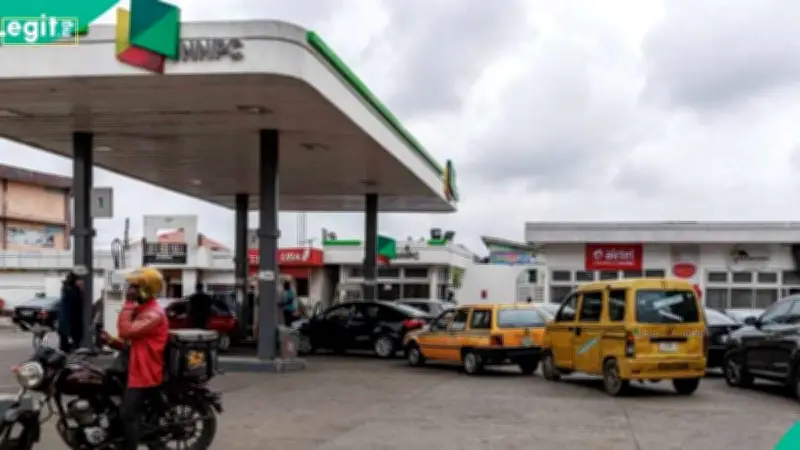
The Nigerian National Petroleum Company Limited (NNPC Ltd) has reduced petrol prices at several of its filling stations in Abuja, lowering the pump price from N1,299 to N1,250 per litre. This N49 per litre reduction follows a decision by Dangote Refinery to cut its gantry price by N50 on August 5, 2026.
Retail Price Cuts Across Nigeria
Checks conducted by Legit.ng showed that NNPC filling stations in Abuja now sell petrol at N1,250 per litre, down from the previous N1,299. Other major retailers, including MRS, had already moved first, cutting their pump prices by between N25 and N50 per litre. Petrol at those stations now sells for between N1,210 and N1,275 per litre in some locations.
Across Abuja and nearby areas, pump prices now range from roughly N1,210 to N1,300 per litre depending on the station. In Lagos, NNPC petrol price dropped from N1,265 to N1,205 per litre.
Dangote Refinery's Price Adjustment
The wave of retail price cuts traces back to a decision by Dangote Refinery to lower its gantry price on August 5. The refinery reduced petrol from N1,215 to N1,165 per litre, a N50 drop, and also cut diesel from N1,650 to N1,570 per litre. That reduction put pressure on fuel suppliers and retailers to compete, pushing many to revise their own prices downward in order to attract customers.
Depot Prices Move in the Opposite Direction
While filling stations have been cutting pump prices, wholesale depot prices climbed sharply on Tuesday, August 11, 2026, across Nigeria's main petroleum hubs. Data from Lagos, Port Harcourt, Calabar, and Warri showed increases in both petrol and diesel.
According to checks by Petroleumprice.ng, depots including Pivot, Integrated, and African Terminal raised petrol prices from N1,168 per litre on Monday to N1,200 on Tuesday, a N32 jump. Diesel at those depots surged from N1,580 to N1,700 per litre over the same period, a rise of N120. The increase was linked to international crude oil prices moving closer to $90 per barrel.
Global Oil Tensions Add Pressure
Adding to the uncertainty is the standoff over Iran's Strait of Hormuz. Mohsen Rezaei, secretary of Iran's Supreme National Security Council, said Washington must end the ongoing conflict and release Iranian funds frozen abroad before Tehran agrees to reopen the waterway. He added that Iran had passed further demands to the United States through intermediaries, though the details were not made public.
The Strait of Hormuz is one of the world's most critical oil-shipping corridors, and continued disruption to traffic through it could affect crude supplies globally. As of 7:20 a.m. WAT on Wednesday, Brent crude was trading at $89.40 per barrel, up 0.55%, while West Texas Intermediate stood at $83.70 per barrel, up 0.60%.
NMDPRA Moves To Stop Petrol Price Fixing
Earlier, Legit.ng reported that Nigeria's oil and gas regulator, the Nigerian Midstream and Downstream Petroleum Regulatory Authority (NMDPRA), has released draft regulations aimed at banning petroleum companies from colluding on prices, dividing markets among themselves, or jointly restricting fuel supplies across the country. The draft Midstream and Downstream Petroleum Prevention of Anti-Competitive Practices and Behaviour Regulations, 2026, gives industry stakeholders 21 days to submit written comments before the framework is finalised.