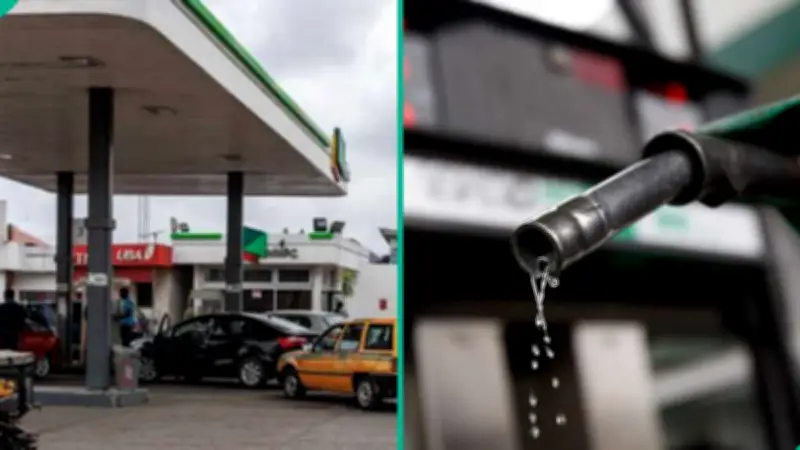
The Nigerian National Petroleum Company (NNPC) Limited has reduced the pump price of petrol at its filling stations in Lagos and Abuja, delivering a measure of relief to motorists grappling with elevated living costs. According to a market survey by Legit.ng, the Lagos reduction was the steeper of the two, with NNPC lowering its price by N35 per litre from N1,300 to N1,265. In Abuja, the Federal Capital Territory, the state-owned company cut its pump price by N15 per litre, bringing the cost down from N1,350 to N1,335.
New Prices Take Effect Across NNPC Outlets
The revised prices have already been implemented at several NNPC retail outlets in both cities. This move is part of a broader trend of price adjustments in Nigeria's downstream petroleum sector, as marketers respond to changing supply dynamics and refinery pricing strategies.
Industry analysts suggest that the NNPC reductions could compel other fuel marketers to lower their own pump prices to maintain a competitive edge. The gap between NNPC's prices and those of independent stations in Lagos and Abuja has narrowed, putting pressure on rivals to match the state-owned company's new rates.
MRS and AA Rano Follow Suit
MRS filling stations have also announced price cuts across parts of Nigeria. In Abuja, MRS stations in Kubwa and along the Lugbe Expressway have reduced their petrol pump price by N40 per litre, from N1,305 to N1,265 per litre. Similarly, AA Rano filling stations have adjusted their prices in the Federal Capital Territory, lowering petrol by N30 per litre from N1,330 to N1,300 per litre.
These latest reductions mean that motorists in Abuja can now purchase petrol for between N1,265 and N1,300 per litre at MRS and AA Rano stations, down from their previous prices of N1,305 and N1,330 per litre, respectively. The coordinated cuts signal growing competition among marketers to attract consumers.
Dangote Refinery Introduces Free Petrol Delivery
The price reductions come as the Dangote Petroleum Refinery has launched a free petrol delivery programme for fuel marketers across six Nigerian states. Under a notice issued by the refinery, the product is priced at N1,075 per litre in the first phase of the initiative. This scheme is part of the company's broader Vision 2030 strategy to strengthen fuel supply logistics and improve access to petroleum products nationwide, as reported by Punch.
The announcement follows the refinery's recent decision to open petrol sales to all licensed marketers, ending its previous consortium marketing arrangement. This liberalisation of distribution is expected to enhance market efficiency and potentially lead to further price reductions at the pump.
Dangote's Ex-Depot Price Cuts Since May
Earlier, Legit.ng reported that Dangote Petroleum Refinery had lowered its ex-depot petrol price by more than N200 per litre since May 30, 2026. The latest adjustment came on July 2, when the refinery reduced the ex-depot price by N50 per litre, bringing it down from N1,125 to N1,075 per litre.
The company has indicated that further reductions in petrol prices may be possible as it begins processing cheaper crude oil cargoes, which are expected to gradually replace higher-cost inventories in its production cycle. This could provide additional relief for consumers in the coming weeks.
Impact on Consumers and the Fuel Market
For motorists in Lagos and Abuja, the combined effect of NNPC's cuts and the adjustments by MRS and AA Rano translates into meaningful savings on fuel purchases. A full tank in a standard saloon car now costs several hundred naira less, offering some respite amid inflation and rising transportation costs.
Energy economists note that the downward pressure on pump prices is unusual for this period, as crude oil prices have remained relatively firm globally. The refinery's aggressive pricing strategy, coupled with improved distribution logistics, appears to be reshaping the competitive landscape of Nigeria's fuel retail sector.
As the Dangote refinery ramps up production and the government continues to deregulate the downstream sector, market watchers expect further price adjustments. The trend toward lower petrol prices could ease inflationary pressures in the broader economy, though sustainability will depend on global crude prices, exchange rates, and refinery output levels.