
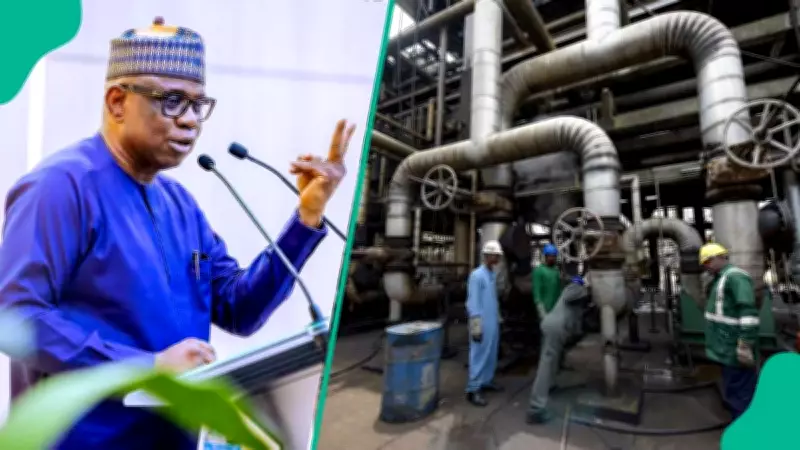
NNPC Chief Exposes Political Pressure Behind Refinery Operations Amid Heavy Financial Losses
The Group Chief Executive Officer of the Nigerian National Petroleum Company (NNPC) Limited, Bayo Ojulari, has publicly revealed that intense political pressure was a key factor in the continued operation of Nigeria's state-owned refineries, even as internal management reviews confirmed the facilities were incurring substantial financial losses. Ojulari made this disclosure during a fireside chat titled Securing Nigeria's Energy Future at the Nigeria International Energy Summit (NIES) 2026 held in Abuja, as reported by Daily Trust.
Management Review Highlights Unsustainable Business Model
According to Ojulari, upon assuming office, his management team conducted a comprehensive diagnostic review to assess the commercial viability of the refineries. The findings were stark, revealing an unsustainable business model characterized by what he described as monumental losses to the nation. He emphasized that the refineries were essentially wasting money, with no clear path to recovery or profitability in sight.
Low Utilisation Rates and High Costs Lead to Value Leakage
Ojulari detailed the operational inefficiencies contributing to these losses. He noted that NNPC was allocating crude oil cargoes to the refineries on a monthly basis, yet the utilisation rates averaged between 50 and 55 per cent. Compounding this issue were high operating and contracting costs, which together resulted in continuous value leakage. In essence, the spending on refinery operations far outweighed the returns from the refined products, making the entire process uneconomical.
Public Frustration and Political Demands
The NNPC chief acknowledged that public frustration over the refineries was understandable, given the significant investments made in their rehabilitation over the years. He stated, "On the refineries, Nigerians were angry. A lot of money has been spent, and expectations were very high. So we were under extreme pressure." Despite strong political demands to keep the refineries running, Ojulari insisted that his professional background made it difficult to support activities lacking commercial viability.
Decision to Halt Operations and Reassess Assets
As a result of the review, Ojulari's administration took the decisive step to halt refinery operations and subject the assets to a rapid technical and commercial reassessment. He cited product quality issues as another concern, using the Port Harcourt Refinery as an example where crude processing yielded mid-grade products whose combined value did not justify the input costs.
PETROAN Calls for Refinery Rehabilitation
In related news, the Petroleum Products Retail Outlets Owners Association of Nigeria (PETROAN) has advised the federal government to rehabilitate the moribund state-owned refineries in Warri, Kaduna, and Port Harcourt. Dr. Joseph Obele, the association's National Public Relations Officer, highlighted that these refineries have been abandoned for years despite their importance to Nigeria's energy security and economy. He pointed out that the brief return of operations at the Port Harcourt Refinery had positive impacts, including increased business activities and employment opportunities for youths in surrounding communities.
This revelation by Ojulari underscores the complex interplay between political pressures and economic realities in Nigeria's energy sector, raising questions about governance and efficiency in state-owned enterprises.




