
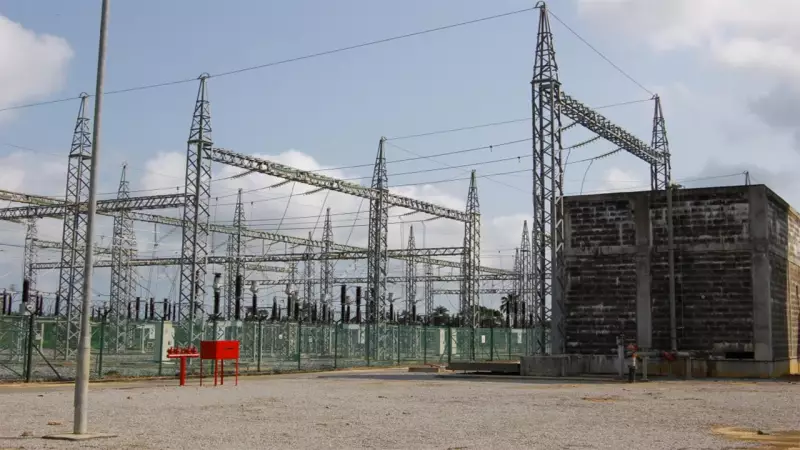
As Nigerians prepared to celebrate Christmas, a severe power crisis plunged much of the country into darkness, with national grid output averaging a mere 3,000 megawatts (MW). This drastic drop occurred despite an installed generation capacity of over 13,000MW, highlighting systemic failures and a crippling liquidity crunch in the electricity sector.
Grid Collapse and the Festive Season Blackout
On Tuesday, December 24, 2025, electricity supply from the national grid crashed to an average of 3,000MW. Data from the Nigerian Independent System Operator (NISO) showed the grid generating about 3,200MW at 5 p.m., only to drop further to 2,652.05 MW by 6 p.m. This is a far cry from the 5,000MW average promised by the Minister of Power, Adebayo Adelabu, especially for customers on the higher tariff Bands A and B.
NISO attributed a significant part of the recent drop to an explosion on the Escravos-Lagos gas pipeline (ELP), which disrupted supply to several gas-fired power plants. The operator stated that repair work by the Nigerian Gas Processing and Transportation Company (NGPTC) was nearing completion and full supply restoration was expected within 24 to 48 hours.
Load allocation data painted a grim picture of the shortages. As of 5:57 p.m. on Tuesday, total electricity allocated to all Distribution Companies (DisCos) was 3,240 MW. Abuja DisCo received the highest share at 496MW, followed by Ikeja (489MW) and Eko (417MW). Yola DisCo recorded the lowest allocation at just 94MW.
The Root Cause: A Trillion-Naira Debt and Idle Capacity
Beyond the immediate gas pipeline issue, industry experts point to a deeper, more chronic problem: a massive debt burden and broken market fundamentals. Fresh regulatory data for the second quarter of 2025 reveals a shocking underutilisation of the country's power assets.
Although Nigeria's grid-connected installed generation capacity stands at 13,625 MW, the average available generation in Q2 2025 was only 5,395.72MW. This translates to a Plant Availability Factor (PAF) of just 39.6%, meaning approximately 8,229MW of capacity was idle and unable to deliver electricity.
The economic cost of this stranded capacity is staggering. Analysis shows it represents about N415 billion in lost market revenue every month, amounting to nearly N5 trillion yearly. This figure closely mirrors the sector's mounting debt, estimated at over N6 trillion, largely owed to Generation Companies (GenCos) and gas suppliers.
Dr. Joy Ogaji, Executive Secretary of the Association of Power Generation Companies (APGC), told The Guardian that the crisis is no longer primarily about gas scarcity. "Nigeria does not have a gas shortage. Gas suppliers have enough supply to support over 10,000MW of electricity. The only shortage we have is payment," she stated. She explained that GenCos cannot pay for available gas because they, in turn, are not being paid fully for the power they generate.
Systemic Failure and the Way Forward
Analysts agree that Nigeria's power woes are systemic. Energy analyst Prof. Dayo Ayoade argued that governance failures account for over 60% of the sector's dysfunction. He described a market where tariffs are insufficient, subsidies are unpredictable, and large industrial consumers are fleeing the grid.
Lanre Elatuyi, another electricity market analyst, cited NERC's Q2 2025 report, confirming that liquidity shortfalls make it impossible for GenCos to secure firm gas contracts. "When market remittance is low and GenCos are not paid 100% of their invoices by the DisCos, there is no way they can sustain firm gas contracts," he said.
The situation is compounded by the underperformance of hydropower plants like Kainji, Jebba, and Shiroro, which are affected by changing rainfall patterns and ageing infrastructure, reducing their ability to stabilise the grid during gas shortages.
Experts warn that without restoring market discipline, enforcing contracts, and fixing the liquidity crisis, increased gas supply or new infrastructure will not translate to reliable electricity. The current market design is deemed unviable, requiring urgent restructuring to ensure optimal dispatch and financial sustainability, lest the economy continues to pay a heavy price for darkness.




