
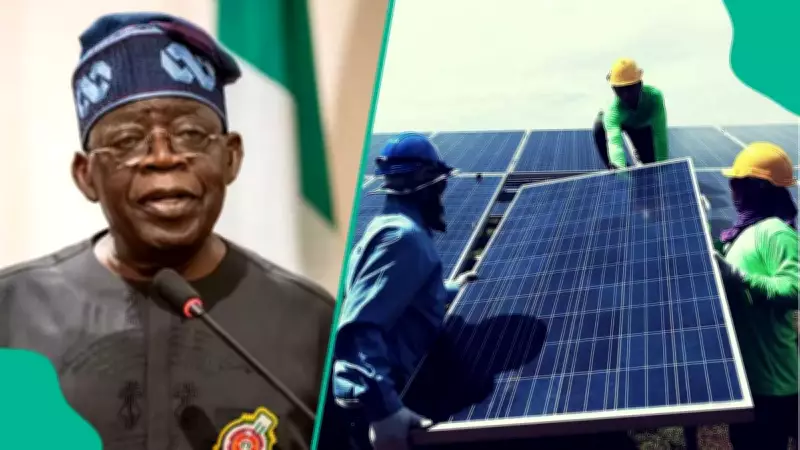
Nigeria's Presidential Villa Announces Plan to Disconnect From National Grid, Fixes Date
Published 22 Feb 2026 at 9:45 AM by Victor Enengedi
The Federal Government has finalized plans to disconnect the Presidential Villa in Abuja from the national power grid by March 2026, marking a complete transition to a standalone solar energy system. This significant move was disclosed on Wednesday, February 18, 2026, by the State House Permanent Secretary, Temitope Fashedemi, during the presentation of the 2026 budget proposal before the Senate Committee on Special Duties at the National Assembly.
Solar Installation and Technical Assessments
According to details shared with State House correspondents, the installation of the solar facility was completed in late 2025 and has been undergoing rigorous technical assessments since December. Fashedemi expressed optimism that this evaluation phase would conclude soon, enabling a total shift away from reliance on the Abuja Electricity Distribution Company (AEDC). He informed lawmakers that authorities anticipate completing the switchover by March, emphasizing that this migration is expected to substantially reduce operational expenses at the seat of government.
Medical Centre as Proof of Concept
To demonstrate the viability of the solar project, Fashedemi referenced the State House Medical Centre, which transitioned to solar energy in May 2025. Since then, the facility has operated without activating its generators. He explained that while the centre briefly supplemented about three percent of its electricity demand from AEDC during the early phase of the transition, the bulk of its energy supply now comes entirely from solar panels supported by battery storage systems.
Funding, Debt Settlement, and Overbilling Claims
The solar mini-grid project attracted N10 billion in the 2025 budget, which sparked debate at the time. In the 2026 Appropriation Bill, the government has proposed an additional N7 billion to strengthen and complete the initiative. Before embarking on the solar conversion, the State House faced mounting electricity liabilities. In February 2024, AEDC listed the Villa among top government debtors, initially placing its outstanding bill at N923.87 million. After reconciliation, the figure was reduced to N342.35 million, which President Bola Ahmed Tinubu subsequently ordered to be settled without delay.
Fashedemi also disclosed that ongoing technical reviews have uncovered cases of alleged overbilling by AEDC, including charges for electricity not supplied. He noted that discussions are in progress to resolve what he described as legacy financial obligations.
Long-Term Benefits and Infrastructure
Beyond financial savings, the Permanent Secretary highlighted that the solar transition would eliminate the need to replace ageing generators installed during the construction of the Villa. While a limited number of units may be retained strictly for emergencies, he expressed confidence that the new solar infrastructure would reliably power the entire complex. This initiative represents a major step towards sustainable energy practices in Nigeria's government operations, setting a precedent for other public institutions to follow.




