
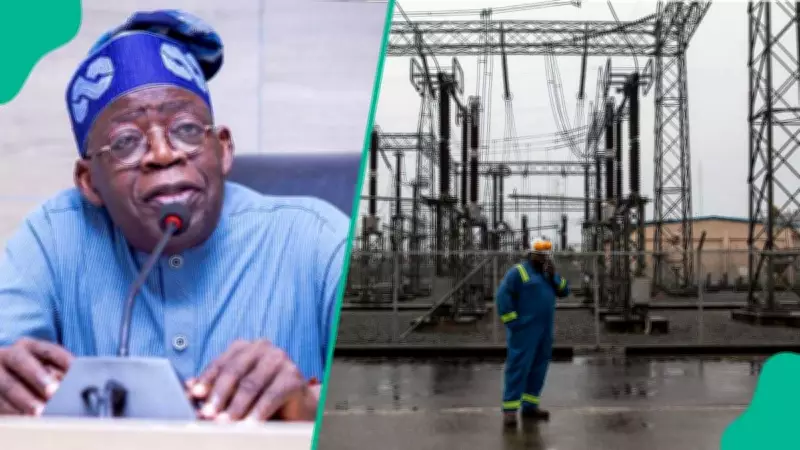
Tinubu Approves N2.8 Trillion Payment to Power Generation Companies
President Bola Tinubu has officially approved the payment of N2.8 trillion to power generation companies (GenCos) as the federal government's verified liability for accumulated electricity subsidies dating back to 2010. This decision follows months of intense negotiations and a comprehensive tripartite audit process involving key government agencies and the power generation operators.
Government Audit Cuts Claim from N6 Trillion to N2.8 Trillion
The approval represents a significant reduction from the N6 trillion claim initially submitted by the power generation companies. According to senior officials in the Presidency and the Federal Ministry of Power, President Tinubu insisted that the government would only pay the audited amount and "will not pay one naira more" than the verified figure confirmed through the rigorous review process.
Sources revealed that the GenCos had initially presented claims ranging from N4 trillion to N6.6 trillion, with the higher figure recently disclosed by Dr. Joy Ogaji, Chief Executive Officer of the Association of Power Generation Companies. Dr. Ogaji had warned in a television interview that the debt was increasing by approximately N200 billion monthly, highlighting the urgency of resolution.
Phased Payment Structure and Initial Disbursement
The approved N2.8 trillion will be paid in phases, with approximately half expected to be settled by mid-year. Government officials disclosed that between May and July, the administration plans to release an additional N600 billion to N800 billion, bringing total payments to roughly 50% of the approved liability. The remaining balance will be settled over a period of 12 to 24 months, according to the structured payment plan.
As part of demonstrating commitment during negotiations, the government had already raised N501 billion through a bond issued under the Presidential Power Sector Debt Reduction Programme in January. This bond was reportedly fully subscribed by pension funds, banks, and asset managers, with the initial disbursement serving as a show of good faith pending the conclusion of the comprehensive audit.
Strict Conditions Attached to Payment Approval
The presidential approval comes with stringent conditions designed to ensure the funds are properly utilized. A significant portion of the N2.8 trillion will be specifically allocated for settling GenCos' outstanding debts to gas suppliers, which have been identified as a major factor behind recurring power shortages and grid instability in Nigeria's electricity sector.
Under the arrangement, power generation companies will be required to allocate a specified percentage of the funds to clear gas debts, while another portion must be invested in infrastructure renewal and expansion. Government officials noted that audits revealed patterns of underinvestment by some operators, with revenue collected not being adequately reinvested in maintaining and upgrading critical power facilities.
Labor Union Opposition and Sector Criticism
The Nigeria Labour Congress (NLC) has recently opposed large-scale payments to GenCos, questioning the value delivered since the power sector's privatization over a decade ago. The labor union criticized both the generation companies and the federal government, threatening nationwide industrial action over the recurring collapse of Nigeria's electricity grid.
The NLC argued that current electricity output reflects stagnation in the power sector and called for a comprehensive review of the entire power industry. This opposition highlights the broader challenges facing Nigeria's electricity sector, which continues to struggle with reliability and capacity issues despite significant financial interventions.
The tripartite audit that determined the final liability involved the Ministry of Finance, the Nigerian Bulk Electricity Trading Plc (NBET), and the generation companies themselves, ensuring a thorough verification process before the presidential approval was granted for the N2.8 trillion payment.




