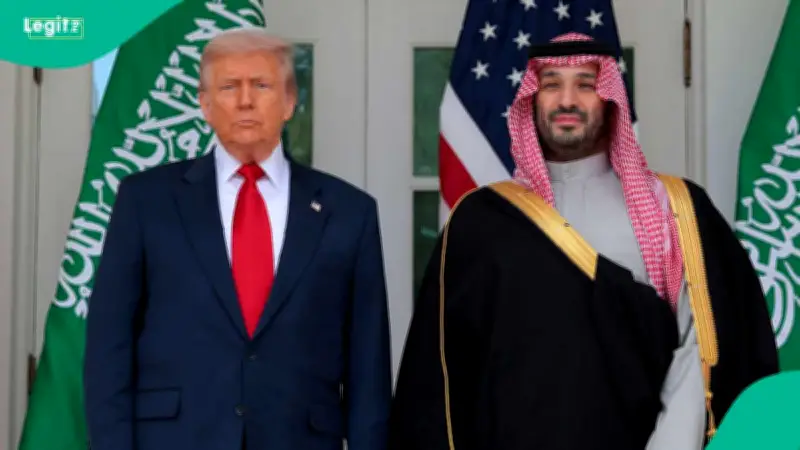
The Trump administration is expected to announce a landmark nuclear agreement with Saudi Arabia on Wednesday, according to CBS News. The 30-year deal would allow US companies to operate nuclear power plants on Saudi soil and may include uranium enrichment rights for the kingdom.
Key Terms of the Agreement
The Wall Street Journal, which first broke the story, reported that the agreement would run for 30 years. Under the terms, American companies would be permitted to build and operate nuclear power plants within Saudi Arabia for civilian purposes. Crucially, the arrangement may also grant Saudi Arabia the right to enrich its own uranium for use as reactor fuel, a provision that has drawn immediate scrutiny from security experts and foreign governments.
Israel Raises Nuclear Weapons Concerns
Nuclear experts and former officials in Israel, the United States' closest ally in the Middle East, have voiced serious concern about where the agreement could lead. Their worry centres on the enrichment clause: the same technology used to produce low-enriched fuel for power reactors can, in theory, be adapted to produce weapons-grade material.
The concern is not new. For years, Saudi Arabia has faced questions about its nuclear ambitions, particularly after Crown Prince Mohammed bin Salman said in 2018 that the kingdom would pursue its own nuclear weapon if Iran developed one. While the current deal is framed as civilian in nature, critics argue that any enrichment capability within Saudi borders raises the threshold of risk in an already volatile region.
Historical Context and 123 Agreements
The United States has historically required countries to sign what is known as a "123 agreement" before receiving American nuclear technology, named after Section 123 of the US Atomic Energy Act. These agreements typically include conditions on enrichment and reprocessing of nuclear material. Whether this deal will include such restrictions, and how tightly they will be enforced, remains a central question ahead of Wednesday's expected announcement.
Saudi Arabia has for years sought to build nuclear power capacity as part of a broader effort to diversify its energy mix and reduce domestic reliance on oil, freeing up more crude for export. The kingdom has been in discussions with multiple countries, including Russia and South Korea, about its nuclear ambitions.
Regional and Global Implications
The deal could reshape energy dynamics in the Middle East. Saudi Arabia's pursuit of civilian nuclear energy is part of its Vision 2030 plan to reduce oil dependence. However, the inclusion of enrichment rights has sparked debate about proliferation risks. Israel has historically opposed any nuclear capability in the region that could lead to weapons development, and its concerns are amplified by the volatile security environment.
The announcement comes amid heightened tensions with Iran, which has advanced its own nuclear programme. Saudi officials have maintained that their nuclear ambitions are peaceful, but critics point to the crown prince's 2018 statement as evidence of potential military aspirations.
Expert Opinions and Future Outlook
According to BBC, the deal is expected to be announced by the Trump administration on Wednesday. The agreement would mark a significant shift in US-Saudi relations and could set a precedent for other countries seeking nuclear technology.
Former US officials have noted that strict safeguards would be necessary to prevent diversion of nuclear material. The International Atomic Energy Agency (IAEA) would likely play a monitoring role. However, the specific terms of the 123 agreement have not been disclosed, leaving uncertainty about the level of oversight.
In related news, Niger, one of the world's biggest sources of uranium, has yet to benefit from the global nuclear resurgence despite increased demand due to the war in Ukraine and climate concerns. The deeply impoverished Sahel state supplies a fifth of the European Union's uranium but its mining industry remains in the doldrums.