Women entrepreneurship design starts with life. Build the business. I have sat in enough rooms with women entrepreneurs to know that most support programmes are built around a polite assumption that the woman has already made the right business choice and simply needs resources to grow it. But what if the business itself is the constraint?
In working with women MSMEs and SMEs, I started noticing a pattern that was hard to ignore. Women were accessing support, completing training, and being diligent, resourceful, and brilliant in the way they navigated impossible circumstances. Yet progress was painfully slow. Not because they lacked effort. Not because the interventions were poorly designed. But because the vehicle they were driving could not reach the destination, and nobody had ever asked them where they actually wanted to go.
So we started doing something simple. We asked women to write down the monthly income that would make them genuinely happy – the number that would mean they had made it every month. The figures we saw were decent, reasonable, and deeply held. These were not greedy numbers. They were dignity numbers. Then we asked a second question: can your current business make you this money? And the room went quiet. That silence was not hesitation. For some, it was the first honest reckoning many of these women had ever had with the structural ceiling of their own businesses.
A woman selling zobo – sharp instincts, relentless effort – might realistically earn a fraction of her income target no matter how hard she works or how many training sessions she attends. The pond is simply too small for the fish she is trying to become. Most programmes would respond by helping her sell more zobo. We decided to ask a different question entirely.
Income-Led Business Design
What emerged from those conversations is a methodology I call Income-Led Business Design. The principle is straightforward: do not start with what a woman has. Start with where she wants to go, and work backward to build the vehicle that can get her there. The framework moves through five stages.
Aspiration Mapping
“What does winning in life look like for you?” The entry point is not the business; it is the life. We ask women to name their target monthly income, describe what that income needs to cover, and paint a picture of themselves. The freedom to design and dream on paper the life they want is where real work begins. Many women get on a ride to nowhere unintentionally or unstrategically. This stage is also important for programme execution because if your expected goal is to get her to 100 million and her life only needs 40 million, you must pull her mind out.
Business-Income Gap Analysis
“Can your current business reach the destination?” This is an honest, non-judgmental audit of whether the existing business can structurally reach the income target. We look at the realistic revenue ceiling, the time and energy cost per naira earned, and the size of the available market she can reach with what she has. The key question is direct: if you worked twice as hard in this business for three years, what is the most you could realistically earn per month? When that number is still below the target, the problem is the vehicle, not the driver.
Business Selection and Redesign
“Choose the vehicle that can reach your destination.” This is where the conversation transforms. Three pathways are explored. A Pivot, where the business category changes entirely based on income target, transferable skills, and market opportunity. An Elevation, where the same sector serves a different, higher-value market – imagine the zobo becoming a premium beverage brand; tailoring becomes corporate fashion design. Or a Stack, where the current business continues alongside a new revenue stream that carries the income weight. The critical design question is always: can this business model structurally reach her target?
Innovation and Market Expansion Planning
“Now build the engine.” Only at this stage do traditional SME tools enter the conversation, but now they are purposeful, not generic. Business model design, market sizing, pricing strategy anchored to the income target rather than to competitors, and distribution planning all have context. She is no longer optimising a hustle. She is building a system.
Identity Reinforcement
“You are not your current business. You are the CEO of your income.” This is the stage that most frameworks skip entirely, and it is why women so often revert. Skills without identity change produce a more efficient version of the same constraint. We invest in community, regular income target check-ins, mentorship from women who have crossed thresholds, and a culture that treats pivots and course corrections as intelligence rather than failure.
Why Income-Led Business Design is Different
Most SME frameworks are gender-neutral in design and gender-blind in practice. They assume a level playing field that does not exist, and they treat the choice of business as a given rather than a symptom. Income-Led Business Design is intentionally different in four ways.
- Permission first. Women are rarely asked what they want to earn. The aspiration conversation – structured, serious, and unhurried – is itself an intervention. It communicates that her ambition is legitimate and worth designing around.
- Naming the narrative. It challenges the sacrifice narrative. Women are socialised to build around what they have rather than reach for what they want. The framework explicitly names this pattern and offers an alternative architecture.
- Confronting the ceiling. Rather than asking a woman to try harder in a structurally limited business, it helps her see the ceiling clearly and make a conscious decision about what to do with that information.
- Identity over skills. A woman who sees herself as the architect of her income will iterate on her business model the way a CEO would. A woman who sees herself as a zobo seller will endure.
Transforming the Conversation
When we shift the conversation from constraints to targets, something remarkable happens. The energy changes. Women who were describing roadblocks begin sketching possibilities. Questions about what they cannot afford give way to questions about who their customer could be, what problem they are solving, and how they might reach a new market. The zobo seller does not disappear. But she might become the founder of a premium wellness beverage brand, a supplier to hotels, or a manufacturer of a dried hibiscus export product. The skill is the same. The identity, the market, and the income ceiling are entirely different.
This is not motivation. It is not inspiration. It is a structured, honest conversation that begins with a number and ends with a strategy. If you are designing interventions for women entrepreneurs, I offer one provocation: ask the income question before you design anything else. Before the training. Before the market linkage. Ask her what winning looks like, and then ask whether the business she is in can get her there. You may find that the most powerful thing you can do is not optimise the business she has, but help her choose the business she needs. That conversation, done well, is worth more than most programmes deliver in a year.
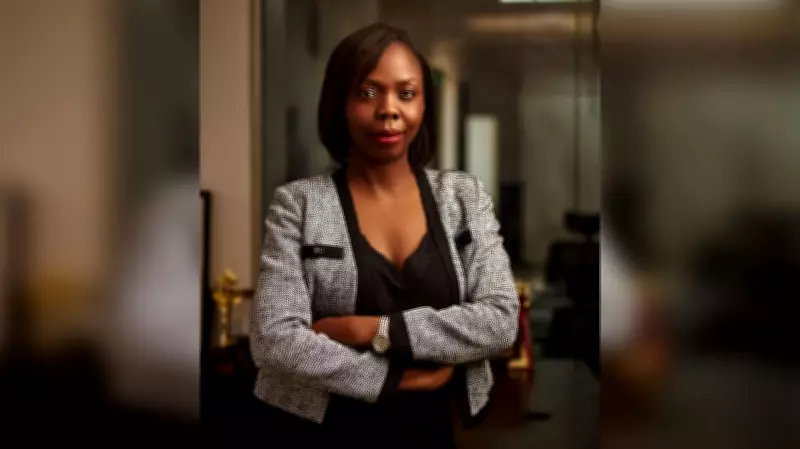
Ifeoma is the Founder and Chief Executive Officer of Shecluded.