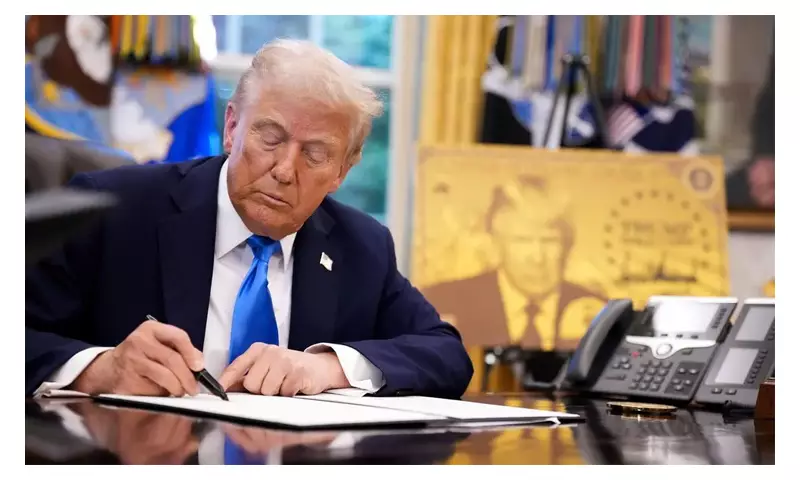
A United States federal court has delivered a significant ruling, upholding a controversial policy from the Trump administration that imposes a hefty $100,000 fee on new H-1B visas for highly skilled foreign workers.
Court Rejects Legal Challenge from Business Groups
On Tuesday, December 24, 2025, US District Judge Beryl Howell in Washington DC dismissed a lawsuit filed by the US Chamber of Commerce. The business group had argued that the steep fee increase violated federal immigration law and would force companies, hospitals, and other employers to cut jobs and reduce services.
Judge Howell ruled that former President Donald Trump had the legal authority to impose the fee under an express statutory grant of authority to the President. She stated that debates over the policy's wisdom were not for the courts, so long as the action fit within the law.
"The parties’ vigorous debate over the ultimate wisdom of this political judgment is not within the province of the courts," Howell wrote in her decision. "So long as the actions dictated by the policy decision and articulated in the Proclamation fit within the confines of the law, the Proclamation must be upheld."
Sharp Increase from Previous Visa Costs
The H-1B visa programme is a critical tool for US employers, especially in the technology sector, allowing them to hire foreign professionals in specialised occupations. The programme typically issues 65,000 visas each year, with an extra 20,000 reserved for workers holding advanced degrees. These visas are usually valid for periods between three and six years.
Prior to this new ruling, the total fees for an H-1B visa generally ranged between $2,000 and $5,000, depending on various company factors. The Trump administration's order, however, proposes a dramatic jump, setting the fee for new H-1B applications at $100,000.
Business Community Expresses Disappointment and Concern
The Chamber of Commerce had strongly contended that the president lacked the power to unilaterally impose such a cost and warned it would severely hurt employers dependent on skilled international talent. Daryl Joseffer, the Chamber's executive vice president and chief counsel, highlighted that many small and medium-sized businesses would find the new fee unaffordable.
"We are disappointed in the court’s decision and are considering further legal options to ensure that the H-1B visa program can operate as Congress intended," Joseffer said in a formal statement following the ruling.
This legal victory for the policy sets the stage for potential implementation, which could reshape how American companies, particularly in tech and healthcare, recruit global talent. The decision underscores the ongoing tension between immigration policy and business needs in the United States.