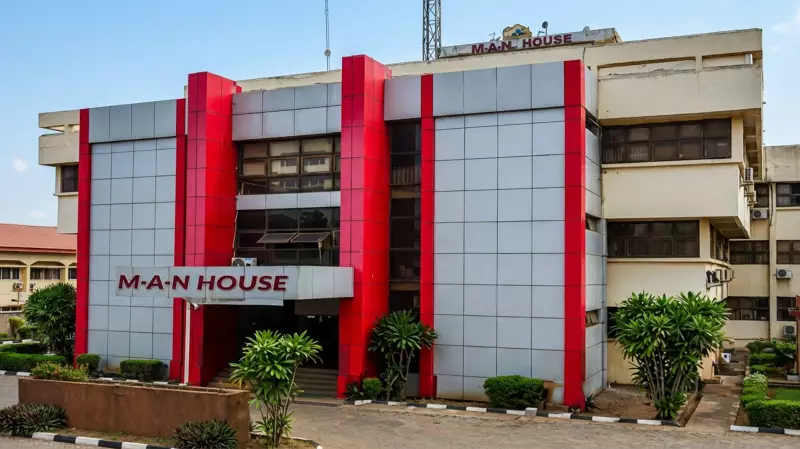
The Manufacturing Association of Nigeria (MAN) has raised a fresh alarm over the unsustainable cost of energy in the country, warning that it is crippling operations and destroying any competitive edge for local industries.
Band A Tariff and Unfulfilled Promises
While Nigeria's electricity tariff is not the highest in Africa, most manufacturers operate on the premium Band A category, paying N209.50 per kilowatt-hour. This band is supposed to guarantee a minimum of 20 hours of power supply daily, but reality tells a different story. Frank Ike Onyebu, Executive Director of Universal Luggage Limited and past chair of MAN Apapa, acknowledged a slight recent improvement but highlighted persistent problems.
"We still have regular issues of unexplained outages," Onyebu stated. "Sometimes, power is switched off for promised one-hour maintenance, only to stretch to three or four hours." He revealed that his company's monthly electricity bill ranges between N180 million and N220 million, a figure he says is typical for the Amuwo-Odofin industrial cluster. This exorbitant cost is compounded by continuous spending on alternative energy sources during outages.
"How are we supposed to compete favourably when energy costs remain this exorbitant?" he questioned. His company is now planning a gradual divestment from the national grid, aiming to adopt solar energy for daytime operations.
Regional Challenges and Mini-Grid Solutions
In the South-East Kaduna zone, MAN Chairman Kabiru Kassim noted that power supply was extremely poor throughout 2025. He expressed cautious optimism for 2026 following an agreement reached with the Kaduna Electricity Distribution Company (KEDCO). "Our issues with KEDCO have been resolved, and we have reached an understanding," Kassim said.
He also spoke on the growing trend of manufacturers developing independent power solutions. "Many companies have started developing mini-grids," he explained. However, he pointed out regulatory hurdles: if a company generates excess power, it must obtain a licence from the Nigerian Electricity Regulatory Commission (NERC) to sell it, a process he described as "cumbersome." For companies in his zone, monthly energy bills still range from N11 million to N20 million, a significant burden.
Infrastructure Theft and Production Shutdowns
The situation is even more dire for some. Dr. Chinedu Otakpor-Azih, CEO of Kazih Kits, reported that power supply at her Iju/Ishaga factory has deteriorated from bad to worse. In November 2025, thieves stole the transformer's wires. When reported, the DisCo informed them that replacement could take until March 2026, suggesting the company fund the repair itself.
"This is so unfair. Why are we saddled with buying wires and building gates to protect them?" she lamented. The situation has forced her company to completely rely on diesel, halting night production to manage costs. "We stop production at exactly 5 pm and turn off generators," she said. This rationing has extended product delivery times from one week to three weeks, despite having the capacity for 24-hour production.
Otakpor-Azih highlighted the impossible position of manufacturers: "Compare with our counterparts from other countries with affordable power, no diesel expense, running 24-hour shifts. How does the government want us to compete, sell at a reasonable price, make profit and still remain in business?"
Manufacturers are now pinning hopes on initiatives from MAN's national body to establish Independent Power Projects (IPPs) for industrial clusters, seeing it as a critical step towards survival and regional competitiveness.