
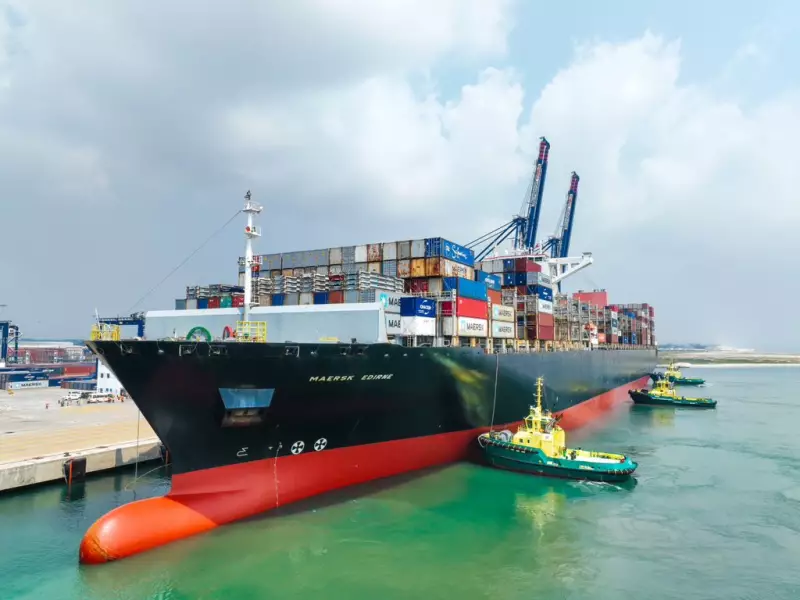
A significant boost in the supply of critical petroleum products is underway as sixteen ships laden with petrol, diesel, aviation fuel, and bulk gas have arrived at major seaports in Lagos. The vessels are currently stationed at the Lekki, Tincan, and Apapa ports, awaiting to discharge their contents.
NPA Reports Influx of Ships with Essential Goods
The Nigerian Ports Authority (NPA) made this known in its weekly 'Shipping Position' publication released on Thursday, January 8, 2026. According to the document, the ports are expecting even more traffic, with 40 additional ships scheduled to arrive between January 8 and January 16.
These expected ships are carrying a diverse range of cargo, including:
- Bulk wheat and other food items
- Petroleum products like bulk diesel, petrol, and crude oil
- Condensate and raw oil
- Bulk urea and bulk gas
- Various containerized goods
Simultaneously, the NPA noted that eight other ships are already at the ports actively discharging containers, diesel, bulk urea, and crude oil.
Customs Command Announces Record-Breaking Revenue Collection
In a related development, the Apapa Area Command of the Nigeria Customs Service (NCS) has announced a monumental achievement in revenue generation. The Command disclosed that it collected a total of N2.93 trillion in 2025 from import and export activities at the Apapa Port.
This figure represents a substantial 24.32 per cent growth, equivalent to an increase of N573.2 billion over the N2.35 trillion collected in the preceding year, 2024.
The Customs Area Controller for Apapa Port, Emmanuel Oshoba, revealed these details on Wednesday through a statement signed by the Command's Public Relations Officer, Isah Sulaiman.
Technology and Strategy Drive Revenue Success
Controller Oshoba attributed this impressive performance to several key factors:
The strategic deployment of technology was highlighted as a major contributor, specifically the implementation of the Unified Customs Management System (UCMS), also known as B'Odogwu. This system has enhanced transparency, efficiency, and accountability in cargo clearance.
Other pillars of success included effective leadership, disciplined manpower, regular performance reviews, and timely revenue recovery measures. Oshoba also commended compliant stakeholders whose adherence to lawful trade practices supported the revenue growth.
To build on this momentum, the Command intensified stakeholder engagement following the rollout of the Authorised Economic Operator (AEO) Programme and expanded its One-Stop Shop (OSS) initiative. These measures are designed to ensure faster processing and release of compliant cargo.
Looking to the future, the Command is at an advanced stage to deploy the FS6000 cargo scanning system, a non-intrusive technology capable of scanning up to 200 containers per hour, which promises to further streamline operations.
Enforcement and Interception of Illicit Goods
Beyond revenue collection, the Apapa Command recorded significant enforcement victories in 2025. Officers successfully intercepted 53 containers loaded with illicit drugs and prohibited items.
The seized contraband included:
- Cocaine
- Canadian Loud (a strong strain of cannabis)
- Tramadol
- Expired pharmaceuticals
The total Duty Paid Value (DPV) of these intercepted items was N12.6 billion. Many of these seizures have been handed over to relevant agencies like the National Drug Law Enforcement Agency (NDLEA) and the National Agency for Food and Drug Administration and Control (NAFDAC) for further investigation and prosecution.
Optimism for Greater Milestones in 2026
With an eye on the future, Controller Emmanuel Oshoba expressed strong optimism that the Command will achieve even greater revenue milestones in 2026. This confidence is driven by plans for deeper implementation of the B'Odogwu system, the AEO programme, the OSS initiative, stronger intelligence-led enforcement, and expanded collaboration with sister security agencies.
The concurrent arrival of essential fuel ships and the announcement of record customs revenue paint a picture of bustling activity and improved administrative efficiency at Nigeria's premier seaports, signaling positive developments for the nation's economy and energy supply chain.




