
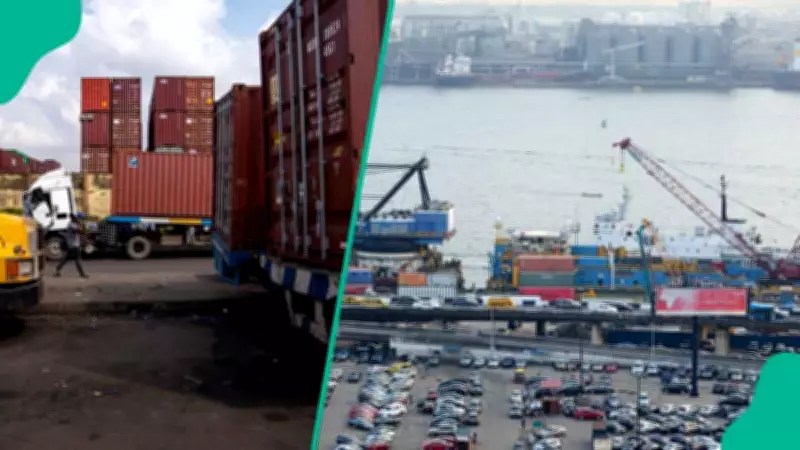
Container Scarcity at Nigerian Ports Threatens $44 Billion Export Industry
The Association of West African Exporters and Marine Professionals has issued a stark warning that a growing scarcity of shipping containers at Lagos ports is placing Nigeria's vital export sector, valued at approximately $44.06 billion as of 2025, in serious jeopardy. This critical situation is compounded by the reported reluctance of major shipping lines to lift export cargoes from Nigerian ports, potentially undermining significant recent gains in the country's export market.
Export Growth Faces Severe Disruption Risk
Speaking in Lagos, AWAEMAP President Bunmi Olumekun emphasized that this development could reverse the substantial progress achieved in Nigeria's export sector under the administration of President Bola Tinubu. Data from the Central Bank of Nigeria reveals that Nigeria's exports increased to $44.06 billion during the first nine months of 2025, up from $40.29 billion in the corresponding period of 2024. However, Olumekun cautioned that current challenges within the shipping sector are placing these hard-won gains at considerable risk.
He alleged that certain foreign shipping companies are deliberately prioritizing other regional ports over Nigerian facilities, often discharging imports locally before sailing to neighboring countries such as Cotonou to collect export cargoes. According to his detailed account, vessels frequently depart Nigerian ports completely empty and proceed directly to Cotonou to load exports, a practice that is having a profoundly negative impact on Nigerian exporters and the national economy.
Export Goods Accumulating at Terminals
The association reported that export goods are accumulating dangerously at port terminals due to an acute shortage of both containers and available vessels to transport them. Olumekun noted with concern that some exporters have had perishable goods stranded at ports since December 2025, with no vessels available for shipment. The congestion is worsening significantly as terminals struggle with severely limited space to accommodate mounting export cargoes, raising serious concerns about a potential return to previous gridlock challenges that plagued Lagos ports.
Global Tensions Exacerbate Shipping Crisis
Industry stakeholders have also linked the deteriorating situation to ongoing disruptions in global shipping routes caused by escalating tensions involving Iran and the United States. Lawal Wasiu, an exporter and Managing Director of LWL Concept, explained that several shipping lines have cancelled routes connected to the Middle East, contributing substantially to delays and logistical bottlenecks.
He further detailed that numerous containers loaded with export goods remain stranded at ports awaiting vessels, while some terminal operators have completely stopped accepting additional export cargoes due to overwhelming congestion. These global shipping disruptions are creating a perfect storm that is severely worsening the container scarcity crisis at Nigerian ports.
Urgent Calls for Government Intervention
AWAEMAP has urgently called upon the federal government to immediately address the container shortage and implement substantial improvements to port operations to support struggling exporters. Industry players have warned emphatically that failure to resolve this critical issue could disrupt Nigeria's export growth trajectory, negatively affect vital foreign exchange earnings, and severely weaken international confidence in the country's trade logistics system.
This crisis follows recent protests by freight forwarders who shut down operations at major firms in Lagos over increased shipping charges. Industry groups within the maritime sector have accused shipping companies of ignoring regulatory guidance to suspend these increases, with efforts by the Nigerian Shippers' Council to mediate being met with resistance, raising additional concerns about escalating costs for exporters.




