
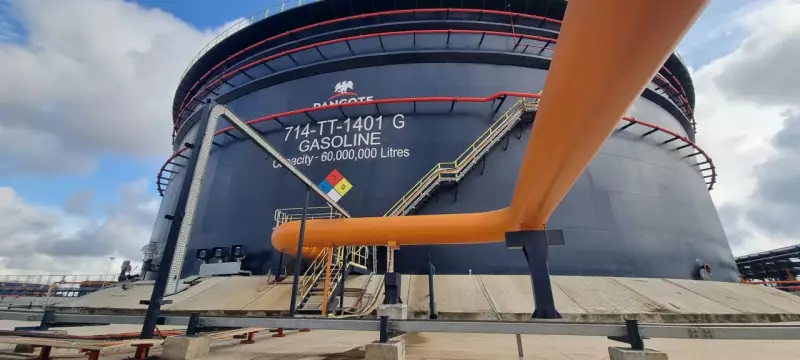
Stakeholders in Nigeria's maritime sector are highlighting a major economic opportunity, forecasting a significant surge in vessel traffic linked to the expanding operations of the Dangote Refinery and other new refineries. They urge immediate action to ensure Nigerian companies and workers capture the resulting freight, jobs, and revenue.
Projected Surge in Vessel Traffic and Economic Potential
Industry projections indicate that Nigeria could witness between 950 and 1,150 vessel movements annually once all refineries, including Dangote and others, become fully operational. This surge presents substantial freight opportunities for the nation.
Sunday Ademuyiwa, Director of International Trade at the Maritime Researchers and Authors Association of Nigeria (MARASSON), provided a detailed breakdown. He noted that the Dangote Refinery alone recorded approximately 650 vessel calls in its first year of operations.
Ademuyiwa estimated that the BUA Refinery, with a smaller capacity, could account for 200 to 300 vessel movements yearly. Furthermore, additional modular refineries could contribute another 100 to 200 movements. He stressed that the final numbers depend on factors like production levels, export demand, and port infrastructure capacity.
Urgent Call for Local Participation and Law Enforcement
Ademuyiwa has called on the Federal Ministry of Marine and Blue Economy to act swiftly. The goal is to position Nigerian shipping companies and ports to benefit from the expected boom in maritime activities.
Echoing this sentiment, Tajudeen Alao, National President of the Nigeria Association of Master Mariners (NAMM), described the Dangote refinery as a major wealth creation driver. He emphasized that its strategic coastal location offers a significant advantage for exports.
Alao pointed out that existing laws on vessel ownership, crewing, and cabotage already provide a framework for Nigerian participation. Stronger enforcement of these maritime laws is crucial to ensuring that taxable income from these operations stays within Nigeria, preventing revenue leakage to foreign vessels.
Advocating for Marine Transport and Job Creation
Both experts strongly advocated for using marine transport to evacuate refined products. Alao explained that moving goods by sea to coastal depots and tank farms is safer, more efficient, and more cost-effective than relying on congested roads.
"A 5,000-tonne tanker can carry the equivalent of about 150 trucks," Alao stated, highlighting the reduction in road damage and congestion.
Captain Michael Ifesemen, a master mariner and maritime expert, confirmed the refinery has opened vast opportunities for jobs in port operations, local shipping, and support services. He also highlighted the potential for coastal transshipment along the West African corridor, which would boost demand for locally built barges, creating more jobs for builders and operators.
The consensus is clear: the refinery-led boom in vessel traffic is a pivotal moment for Nigeria's maritime sector. Proactive steps to leverage local content and enforce existing laws are essential to transforming this activity into lasting jobs, regional trade growth, and national revenue.




