
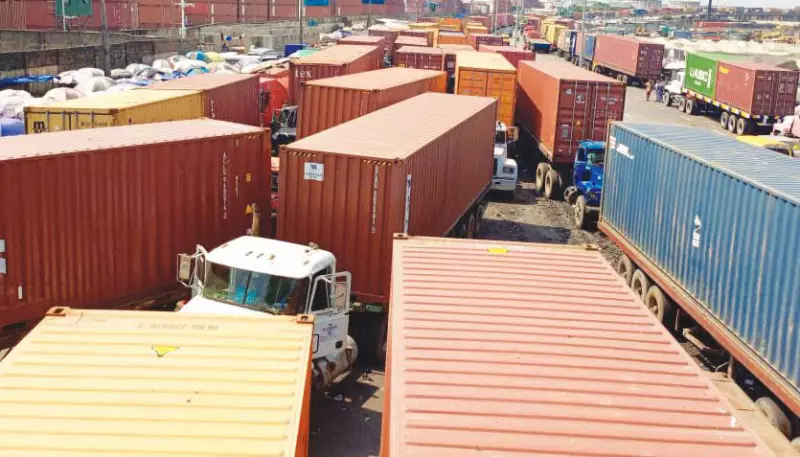
In a significant revelation for Nigeria's maritime sector, the long-standing and notorious traffic gridlock that plagued the Mile 2 to Tin Can Island Port corridor was cleared through strategic engagement and dialogue, not force. This insight comes from the former Port Manager of Tin Can Island Port, Sylvester Egede, who documented the successful approach in his newly launched memoir.
The Blueprint for a Gridlock-Free Corridor
Sylvester Egede shared the details at the Lagos launch of his book, 'Lion of the Port Corridor: Strategy Is Everything'. He explained that the solution was forged during his first four years in office, where the persistent congestion caused by trucks parking indiscriminately was finally resolved. Egede highlighted that this achievement was a defining moment, especially in a context where numerous committees had previously failed to find a lasting fix.
The breakthrough, according to Egede, was rooted in constructive dialogue and a well-planned strategy instead of coercion. He emphasized that the truckers voluntarily vacated the critical corridor after being engaged in meaningful talks. The process began with a comprehensive SWOT analysis—assessing Strengths, Weaknesses, Opportunities, and Threats—to fully understand the complexities of the problem before crafting an effective response.
Commitment and Collaboration as Key Drivers
A major factor in securing compliance was providing the truckers with a credible alternative. Egede disclosed that the operators agreed to a deadline after receiving assurances that an alternative truck park would be established. Following through on this promise, a suitable location with the capacity to accommodate approximately 4,000 trucks was identified in collaboration with relevant stakeholders.
Reflecting on broader leadership lessons, Egede urged decision-makers to look beyond surface-level issues when tackling complex national challenges. He noted that sustainable solutions are often closer than they appear, requiring insight, deep thinking, and strategic planning. His memoir aims to document these critical lessons from his career at the Nigerian Ports Authority (NPA).
Ports: The Lifeline of Global Trade
The event also featured a keynote address by Dr. MkGeorge Oyung, former President of the Ship Owners Association of Nigeria (SOAN). He underscored the indispensable role of efficient port corridors in international trade, describing them as the integrated network of transport infrastructure that ensures goods move seamlessly from ports to the hinterland.
Dr. Oyung highlighted the strategic and economic importance of ports, noting that maritime transport remains cost-effective, environmentally friendly, and safe, with a single large vessel capable of carrying multiple cargoes. He pointed out Nigeria's advantageous position in the post-Panama shipping era and stressed that no nation can thrive without an efficient port system. He commended Egede's dedication to ensuring smooth port operations during his service.
Recognizing a Maritime Strategist
The Managing Director of the NPA, Dr. Abubakar Dantsoho, acknowledged Sylvester Egede's substantial contributions and consistent pursuit of excellence. Represented by the General Manager of the MD’s Office, Mr. Fatai Oladipo, Dantsoho stated that the book launch was a step toward honoring an individual whose service has profoundly shaped the growth of Nigeria's maritime sector. He congratulated Egede for documenting his experiences for the benefit of other professionals and saluted his lasting impact on port development.
The collective insights from the event reinforce that persistent national problems, like the infamous port gridlock, require innovative thinking, stakeholder engagement, and strategic foresight—a formula that proved successful for the Mile 2-Tin Can corridor.




