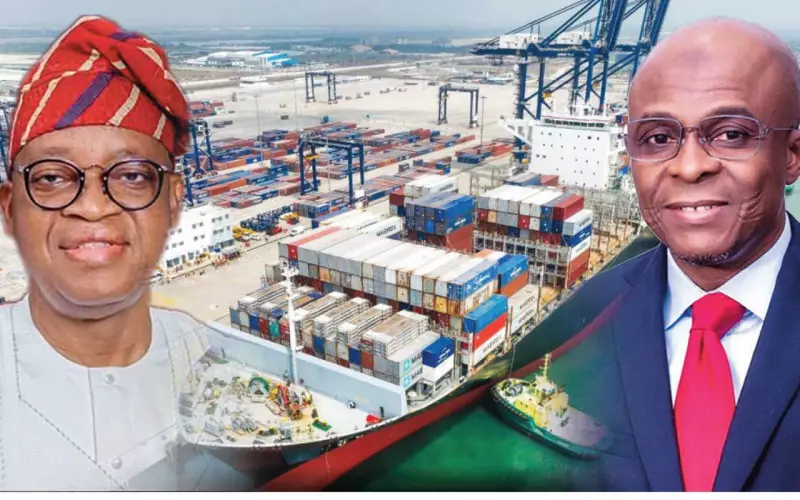
Nigeria's strategic goal to reclaim its position as the premier maritime hub for West and Central Africa is facing significant setbacks. The ambitious plan to develop multiple deep-seaports is currently paralyzed, primarily due to a severe lack of investor interest and a staggering infrastructure funding gap estimated at $14 billion (approximately N19 trillion).
Investment Paralysis and Operational Struggles
While the Lekki Deep Seaport is operational, it is currently functioning at only 20% of its projected capacity, handling a fraction of its 1.2 million TEUs potential. The situation is more dire for seven other proposed deep-seaport projects, including major ones in Badagry, Ibom, and Bonny. These remain incomplete, trapped in a cycle of planning and funding challenges.
Dr Abubakar Dantsoho, Managing Director of the Nigerian Ports Authority (NPA), highlighted the core issue: investors are hesitant to commit funds without a guarantee of returns on investment. This fear is fueled by the continuous diversion of Nigerian-bound cargo to more efficient ports in neighbouring countries like Ghana, Togo, and Benin Republic. "No group of people in Nigeria can sit and give you $3.7 billion. It must come from international partnerships and private sector investors," Dantsoho stated, referencing the funding need for the Badagry project alone.
Root Causes: From Weak Connectivity to Cargo Diversion
The problems are multifaceted. Industry experts point to six critical fundamentals for port viability that are largely missing: intermodal transport connectivity, cargo generation capacity, efficient port governance, sustainable funding models, proper dredging, and transhipment potential. The existing legacy ports—Apapa, Tincan, Onne, Warri, and Calabar—suffer from operational inefficiencies, ageing infrastructure, shallow depths, and congested evacuation corridors.
Mfon Usoro, National President of the Chartered Institute of Logistics and Transport (CILT) Nigeria, revealed how the lack of assured cargo stalled a deal with Singapore's Pacific International Lines for a national fleet. She lamented that Nigeria has been turned into a transhipment hub for smaller vessels, while larger cargoes are discharged in Cotonou due to more business-friendly policies there.
Expert Recommendations and the Path Forward
Facing this crisis, maritime professionals are proposing concrete solutions. Dr Eugene Nweke of the Sea Empowerment and Research Centre (SEREC) advocates for a "Prioritisation Matrix Framework". This structured method would rank port projects based on commercial readiness, regional demand, and funding feasibility, preventing wasteful simultaneous development.
Nweke also suggested converting some stalled deep-seaport sites into Maritime Service Hubs for ship repair, bunkering, and offshore logistics. This would reduce capital burden and create skilled jobs. Furthermore, Dr Muda Yusuf of the Centre for the Promotion of Private Enterprise (CPPE) cautioned against government-led financing, urging a focus on making existing ports like Lekki viable first. "Investors will only come when existing seaports operate efficiently and attract sufficient cargo volumes," he argued.
Corruption remains a significant impediment. Taiwo Fatomilola of the Association of Registered Freight Forwarders of Nigeria (AREFFN) identified inflated budgets and a culture of cutting corners as major blockers. Transparency, proper policy implementation, and eradicating corruption in project execution are deemed essential for progress.
The consensus is clear: Nigeria must address its internal port inefficiencies, guarantee cargo, and create a transparent, investor-friendly environment. Without these steps, the dream of reviving its maritime dominance will remain anchored in uncertainty, while regional competitors continue to sail ahead.