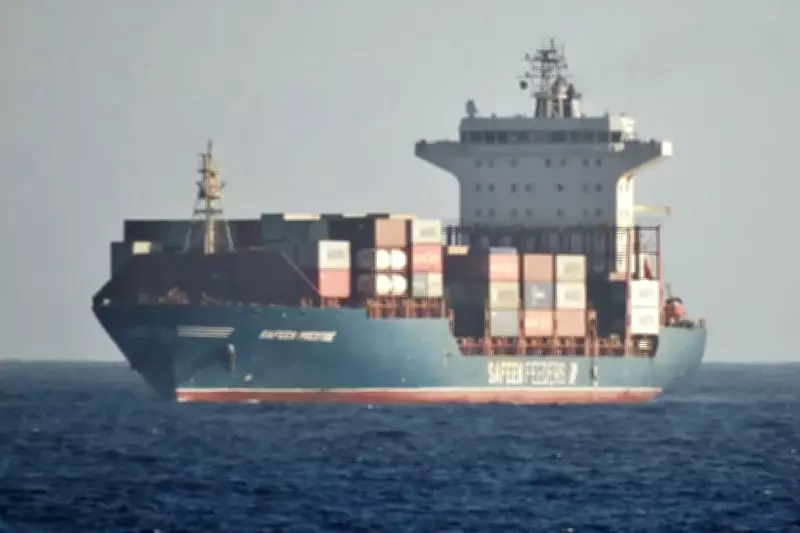
Iranian Missile Attack Forces Crew to Abandon Container Ship in Critical Waterway
A Maltese-flagged container vessel, the Safeen Prestige, has been struck by an Iranian missile while navigating the strategically vital Strait of Hormuz, compelling its entire crew to abandon the ship in a dramatic emergency evacuation. The incident occurred approximately two nautical miles north of Oman, as the vessel was transiting one of the world's most crucial global shipping lanes, according to shipping industry sources.
Fire Erupts After Projectile Impact Above Waterline
British maritime risk management firm Vanguard provided detailed confirmation of the attack, reporting that the container ship was hit by an unknown projectile just above the waterline. This impact ignited a significant fire within the engine room, creating a hazardous situation that necessitated the immediate evacuation of all personnel on board. The company emphasized that, fortunately, no environmental impact has been reported at this time, though the situation remains under close monitoring.
The UK Maritime Trade Operations (UKMTO) also verified the occurrence of the attack but clarified that the vessel involved is not British-flagged, highlighting the international nature of maritime traffic through this volatile region.
Heightened Fears Over Global Energy Supply Disruptions
The Strait of Hormuz represents one of the planet's most critical energy chokepoints, with an estimated one-fifth of all global oil shipments passing through this narrow waterway. It serves as the primary conduit linking the Persian Gulf to the Gulf of Oman and the Arabian Sea, making it an indispensable corridor for oil exports destined for Europe, the United States, and Asia. The strait is bordered by Iran on one side and the United Arab Emirates and Oman on the other, placing it at the heart of longstanding geopolitical tensions.
This missile strike has intensified concerns about potential disruptions to global energy supplies, especially following recent warnings from Iran that it could move to close the strait entirely amid escalating regional hostilities. The vast majority of oil tankers departing from ports across the Persian Gulf must traverse this approximately 60-mile-wide channel, which has been a focal point of international disputes for decades.
Shipping Industry Reacts with Caution and Rerouting Considerations
Shipping analysts indicate that this latest attack is already prompting a wave of caution among shipowners and operators. Many are now increasing onboard security measures for vessels scheduled to pass through the Strait of Hormuz, while others are actively considering rerouting shipments despite the prospect of significantly longer travel times and increased operational costs. This shift underscores the growing apprehension within the global maritime community regarding the safety and reliability of this essential route.
Separate Incident: Iranian Naval Frigate Sinks Off Sri Lanka
In a related development, Sri Lankan authorities reported that an Iranian naval frigate, identified as the IRIS Dena, has sunk off the coast of Sri Lanka. Officials confirmed that 32 individuals were successfully rescued from the vessel, though several casualties were also reported. The precise cause of the sinking remains unclear at this time. The warship was equipped with an array of advanced weaponry, including heavy guns, surface-to-air missiles, anti-ship missiles, and torpedoes, and had the capacity to carry a helicopter.
Earlier statements from the United States military revealed that it had destroyed 17 Iranian vessels during the ongoing regional conflict, with officials declaring that their objective was to sink the entire Iranian navy. These events collectively paint a picture of escalating maritime hostilities that threaten to destabilize key global trade routes and energy markets.