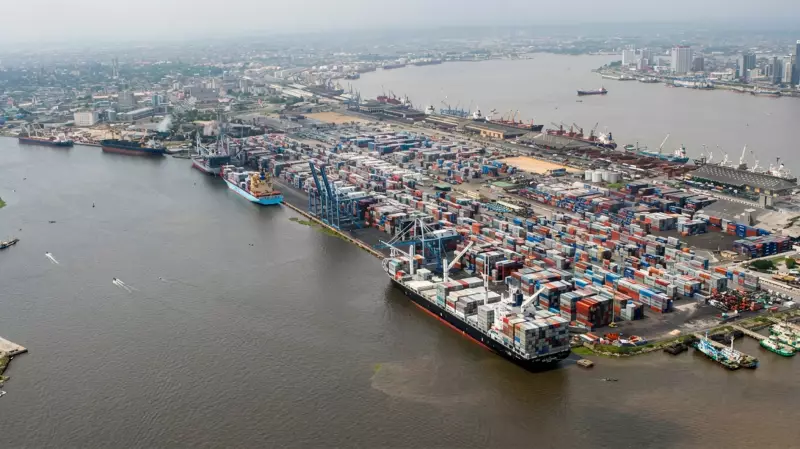
Serious concerns are mounting over the infiltration of Nigeria's maritime supply chains by sophisticated criminal networks involved in drug smuggling. Investigations indicate these gangs are now operating seemingly legitimate forwarding businesses, using them as a cover to move large quantities of illegal narcotics through the nation's seaports on commercial vessels.
Insider Threats and Major Seizures
A critical study by the World Customs Organisation (WCO) has exposed a disturbing pattern. The findings show that a staggering 70 per cent of all maritime drug seizures have a link to a trusted insider within the supply chain. The report describes the global cocaine trade as a "highly mature industry" with a well-established supply chain designed for mass production and steady global distribution.
The WCO criticised the failure of the maritime industry and its regulators to implement a more effective cargo inspection system, which inadvertently provides smugglers with easy access. This vulnerability is evident in Nigeria. The Nigeria Customs Service (NCS) recently uncovered 25.5kg of cocaine on the Brazilian vessel MV San Anthonio at the Apapa port, alongside another 1,187kg seizure. In a separate operation, the NCS intercepted a cocaine shipment valued at N29.4 billion at the Port and Terminal Multiservices Limited (PTML).
SEREC's Grave Warning and Systemic Failures
The Sea Empowerment and Research Centre (SEREC) has issued a stark warning, highlighting the alarming rise in illicit drug trafficking and fake drug imports via the maritime domain. In a position paper signed by its Head of Research, Dr. Eugene Nweke, SEREC stated that this trend poses a severe threat to both national security and public health.
The research body acknowledged the efforts of agencies like the National Drug Law Enforcement Agency (NDLEA), NAFDAC, and the NCS. However, it stressed that the problem persists due to deep-rooted systemic loopholes and powerful transnational criminal networks. SEREC's assessment identifies Nigeria as both a transit hub and a consumer market for narcotics.
Key drivers fuelling this crisis include:
- Porous borders and entrenched corruption.
- Socioeconomic pressures and weak institutional capacity.
- Exploitation of surveillance gaps and compromised officers.
- Economic despair, particularly among youths, driving participation in the drug trade.
The report also points to critical weaknesses undermining the national response: underfunded regulatory agencies, outdated inspection technologies, inadequate public awareness, and limited community engagement.
A Blueprint for Reform and National Security
To counter this growing menace, SEREC has proposed a comprehensive reform blueprint focused on technology, intelligence, institutional change, and community involvement. The recommendations are designed to shift Nigeria from a reactive to a preventive stance.
The proposed measures include:
- Deploying modern scanning and surveillance systems at all borders, airports, and seaports.
- Strengthening intelligence-sharing frameworks among agencies.
- Implementing periodic rotation of enforcement officers to reduce corruption risks.
- Establishing special narcotics courts to fast-track prosecutions.
- Increasing budgetary support for the NDLEA and NAFDAC.
- Creating a national drug tracking system to monitor pharmaceuticals from import to distribution.
SEREC emphasised the urgent need for enhanced regional and international collaboration, specifically with ECOWAS and the United Nations Office on Drugs and Crime (UNODC), to improve intelligence exchange and coordinate operations against transnational syndicates.
The group concluded that only an integrated, proactive approach can stem the tide of illicit drug proliferation and its devastating socio-economic consequences. "The time has come for decisive reforms, community participation and technological modernisation in managing the war against drugs," SEREC stated.