
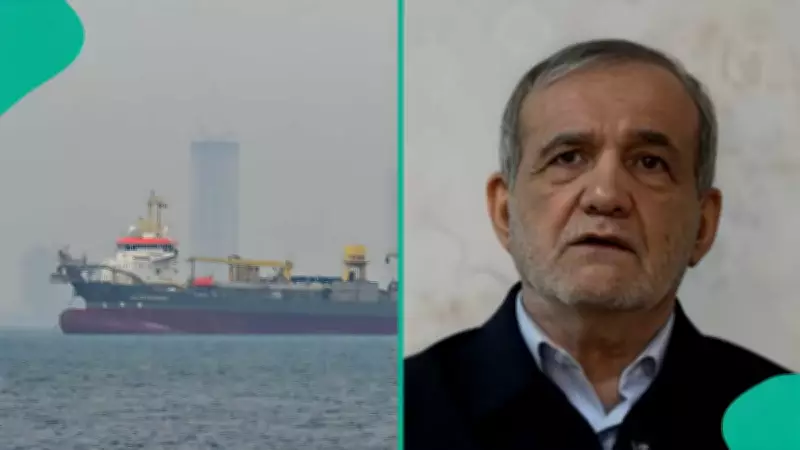
Ships Adopt 'China-Owned' Identity in Strait of Hormuz Amid Israel-Iran War Tensions
Commercial ships navigating the volatile waters of the Gulf are employing unconventional strategies to safeguard themselves as tensions escalate in the ongoing Israel-Iran conflict. Multiple vessels have started indicating connections to China through their destination signals, aiming to lower their chances of being attacked in the strategically vital Strait of Hormuz and surrounding areas. This development underscores increasing worries about maritime safety as the war continues to interrupt shipping lanes, posing significant risks to global trade.
Vessels Declare Chinese Links to Mitigate Attack Risks
Since the outbreak of the Iran war, at least eight commercial ships traversing the Strait of Hormuz and the broader Gulf region have modified their destination signals to include brief notes like "CHINA OWNER" or "CHINA OWNER&CREW." This information comes from marine traffic data examined by the Associated Press and covered by TRT Africa. The primary objective behind this identification is not to ease passage through the strait but to diminish the likelihood of being targeted, as explained by trade risk analysts.
Ana Subasic, a trade risk analyst at Kpler, clarified the rationale: "The main goal of vessels publicly identifying themselves as 'Chinese' while transiting the Gulf or the Strait of Hormuz is primarily to reduce the risk of being attacked rather than to facilitate passage through the strait itself." This approach leverages China's neutral position and robust economic relationships with Tehran, which have generally led Iran and its allied groups to refrain from attacking Chinese-linked ships.
Growing Concerns Over Maritime Attacks and Shipping Disruptions
Attacks by Iranian forces on commercial vessels in the Gulf and adjacent waters have sparked serious alarm among shipping companies. As of recent reports, at least 19 commercial ships have sustained damage in the conflict. Among the eight vessels identified by MarineTraffic, some successfully navigated through the strait and proceeded to their destinations, while others lingered in the region, highlighting the precarious nature of maritime operations during this period.
Kun Cao, a client director at the consulting firm Reddal, elaborated on the messaging strategy: "The message is more like 'do not mistake me for the kind of ship you said you would hit.'" This tactic, though not entirely novel, has gained prominence as a risk-reduction measure. During previous Houthi assaults in the Red Sea, some ships similarly declared Chinese affiliations in their destination signals, apparently to lower risks from Iranian-backed Houthi forces.
Complexities of Flags and Ownership in Commercial Shipping
Most of the vessels proclaiming Chinese links do not fly the Chinese flag; instead, they are registered under flags such as Panama and the Marshall Islands. Cao pointed out that in the commercial shipping industry, "a vessel's flag often has little to do with the ship owner's nationality." This distinction complicates the effectiveness of the identity-shifting tactic, as the actual ownership and operational ties may vary widely.
Rico Luman, a senior economist at ING, noted that while many bulk carriers have substantial connections with China in terms of ownership, operation, and cargo, the practical impact of declaring themselves as China-linked to evade attacks remains uncertain. The reliance on destination signals—short notes manually entered by a ship's crew into its transponder to broadcast location and intended next port—adds another layer of complexity. Subasic explained that these signals are typically used for navigation safety and port planning, but "some vessels occasionally use it to display additional information or signals, such as references to ownership or nationality."
Broader Implications and Accusations in the Conflict
The Israel-Iran war has not only disrupted shipping but also led to heightened accusations between the involved parties. The Israeli Ministry of Foreign Affairs has accused Iran of targeting civilians with cluster munitions, weapons that disperse multiple smaller explosives over a wide area. The use of such munitions is highly controversial due to the severe risks they pose to civilians, both during attacks and afterward, as unexploded bomblets can remain hazardous for years. International organizations have repeatedly expressed concerns about their humanitarian consequences.
As the conflict persists, the adoption of identity-changing tactics by ships reflects a broader trend of adaptation in the face of maritime insecurity. The situation in the Strait of Hormuz, a critical chokepoint for global oil shipments, continues to evolve, with shipping companies and analysts closely monitoring developments to assess the efficacy of these protective measures and the overall impact on international trade routes.




