
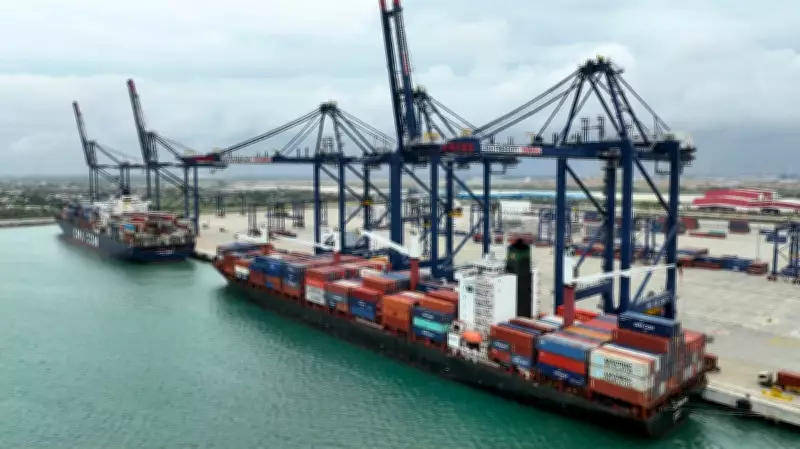
World Bank Advocates for Maritime Sector Investment to Tackle Global Job Shortage
The World Bank Group has issued a compelling call to action for Nigeria and other developing countries, urging them to prioritize investment in maritime infrastructure, enhance regulatory frameworks, and foster private sector involvement. This strategic push is positioned as a vital mechanism for job creation and economic advancement, especially as the global workforce is projected to expand significantly.
Addressing the Looming Employment Crisis
In its newly released report titled 'The Maritime Sector: Driving Jobs and Development', the World Bank Group underscores the maritime sector's pivotal role in economic development. The institution highlights its substantial potential to help bridge an impending job gap, with an estimated 1.2 billion young people expected to reach working age over the next 15 years. The report emphasizes that employment remains the most effective pathway to poverty eradication, offering individuals hope, dignity, stability, and opportunities for improved living standards.
The Economic Impact of Maritime Trade
The maritime transport sector is a cornerstone of the global economy, with ports serving as strategic hubs central to job creation, international trade, and worldwide economic activity. Currently, the maritime sector directly employs 30 million people and supports over 90 million indirect jobs globally. Its significance is further reflected in trade metrics, accounting for approximately 80 percent of global trade by volume and 70 percent by value.
This data underscores the critical importance of shipping services and port infrastructure in facilitating the movement of goods across international markets and sustaining global commerce. Efficient ports are essential for supporting industrial development, connecting nations to regional and global markets, enabling economic growth, and generating millions of jobs worldwide.
Broader Employment Opportunities Across Industries
Beyond core shipping and port operations, the maritime economy sustains employment across a diverse range of industries. These include shipbuilding, logistics, fisheries, tourism, energy, and various related maritime services. However, the World Bank Group cautions that the ability of countries, particularly developing economies, to reap benefits from maritime trade is heavily influenced by factors such as geography, infrastructure quality, and investment levels.
Challenges Facing Developing Nations
The report notes that developing economies often face disproportionate challenges in maritime logistics. Goods transported to or from these countries typically travel longer distances, both internationally and domestically. Additionally, shipments frequently consist of heavier, lower-value commodities like minerals or ores. These factors collectively increase costs and logistical burdens, especially for landlocked countries and small island states.
Although many developing countries operate their own ports, these facilities are often overburdened and underdeveloped. This limits their capacity to adequately meet the growing demands of import and export activities, hindering economic potential.
World Bank's Commitment to Support
To address these evolving challenges, the World Bank Group continues to collaborate with countries in various ways to ensure their ports and logistics systems keep pace with demand. The institution aims to improve performance, create jobs, and enhance livelihoods. With an active portfolio exceeding $5 billion dedicated to ports, this represents a critical area of engagement across the entire World Bank Group.
The World Bank Group is actively working to connect millions of people to employment opportunities, attract transformative private investment, and establish conditions for sustainable growth on a global scale. This comprehensive approach underscores the institution's commitment to leveraging the maritime sector as a catalyst for economic development and job creation in the face of a rapidly expanding workforce.




