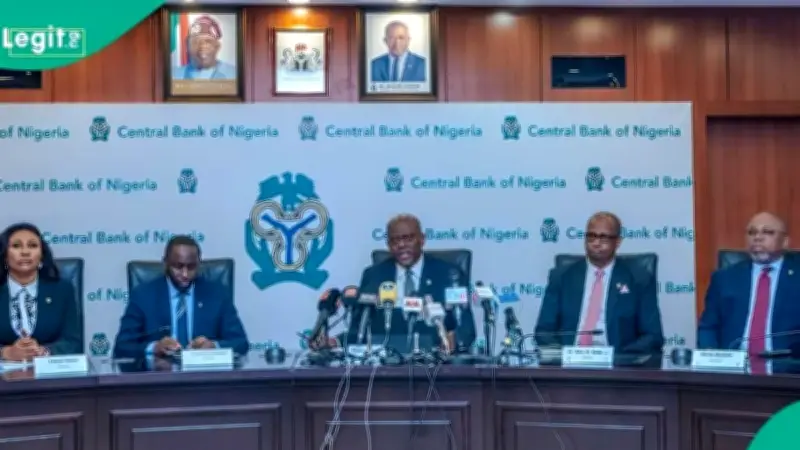
The Central Bank of Nigeria (CBN) has reduced its benchmark interest rate by 350 basis points to 23%, marking the largest single cut to the Monetary Policy Rate (MPR) in the bank's history. The move is expected to lower borrowing costs across the Nigerian economy, potentially making loans cheaper for businesses and consumers.
MPC Decision Announced in Abuja
CBN Governor Olayemi Cardoso announced the decision on Tuesday, September 22, 2026, following a two-day sitting of the Monetary Policy Committee (MPC) in Abuja. At its 307th meeting, the committee voted to bring the MPR down from 26.50% to 23%, a reduction of 350 basis points.
Alongside the rate cut, the MPC agreed to recalibrate the Standing Facilities Corridor to +50/-300 basis points around the MPR. This adjustment is designed to align the corridor with the new policy rate and provide clearer guidance to financial institutions.

Cash Reserve Requirements Unchanged
Despite the shift in policy direction, the MPC held the Cash Reserve Requirement (CRR) steady. Deposit Money Banks will continue to keep 45% of their deposits as reserves with the CBN, while Merchant Banks remain at 16% and non-Treasury Single Account public sector deposits stay at 75%.
The decision means commercial banks' reserve obligations are unchanged, even as the cost of funds from the central bank falls. This suggests the CBN is balancing its easing stance with caution regarding liquidity in the banking system.
Why the CBN Moved on Rates
The rate cut follows a period of easing price pressures across Nigeria. Data from the National Bureau of Statistics (NBS) showed that headline inflation dropped for the third month in a row to 15.39% year-on-year in August 2026, down from 15.43% in July. The figure is also sharply lower than the 23.14% recorded in August 2025.
Month-on-month, headline inflation slowed to 0.71% in August from 1.57% in July, pointing to a slower pace of price increases within the month itself. Food inflation also continued to ease, falling to 19.57% year-on-year in August from 25.30% in the same month of 2025. On a monthly basis, food prices rose 1.02% in August, compared with 5.56% in July. The NBS linked the moderation to price changes across several items.
Expected Impact on Borrowing Costs
The rate cut is expected to reduce the interest rates banks and other financial institutions charge on loans. This could stimulate credit growth and support economic activity, as businesses and individuals find it cheaper to borrow.
Earlier, Legit.ng reported that members of the MPC said the naira's recent stability reflects improved confidence and reforms in the foreign exchange market. They cited the drop in inflation, exchange rate stability, and hopes to consolidate these gains as their reasons for the decision, while warning that inflationary pressures still pose risks. They linked the trend to stronger FX turnover, rising oil earnings, non-oil export inflows and diaspora remittances.