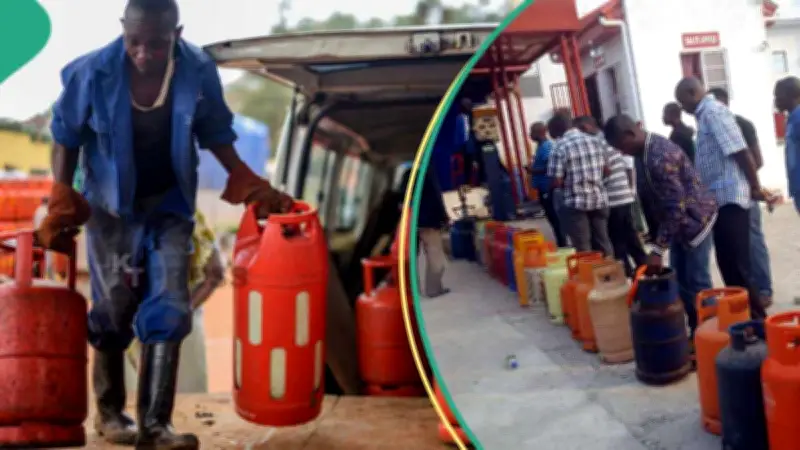
Nigeria is experiencing a worsening cooking gas crisis, with fresh scarcity driving prices sharply higher across Lagos, Abuja, and several other states. Many households are abandoning Liquefied Petroleum Gas (LPG) for charcoal and firewood as a result.
Retailers and Marketers Speak Out
Retailers and marketers report that the situation remains dire despite the arrival of new LPG shipments. They warn that prices may continue to rise if urgent government intervention does not materialize. In many neighborhood retail outlets, cooking gas now sells for as much as N2,400 per kilogram, leaving consumers struggling with soaring energy costs amid worsening economic hardship.
Supply Dries Up for Retailers
The Chairman of the Liquefied Petroleum Gas Retailers Association of Nigeria, Ayobami Olarinoye, stated that retailers are still battling severe shortages despite a slight improvement in supply following the arrival of an LPG vessel in late May. He noted that many plant operators either lack sufficient products or prefer to sell directly to end users, making it difficult for retailers to restock.
“The cooking gas situation remains almost the same. Supply improved slightly after a shipment arrived in late May, but prices remain very high,” he said. Olarinoye also disclosed that another LPG cargo arrived on June 3, but alleged that the product was reserved mainly for the company’s retail outlets instead of being distributed to independent marketers.
He explained that access to products has become increasingly difficult in recent weeks, with only a few gas plants having stock available for retailers. “Out of every 10 plants, only one or two have products to sell to retailers. Many prefer to sell directly to consumers,” he added.
Prices Surge Beyond N2,000/kg
The scarcity has triggered a sharp increase in prices nationwide. A survey showed that while some filling stations still sell gas between N1,650 and N1,700 per kilogram, several neighborhood retailers charge between N2,200 and N2,400 per kilogram due to transportation and operating costs. An Ibadan-based retailer, Opeyemi Olaire, blamed the high prices on logistics expenses. “If I buy gas at N1,700 and spend heavily on transportation, there is no way I can sell cheaply,” he explained.
Nigerians Return to Charcoal and Firewood
As prices continue to climb, many Nigerians say they can no longer afford cooking gas. A Lagos resident, Desire Billy, lamented that LPG had become too expensive for average households. “It has gotten to the point where you buy gas and avoid cooking foods that consume too much energy. Coal pots are gradually returning to kitchens,” she said. In Ilorin, Kwara State, residents said they had completely switched to charcoal because of the rising cost of LPG. “The price is unbearable. We have stopped using gas entirely,” a resident, Kemisola Nitta, said.
Marketers Warn of More Hardship
Industry players warned that the crisis could worsen if authorities fail to address supply bottlenecks and alleged hoarding by terminal operators. Marketers also expressed concerns that some locally produced LPG is being exported to neighboring countries for foreign exchange earnings instead of being supplied to the domestic market. The Nigerian Association of Liquefied Petroleum Gas Marketers said the rising cost of LPG was already causing severe hardship for households, food vendors, and small businesses across the country. The association warned that continued scarcity and soaring prices could reverse years of progress made in promoting clean cooking energy in Nigeria.
Cooking Gas Dealers Release Fresh Prices
Earlier reports indicated that Nigerians are facing fresh pressure on household budgets as cooking gas prices continue to rise across major cities, with some consumers now paying as much as N2,000 per kilogram amid growing supply shortages and rising operational costs. A market survey conducted on Monday, May 25, 2026, showed significant increases in the price of LPG across parts of Lagos, Ogun, Abuja, and other states. The latest hikes have sparked concerns among consumers and industry stakeholders, many of whom fear that the situation could deteriorate further if urgent measures are not taken.