
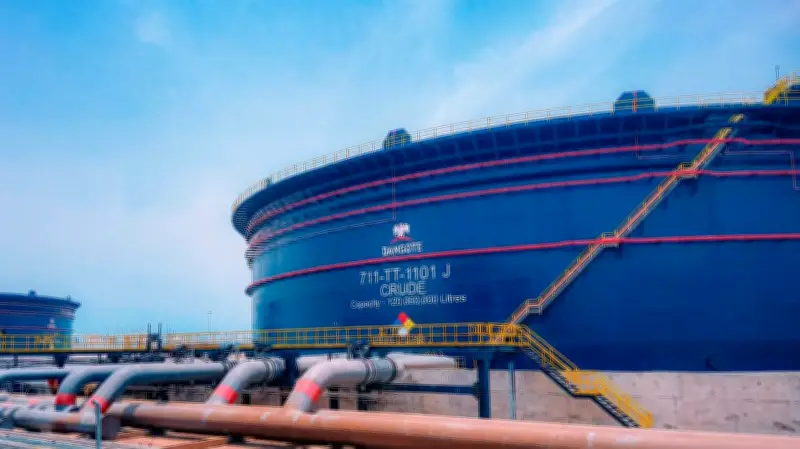
Nigeria's downstream petroleum market received a major boost on Monday as Dangote Petroleum Refinery slashed the ex-depot price of Premium Motor Spirit (PMS), popularly known as petrol, by N75 per litre, raising hopes of fresh reductions in pump prices and easing pressure on consumers grappling with high energy costs.
Price Reduction Details
The refinery announced a reduction in its gantry price from N1,250 per litre to N1,175 per litre, effective from 12:00 a.m. on June 16, 2026, citing the recent de-escalation of geopolitical tensions in the Middle East and the resulting decline in global crude oil prices. The latest price adjustment, one of the most significant reductions recorded in recent months, is expected to trigger renewed competition among fuel marketers and private depot owners, with industry stakeholders anticipating a downward review of retail pump prices across the country.
Circular to Customers
In a circular issued to customers and fuel marketers on Monday, Dangote Refinery attributed the decision to changing dynamics in the international energy market. “Following the de-escalation of tensions in the Middle East, which has impacted energy prices. We wish to inform you that we have reviewed our premium motor spirit gantry/coastal price,” the circular stated. According to the notice, the refinery reduced its gantry price by N75 per litre from N1,250 to N1,175 per litre, while its coastal loading price was cut by N100,575 per metric tonne, dropping from N1,595,790 per metric tonne to N1,495,215 per metric tonne. The company said the revised prices would take effect immediately.
“Kindly note that all outstanding unloaded gantry volumes will be repriced at the new rate effective 12:00 AM, June 16, 2026. We sincerely appreciate your continued patronage and assure you of our unwavering commitment to reliable product supply and excellent service delivery,” the circular noted.
Global Oil Market Context
The development comes at a time when global oil markets are responding positively to reports of a ceasefire agreement between the United States and Iran, ending months of hostilities that had threatened crude supply routes and pushed energy prices higher across international markets. The agreement is expected to restore confidence in global oil supply chains, particularly through the Strait of Hormuz, one of the world's most strategic maritime routes for crude oil transportation.
For more than three months, tensions involving the United States, Iran and Israel had created uncertainty in global energy markets, sending crude oil prices sharply higher amid fears of supply disruptions. Crude oil prices had surged from below $70 per barrel before the outbreak of hostilities on February 28 to above $100 per barrel during the conflict, crossing the $120 per barrel mark at some points. The rise in crude prices translated directly into higher fuel costs globally, including in Nigeria, where petrol prices climbed from around N830 per litre to as much as N1,300 per litre in several locations.
Ceasefire Impact
However, the signing of a ceasefire agreement and the reopening of the Strait of Hormuz have altered market sentiment. Oil prices continued their downward trajectory on Monday following confirmation that the United States and Iran had reached an agreement to end the conflict. Market data showed that Brent crude, the global oil benchmark, fell from about $87 per barrel on Sunday to around $83 per barrel on Monday, extending losses recorded in recent weeks. The decline followed comments by United States President Donald Trump, who announced the signing of a peace deal aimed at ending hostilities and facilitating the reopening of the crucial shipping route. The agreement is expected to provide for the immediate opening of the Strait of Hormuz and create room for a 60-day negotiation period during which broader issues, including Iran's nuclear programme, would be addressed.
Market Implications
The reduction by Dangote Refinery is therefore being viewed as one of the earliest indications of how changes in international crude prices can quickly filter into Nigeria's domestic fuel market following deregulation. According to market monitoring platform Petroleumprice.ng, many marketers were still selling petrol sourced from other channels at around N1,240 per litre on Monday, making Dangote's revised rate significantly more competitive. The development is expected to put pressure on private depot operators and import-dependent marketers to review their prices downward in order to remain competitive.
The impact may be particularly significant for manufacturers, transport operators and small businesses that depend heavily on petroleum products for daily operations. Although the extent of reductions at filling stations will depend on logistics costs, existing stock levels and marketers' pricing strategies, analysts say consumers could begin to see lower pump prices if the decline in global crude oil prices is sustained.




