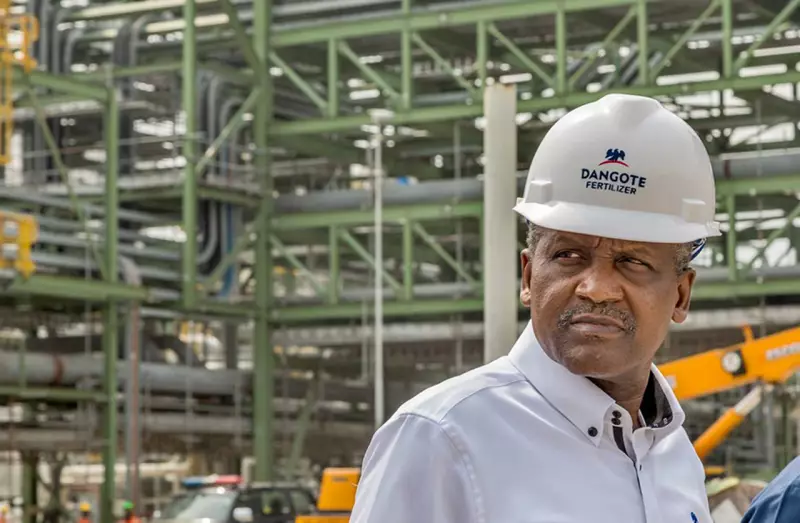
In a year defined by global trade wars and domestic turmoil, one narrative of monumental success emerged from Nigeria: the private-sector triumph of the Dangote Refinery. For his pivotal role in securing the nation's energy future and driving industrialisation, Aliko Dangote, founder of the Dangote Group, has been named The Guardian Person of the Year for 2025.
The Battle for Energy Independence
While Nigeria grappled with systemic challenges from insecurity to a wobbling economy, its most glaring paradox remained its reliance on imported fuel despite being a major crude oil producer. For decades, the state-owned refineries in Port Harcourt, Warri, and Kaduna, with a combined capacity of 445,000 barrels per day, failed to operate effectively despite over $25 billion spent on maintenance.
This anomaly was decisively challenged by Aliko Dangote. Riding on the Petroleum Industry Act (PIA) and full deregulation, the Dangote Refinery Limited demystified the notion that running a refinery was an impossible feat for the private sector. In 2025, the dream became a tangible reality as locally refined petrol and diesel began flowing from the facility, marking a historic shift for the nation.
Scale, Impact, and Continental Ambition
The Dangote Refinery is a colossus. Situated on a 2,500-hectare site in the Lekki Free Trade Zone, Lagos, it is the world's largest single-train refinery with an optimum capacity of 650,000 barrels per day. The $20 billion facility is supplied by a 1,100 km sub-sea pipeline, the largest of its kind globally.
Its impact is both psychological and material. The refinery is projected to save Nigeria between $25-$30 billion yearly in foreign exchange previously spent on fuel imports. This shift has already helped stabilise the Naira and contributed to a rare surplus in the country's balance of payments. At full operation, it will produce 50 million litres of petrol and 17 million litres of diesel daily, meeting Nigeria's entire domestic demand and enabling exports.
Undeterred by initial success, Dangote announced plans in October 2025 to expand the refinery's capacity to a staggering 1.4 million barrels per day, which would make it the largest refinery in the world.
Beyond Oil: The Dangote Industrial Blueprint
The refinery is the crowning achievement in Dangote's long-term strategy of backward integration—producing locally what Nigeria once imported. From cement, sugar, and salt to flour and fertilisers, Dangote brands have become household essentials.
His cement venture, bolstered by supportive government policies under President Olusegun Obasanjo, grew into a pan-African empire, making Dangote Cement the continent's largest producer. This model has reshaped African entrepreneurship, proving that the continent can build globally competitive industrial champions rooted in local economies.
The Lagos refinery and fertiliser complex alone is estimated to create over 570,000 direct and indirect jobs. President of the ECOWAS Commission, Dr Omar Touray, hailed the project as a "beacon of hope for Africa's future."
Criticism and the Path Forward
Success has not come without controversy. Dangote has faced accusations of seeking a monopoly in the downstream sector. Regulators, like former NMDPRA CEO Farouq Ahmed, have pushed back against requests to halt all import licences. Critics also point to the risks of relying on a single-train refinery and cite the high-profit margins in his cement business as a cautionary tale.
However, the consensus is that Dangote has delivered tangible industrial outcomes where many have failed. The onus is now on the state to strengthen regulatory frameworks, encourage more private investments in refining, and ensure that this industrial power fosters inclusive growth. The Nigerian National Petroleum Company Limited (NNPCL) must also expedite plans to privatise the four moribund state-owned refineries.
Aliko Dangote's journey from trader to Africa's richest man and now the face of Nigeria's energy security is a saga of ambition and execution. Through the Aliko Dangote Foundation, endowed with $1.25 billion, and a newly launched N1 trillion National Scholarship Programme, he continues to give back. In a challenging year, his refinery stands as a definitive proof that African capital and vision can solve African problems, cementing his legacy as a defining figure in the continent's economic narrative.