
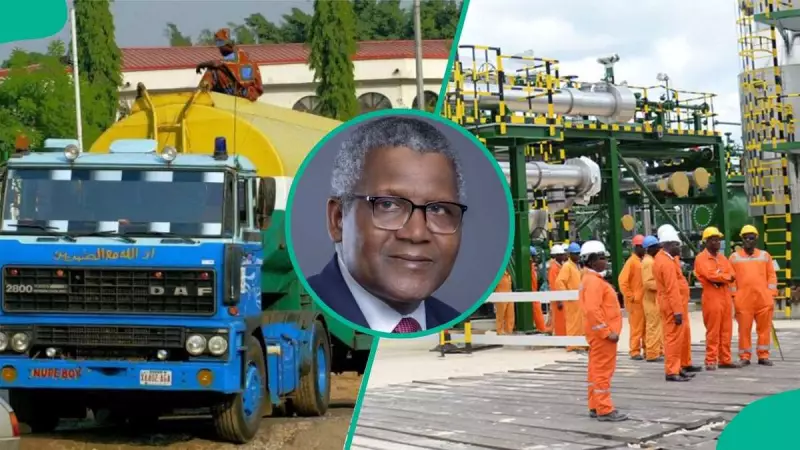
The year 2025 was marked by significant turbulence in Nigeria's oil and gas industry, with the colossal Dangote Petroleum Refinery at the centre of multiple high-stakes disputes. These conflicts, involving powerful labour unions, fuel marketers, and government regulators, exposed deep-seated issues concerning workers' rights, fuel pricing mechanisms, regulatory oversight, and market dominance.
Labour Unrest and Unionisation Battles
In late September 2025, a major conflict erupted between the refinery and the Petroleum and Natural Gas Senior Staff Association of Nigeria (PENGASSAN). The union accused Dangote of laying off hundreds of employees for attempting to unionise, alleging severe violations of labour rights. In retaliation, PENGASSAN ordered its members to halt the supply of gas and crude oil to the facility and declared a strike.
This industrial action disrupted refinery operations, contributed to reduced electricity supply, and sparked fears of nationwide fuel shortages. The situation demanded intervention from the government and the courts, which moved to limit the strike's impact. Following negotiations, the union suspended its action but issued a stern warning that the dispute could reignite if unresolved issues persisted.
Simultaneously, the Nigeria Union of Petroleum and Natural Gas Workers (NUPENG) entered a separate clash with the refinery. NUPENG alleged that Dangote breached an existing agreement by preventing workers from joining the union and threatened a nationwide strike that would disrupt fuel transportation. After intervention by security agencies and government officials, both parties signed an agreement on September 8, 2025, which granted workers the right to unionise and led to the strike being called off.
Pricing Wars and Market Access with Marketers
Between September and November 2025, a fierce dispute unfolded between Dangote Refinery and the Depot and Petroleum Products Marketers Association of Nigeria (DAPPMAN). The core issues revolved around fuel pricing and supply regulations. Dangote alleged that DAPPMAN was lobbying the government for a N1.5 trillion annual subsidy to enable its members to compete with the refinery's prices, a claim DAPPMAN vehemently denied as false.
Further tensions arose when the refinery discontinued certain fuel sales methods, angering marketers who demanded equitable access and more transparent operational rules. The standoff prompted calls from industry leaders for both sides to de-escalate and collaborate to ensure market stability.
Regulatory Showdown and Allegations of Corruption
Perhaps the most dramatic confrontation was with the regulatory body, the Nigerian Midstream and Downstream Petroleum Regulatory Authority (NMDPRA). Dangote Refinery initiated a lawsuit against the NMDPRA, accusing it of improperly licensing fuel imports despite sufficient local refining capacity, an act it claimed was illegal and detrimental to domestic producers. The refinery sought N100 billion in damages before later withdrawing the case, though disagreements festered.
The conflict intensified when Dangote's leadership publicly accused the NMDPRA Chief Executive, Mr. Farouk Ahmed, of corruption and biased regulation. The refinery alleged collusion with international traders and importers to undermine local refining through the continuous issuance of import licenses. These serious allegations triggered investigations by lawmakers and mounted immense pressure on the regulator, culminating in Mr. Ahmed's resignation after a meeting with President Bola Tinubu.
Outlook and Consumer-Facing Initiatives
While government mediation and negotiations averted prolonged sector-wide disruptions, the crises of 2025 underscored the urgent need for clearer regulations, fair labour practices, and genuine cooperation among all stakeholders. The balance between powerful private investment and the broader public interest remains a critical challenge for the sustainable development of Nigeria's oil industry.
Amid these conflicts, Dangote Refinery launched a consumer protection initiative, unveiling a hotline for Nigerians to report MRS filling stations selling petrol above the approved price of N739 per litre. The refinery warned against artificial scarcity and urged regulators to penalise offenders, advising the public not to purchase fuel at inflated prices.




