
In a stark illustration of Nigeria's energy paradox, Ebi Wonodi fries bean cakes ('akara') over a smoky firewood stove on Otitio Road in Yenagoa, Bayelsa State. Tears streak her face from the smoke, a daily reality in a state that produces vast quantities of natural gas. Her story, echoed across the nation, highlights a deepening crisis where clean cooking gas has become an unaffordable luxury, pushing millions back to forests for fuel.
The Unaffordable Flame: Soaring Costs Force a Dangerous Shift
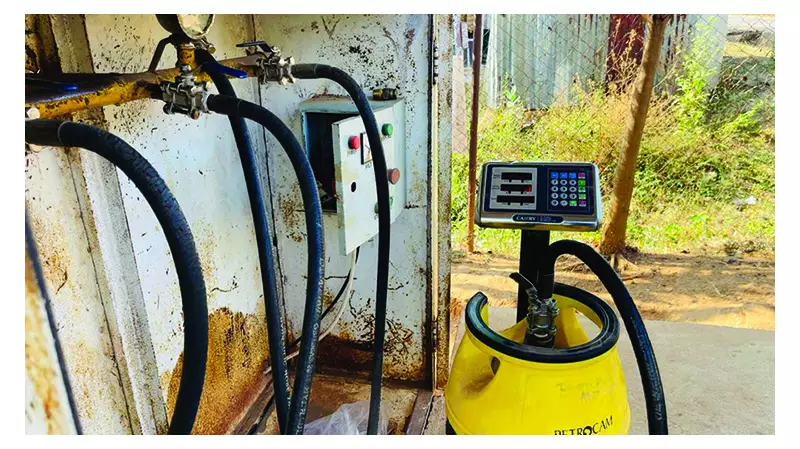
When Wonodi started her business in 2022, the average price of Liquefied Petroleum Gas (LPG) was around N816 per kilogram. By November 2025, data from the Nigerian Midstream and Downstream Petroleum Regulatory Authority (NMDPRA) shows it had skyrocketed to N1,500 per kilogram. The upfront cost is equally prohibitive; a standard 12.5kg cylinder now sells for about N48,000, placing it far beyond the reach of low-income families and small-scale vendors.
This surge undermines Nigeria's 'Decade of Gas' strategy, which promotes LPG as a cleaner alternative to curb deforestation and household air pollution. Despite Nigeria sitting on over 210 trillion cubic feet of gas reserves, according to the Nigerian Upstream Petroleum Regulatory Commission (NUPRC), access remains a critical issue. The continent-wide picture is similar, with Africa holding an estimated 620–800 trillion cubic feet of gas, yet per capita consumption outside North Africa remains critically low.
Forests Under Fire: From Ecosystems to Economic Lifelines
As LPG prices climb, demand for firewood and charcoal surges, transforming forests into both fuel sources and income streams. In Iludun Oro, Kwara State, Biola Ayangbade, a college graduate, fells 10 to 20 trees monthly to produce charcoal, selling bags for N10,000 to N13,000 each. "Charcoal is what keeps us going. There are few jobs here. Many youths depend on it," he explains.
This practice is entrenched by migrant farmers who clear land for cultivation and convert the felled trees into charcoal, weaving deforestation into the fabric of the local economy. The environmental cost is staggering. Nigeria lost approximately 250,000 hectares of natural forest in 2024 alone, equivalent to 110 million tonnes of CO₂ emissions, reports Global Forest Watch. Between 2001 and 2024, the country's tree cover loss reached 1.4 million hectares.
Health, Gender, and Structural Barriers
The human cost of this energy poverty is severe and gendered. Women and girls bear the heaviest burden. The International Energy Agency (IEA) estimates they spend about 40 billion hours yearly in sub-Saharan Africa collecting firewood, time lost to education and economic activity. They are also most exposed to deadly indoor air pollution.
Michael Kelly, Chief Advocacy Officer for Sub-Saharan Africa at the World Liquid Gas Association (WLGA), notes that indoor air pollution from solid fuels causes about one million premature deaths annually in Africa, more than malaria, HIV, and tuberculosis combined. While LPG is a cleaner, more efficient alternative, penetration across Africa remains below 20%.
Structural weaknesses in Nigeria's LPG supply chain persist. Although domestic production has risen to between 3,200 and 4,500 tonnes per day, affordability is the central hurdle. Emmanuel Omuojine of Rainoil Gas Limited notes annual consumption has grown from 250,000 tonnes in 2014 to 1.5 million tonnes in 2024, but per capita consumption is just 7kg per year, far below the global average of 25–30kg.
Industry leaders like Oladapo Olatunbosun, President of the Nigerian Association of LPG Marketers, stress that awareness is not the problem—"The problem is affordability." They call for targeted subsidies and innovative models, like the partial cylinder refilling system used in South Africa, which allows people to start cooking with as little as $0.50 worth of gas.
A Narrowing Window for Solutions
While global initiatives like the G20's clean cooking action plan provide political momentum, on-the-ground implementation lags. Nigeria's goal to expand LPG consumption to five million tonnes annually has been pushed from 2025 to 2030. Experts from the IEA, WLGA, and financial institutions warn that achieving higher LPG penetration requires:
- Regulatory certainty and harmonized standards across Africa.
- Major infrastructure investment and innovative financing.
- Integrated strategies combining smart subsidies, micro-distribution networks, and safety education.
Anibor Kragha of the African Refiners and Distributors Association (ARDA) reaffirmed a continental target to raise LPG penetration to 60% by 2030. Without urgent, coordinated action, millions risk being locked into biomass dependence for decades, with devastating consequences for public health, gender equality, and the continent's rapidly diminishing forests.




