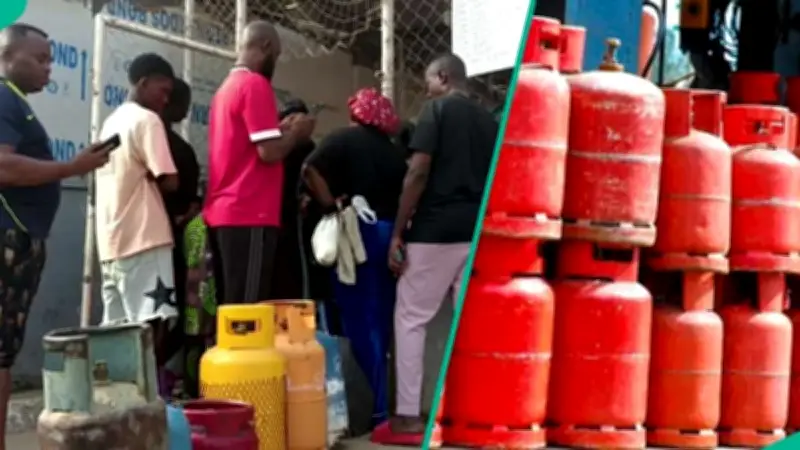
Nigeria's cooking gas demand plunged by nearly 23% to 123,000 tonnes in June 2026, the lowest level in seven months, as the Iran conflict disrupted global liquefied petroleum gas (LPG) supplies, according to energy intelligence firm Argus.
Argus, citing data from Nigeria's Midstream and Downstream Petroleum Regulatory Authority, attributed the drop to weaker domestic output and tighter import conditions amid global LPG market stress from the conflict.
Domestic Production Falls Over 20%
Domestic LPG production declined by more than 20% over the period, hit by lower output from inland gas-processing plants and scheduled maintenance at the Dangote refinery's residual fluid catalytic cracker.

To bridge the gap, Nigerian LPG operators sharply ramped up imports, bringing in 46,000 tonnes in June alone, up from just 3,000 tonnes in May and nothing in April.
Prices Drop After US-Iran Peace Deal
The situation eased after a US-Iran peace deal in June pushed international LPG prices sharply lower. The Argus butane West Africa index dropped more than 40% to $513.50 per tonne on June 24, from a March peak of $860.50 per tonne.
That relief helped Nigeria swing from four straight months of deficit into a 30,000-tonne LPG surplus. By July, domestic supply recovered strongly: Dangote refinery output climbed 71% to 25,800 tonnes, while gas-processing plants increased supply by 88% to 47,000 tonnes.
Retail Prices and Demand Recover
Nigeria's average retail LPG price fell 10% month-on-month to N1,491.75 per kilogramme in July, and demand rose 7% to 136,500 tonnes, its first increase since March.
Earlier, the National Bureau of Statistics (NBS) reported that the average retail price for refilling a 5kg cylinder of LPG rose by 13.73% month-on-month, from N7,655.73 in March 2026 to N8,706.93. On a year-on-year basis, the price increased by 10.42% from N7,885.60 in April 2025. The average retail price for refilling a 12.5kg cylinder rose by 13.89% month-on-month.
Regional Markets Under Pressure
Nigeria was not alone. In Ghana, seaborne LPG imports fell by nearly a third year-on-year to about 24,000 tonnes per month between April and August, according to vessel-tracking firm Kpler. The shortfall pushed Ghana's LPG stocks down by more than three-quarters to just 5,500 tonnes in early July, roughly eight days of consumption. Higher output from the 40,000-barrel-per-day Sentuo refinery helped cushion the blow.
According to Argus, the price relief and supply recovery in July marked a turning point, with Nigeria's LPG surplus and demand rebound suggesting the market is stabilizing after the conflict-driven shock.