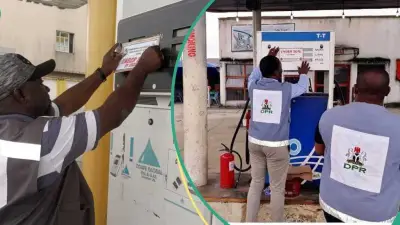
The Nigerian Midstream and Downstream Petroleum Regulatory Authority (NMDPRA) has unveiled draft regulations aimed at prohibiting fuel price fixing, hidden charges, and other anti-competitive practices in the petroleum industry, even as a Federal High Court in Abuja ordered the continued issuance of import licences to three fuel marketers.
NMDPRA Proposes New Competition Rules
Speaking at a stakeholders' consultation forum in Abuja, NMDPRA Chief Executive Mallam Rabiu Umar said the proposed framework was developed under Section 216 of the Petroleum Industry Act (PIA), 2021. The draft, titled "Midstream and Downstream Petroleum Prevention of Anti-Competitive Practices and Behaviour Regulations, 2026," seeks to strengthen competition, improve transparency, and promote fair access to essential infrastructure.
Umar stated that stakeholders' submissions would be considered before the regulations are finalised. NMDPRA Secretary and Legal Adviser, Dr Joseph Tolorunse, revealed that the framework contains 138 regulations across 23 parts, translating the PIA's competition provisions into detailed, enforceable rules.
Ban on Price Fixing and Hidden Charges
Under the proposals, competing operators would be barred from coordinating pump and ex-depot prices, profit margins, discounts, freight charges, supply volumes, and tender submissions. Service providers would also have to disclose tariffs, fees, and general operating conditions. Hidden surcharges, undisclosed preferential arrangements, and informal agreements altering published access terms would be prohibited.
Access Rules for Pipelines, Depots, and Jetties
Owners or controllers of essential petroleum infrastructure, including pipelines, storage terminals, jetties, bulk-loading facilities, and depots, would be required to provide qualified third parties with access on transparent and non-discriminatory terms. According to Tolorunse, restrictions would only be permitted on legitimate technical, safety, or creditworthiness grounds.
He clarified that becoming a dominant operator would not itself constitute an offence. The regulations would instead target the abuse of that position to undermine fair competition.
Court Backs Fuel Import Licences
In a related development on September 28, the Federal High Court in Abuja ordered NMDPRA to continue granting petroleum product import licences to Matrix Energy, AA Rano, and AYM Shafa, subject to their meeting applicable requirements. Justice Inyang Ekwo reportedly held that the regulator's refusal to issue or renew the companies' licences was inconsistent with the PIA. The judgment also affirmed the authority's responsibility to promote competition and prevent abuse of dominant positions.
The decision strengthens importers' position in the wider dispute over domestic refining and foreign fuel supplies. Dangote Refinery has separately challenged import licences, arguing that imports should be permitted only where domestic supply falls short, Reuters reports.
Impact on Consumers and Market
For consumers, the proposed rules are intended to curb practices that distort fuel pricing and access to supplies. They remain subject to consultation and finalisation, however, and their announcement does not establish a new pump price or guarantee immediate reductions at filling stations across Nigeria.
Legit.ng earlier reported that oil marketers are increasingly lifting petroleum products from the Dangote Petroleum Refinery as the cost of importing petrol and diesel remains above the refinery's selling prices. The widening price advantage comes as some filling stations have begun selling petrol below ₦1,400 per litre, offering motorists some relief after weeks of elevated fuel prices.