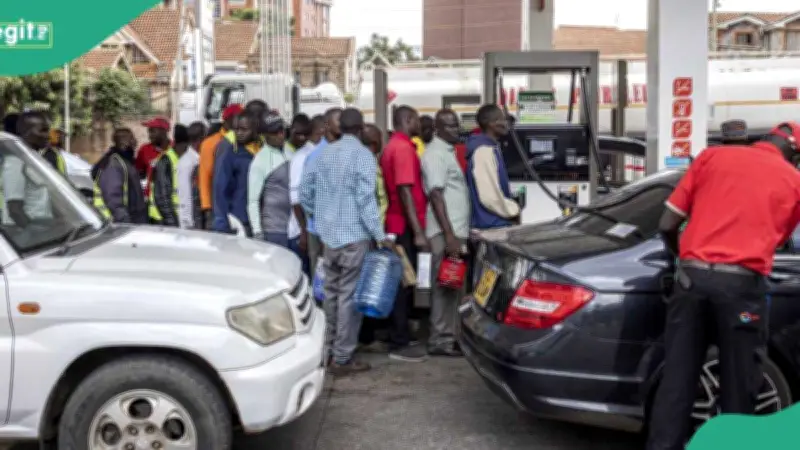
Petrol prices in parts of Lagos have climbed to N1,310 per litre at some independent filling stations, up from N1,290 on Friday, September 4, 2026, according to findings across retail outlets operated by independent marketers. The adjustment took effect on Monday, September 7, 2026, as global oil market tensions continue to influence domestic fuel costs.
Depot Prices and Global Crude Rally Drive Increase
Marketers attributed the latest increase partly to movements in depot prices, noting that the cost of securing supplies is responding to developments in the international oil market. Data from PetroleumPriceNG showed that Soroman and A.Y.M Shafa were selling petrol at N1,295 per litre on Monday.
The rise comes as international crude prices climb sharply amid growing fears that the conflict involving the United States and Iran could disrupt oil supplies and global shipping routes. Brent crude rose above $97 per barrel on Monday, while US West Texas Intermediate crude traded above $92.

Goldman Sachs Sees Oil Approaching $120
Goldman Sachs warned that crude prices could rise significantly if attacks on commercial vessels intensify and shipping disruptions spread across the region, as reported by The Independent UK. Daan Struyven, co-head of global commodities research at Goldman Sachs, told Bloomberg TV that recent developments had increased the risk of broader and more severe disruptions to global shipping.
The investment bank sees "meaningful upside" to crude oil prices, particularly if the crisis begins to threaten key energy supply routes. Struyven also pointed to potentially sharper price increases for natural gas and refined petroleum products, noting that supply shocks could be more severe in those markets than in crude oil.
Strait of Hormuz Emerges as Key Risk
The growing tensions have placed the Strait of Hormuz at the centre of concerns about global energy supplies. The strategic waterway is a major route for international oil shipments, making any prolonged disruption potentially significant for crude and refined-product markets.
The situation deteriorated further after the United States said it had struck three Iranian oil tankers following attacks on two US warships by Iran's Islamic Revolutionary Guard Corps. Iran subsequently threatened tougher retaliation and announced plans for an exclusion zone around the Strait of Hormuz.
Iranian officials warned that vessels entering the area could face sanctions, raising concerns among maritime operators and energy traders. Maritime intelligence firm Marisks said the conflict had increasingly blurred the distinction between military confrontation and commercial shipping, as oil tankers became targets of economic pressure.
Nigeria Remains Exposed to Global Oil Swings
For Nigerian consumers, sustained increases in international crude and refined-product prices could create fresh pressure on petrol prices, particularly as marketers respond to changing supply and depot costs. With Brent crude already nearing the $100 threshold, a further escalation in Middle East tensions could intensify volatility in the global oil market and feed into domestic fuel prices.
For motorists and businesses, the immediate concern is whether the latest petrol increase will remain limited or become the beginning of another sustained upward price cycle. Legit.ng earlier reported that petrol prices have climbed sharply across Nigeria, with retail pump prices now reaching as high as N1,345 per litre, putting fresh pressure on motorists, transport operators, businesses and households. The latest increase represents a significant jump from prices of between N1,210 and N1,275 per litre recorded less than two weeks ago.