
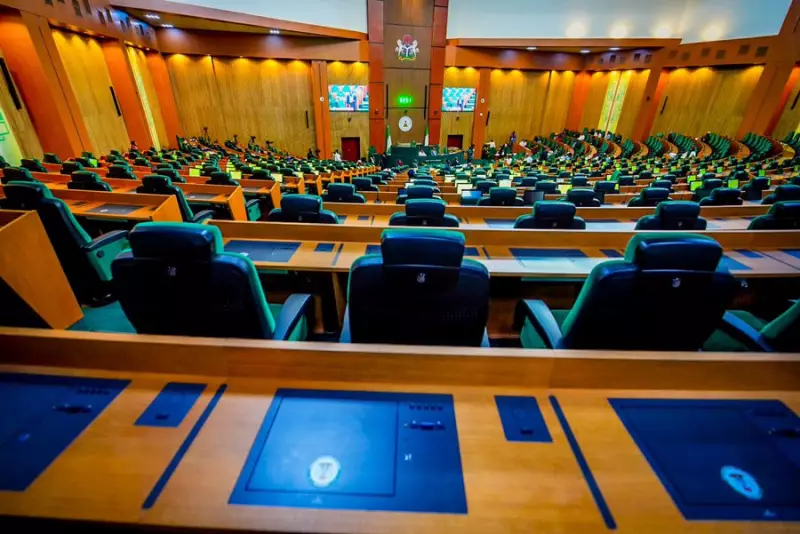
The House of Representatives has taken a firm stance to protect Nigeria's oil-producing communities, pledging to ensure they finally reap the full benefits of petroleum operations in their lands. This commitment comes through the House Committee on Host Communities, which is now actively enforcing the provisions of the Petroleum Industry Act (PIA).
A Legislative Response to Decades of Neglect
The committee's chairman explained to The Guardian that the panel was established as a direct legislative intervention. Its purpose is to tackle the long history of neglect, environmental damage, and socio-economic hardship endured by communities in the Niger Delta and other oil-producing regions.
He traced the committee's origins to the Ninth National Assembly. The then-Speaker, Femi Gbajabiamila—now Chief of Staff to the President—was moved by the "abject poverty, suffering, deaths and diseases" plaguing these areas. In response, he created a standing committee dedicated solely to their challenges.
Recognising its vital role, the current Speaker of the 10th Assembly, Dr. Tajudeen Abbas, retained the committee. Its core mandate is to correct the injustices and denials faced by host communities over many years.
Wide-Ranging Oversight and a New Funding Model
The committee's authority is extensive. It oversees all financial streams meant for oil host communities. This includes the 13% derivation fund, the Host Communities Development Trusts (HCDTs) created by the PIA, and environmental clean-up projects like the Hydrocarbon Pollution Remediation Project (HYPREP).
Specifically, the committee is tasked with:
- Protecting the rights and welfare of mineral-producing communities.
- Monitoring agreements between communities and oil firms.
- Overseeing how derivation funds are used.
- Promoting youth development.
- Handling petitions from aggrieved communities.
The chairman highlighted the PIA's implementation as a major breakthrough. The law moves away from voluntary Memoranda of Understanding (MoUs) to a legally binding framework. A key provision requires oil companies to contribute 3% of their previous year's operating expenditure (OPEX) to host communities—a rule he called "a game changer."
These funds are managed through structured Boards of Trustees and HCDTs. Projects are chosen based on community needs assessments, with regulatory oversight from the Nigerian Upstream Petroleum Regulatory Commission (NUPRC) and parliamentary supervision.
Navigating Challenges and Showcasing Success
The transition has not been without issues. The chairman acknowledged disputes in some communities over the leadership of the trusts, with several cases already in court. The committee is engaging stakeholders to ensure proper structures are in place and communities are not shortchanged.
Despite these hurdles, there are success stories. The chairman pointed to the Obagi Host Community Development Trust in Rivers State, where TotalEnergies operates, as a model. Under this trust, the community has seen the construction of health centres, schools, ICT facilities, and roads. They have also launched income-generating ventures like a water bottling company, all of which have tangibly improved local livelihoods.
The committee's renewed vigour signals a determined effort to translate the PIA's promises into visible development, aiming to end the cycle of poverty and pollution in Nigeria's oil-rich regions.




