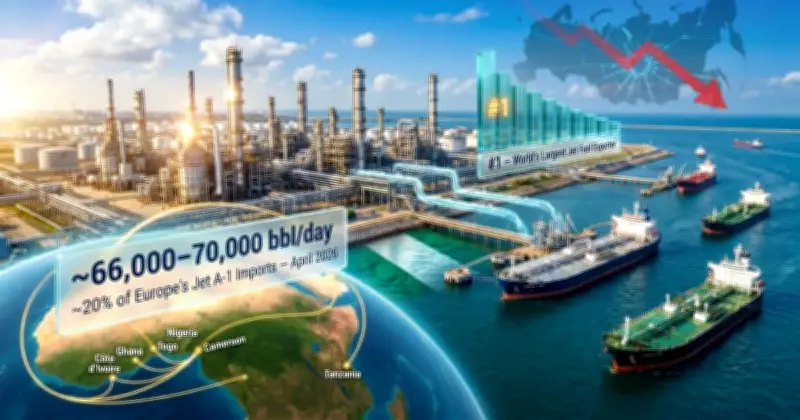
Russia's decision to extend its jet fuel export ban until November 2026 is tightening international aviation fuel supplies, presenting a strategic opportunity for Nigeria's Dangote Refinery to expand its global footprint. The move, announced on Monday, aims to protect domestic fuel supplies as ongoing Ukrainian drone attacks continue to affect the country's refining and export infrastructure.
Impact on Global Aviation Fuel Market
Although Russia is not among the world's largest jet fuel exporters, analysts say the extended ban adds to concerns over tightening global aviation fuel supplies at a time when air travel demand is recovering and geopolitical tensions disrupt energy markets. This development is expected to strengthen the position of alternative suppliers such as the Dangote Refinery, which has rapidly emerged as a major player in the international aviation fuel market.
The Dangote Refinery has quickly become a key supplier for European buyers, having exported approximately 1.1 billion litres of aviation fuel to Europe between March and April 2026. In recent months, European buyers have increasingly looked beyond traditional suppliers in the Middle East and Gulf region due to supply disruptions and geopolitical uncertainties, opening new opportunities for refiners in the Atlantic Basin, including those in West Africa.
Dangote Refinery's Growing Export Capacity
Industry data shows that between March and April 2026, the Lagos-based refinery exported approximately 1.1 billion litres of aviation fuel to Europe while also meeting more than 95 per cent of Nigeria's domestic Jet A1 demand. The refinery reportedly shipped about 615 million litres of aviation fuel in April alone, part of a wider 1.66 billion litres of refined petroleum products exported during the month, highlighting growing international demand for its products.
Market observers say disruptions affecting major refining centres around the world are gradually increasing the importance of newer large-scale facilities like Dangote in global fuel supply chains. While Russia's jet fuel export ban may not dramatically reduce global supply volumes on its own, it contributes to a broader environment of tighter fuel availability, often supporting suppliers that have significant export capacity and reliable production.
Russia's Domestic Supply Challenges
Russia's latest restriction covers jet fuel sold through commercial channels and exchange markets, though supplies shipped under intergovernmental agreements and cargoes already undergoing customs clearance or in transit are exempt. The move represents one of Moscow's most significant interventions in its refined products market in recent years, following earlier gasoline export restrictions introduced in April as pressure on the country's refining sector continues to grow.
Ukrainian drone strikes have repeatedly targeted Russian refineries and energy infrastructure over the past year, causing temporary shutdowns and disrupting production at several facilities. The attacks form part of Kyiv's broader strategy to reduce Russia's energy revenues, which remain a key source of funding for its military operations. As a result, Russian refining output has reportedly declined in recent months, with some plants operating below capacity or suspending operations intermittently, tightening domestic fuel supplies and prompting authorities to prioritise local consumption over exports.
Future Outlook for Dangote Refinery
Beyond jet fuel, Russian authorities are also considering stricter controls on diesel exports as they seek to avoid domestic fuel shortages while managing the impact of continued attacks on the country's energy infrastructure. For Dangote Refinery, the changing global landscape presents another opportunity to expand its footprint in the international aviation fuel market, particularly as buyers search for dependable suppliers amid ongoing disruptions to traditional trade routes.