
President Bola Tinubu has lauded the people of Ogoniland in Rivers State for fostering peace, calling the region a pivotal point for Nigeria's stability and development. The praise came as the federal government moves closer to resuming oil exploration in the area, a plan met with fierce opposition from local groups and civil society.
High-Level Delegation Delivers Presidential Commendation
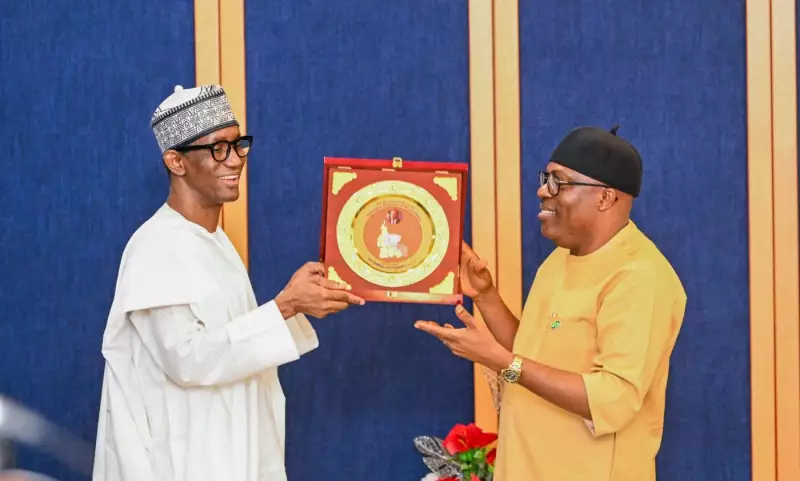
The President's message was delivered on Monday, December 22, 2025, by a powerful federal delegation led by the National Security Adviser (NSA), Mallam Nuhu Ribadu. The team, which included senior military commanders, the Minister of Works David Umahi, the Minister of Environment Baralabe Abbas Lawal, and NNPCL Group CEO Bayo Ojulare, was in Port Harcourt to assess progress in Ogoniland.
The visit is directly tied to plans to restart oil production, aligning with Nigeria's goal to boost daily crude output to 1.84 million barrels in 2026. The Ogoni Dialogue Committee, formed in late 2024, submitted its report to President Tinubu in September 2025 after extensive stakeholder engagements.
NSA Ribadu stated that the President is pleased with the unity among government institutions, security agencies, and Ogoni leaders. "Ogoniland is looking like a turning point for Nigeria. A new chapter is being opened," Ribadu said, adding that the positive change for the nation is starting from the Niger Delta.
Activists and CSOs Firmly Reject Resumption Plans
Despite the government's optimistic tone, Ogoni groups and international organizations like Amnesty International remain steadfast in their opposition. They insist that comprehensive environmental remediation and historical justice must come before any oil activities resume.
Renowned environmental activist Celestine Akpobari renewed calls for justice for the thousands of Ogoni people killed during past crises, alleging over 2,000 deaths. "Those who died in Ogoni were human beings, not chickens. Their parents are still crying for justice," he emphasized. Akpobari also noted that the ongoing Ogoni cleanup, while critical, is in its early stages and may take over 30 years to complete.
He questioned the heavy security presence around oil areas, asking, "The National Security Adviser is not the Minister of Petroleum. Why then is the NSA positioned around oil production areas in Ogoni?"
Similarly, Sir Joe Korka-Waadah, a relative of the executed activist Ken Saro-Wiwa, criticized the government's approach. He described plans to reroute the Calabar Coastal Road through Ogoniland as "cosmetic and diversionary." He reiterated core Ogoni demands: the exoneration of Ken Saro-Wiwa, a full environmental cleanup, and the implementation of the Ogoni Bill of Rights.
Government Highlights Development Projects and Employment
The federal delegation pointed to several development projects as evidence of commitment. Minister of Works David Umahi detailed infrastructure work, including the 15-kilometre Eleme axis of the East-West Road, a over ₦200 billion project with five flyovers, scheduled for completion in April 2026. He also announced presidential approval to dualise the Bonny-Bodo Road and redesign the Lagos-Calabar Coastal Highway to pass through Ogoniland.
The NNPCL's Bayo Ojulare shifted focus from oil to people, disclosing that the employment of 30 Ogoni indigenes has reached its final stage, with appointment letters issued and resumption set for January 2026. He described the developments in Ogoni as a model for a new Nigeria.
Rivers State Governor Siminalayi Fubara thanked President Tinubu for his intervention, noting that resolving a crisis that lingered for over three decades was not easy. He appealed to Ogoni leaders to engage youths to allow oil facility operators to repair equipment and prevent new spills during the ongoing environmental restoration.
While the Federal Government assures sustained peace and inclusive growth, the path to resuming oil production in Ogoniland remains fraught with deep-seated grievances and unresolved demands for justice and environmental repair.




