
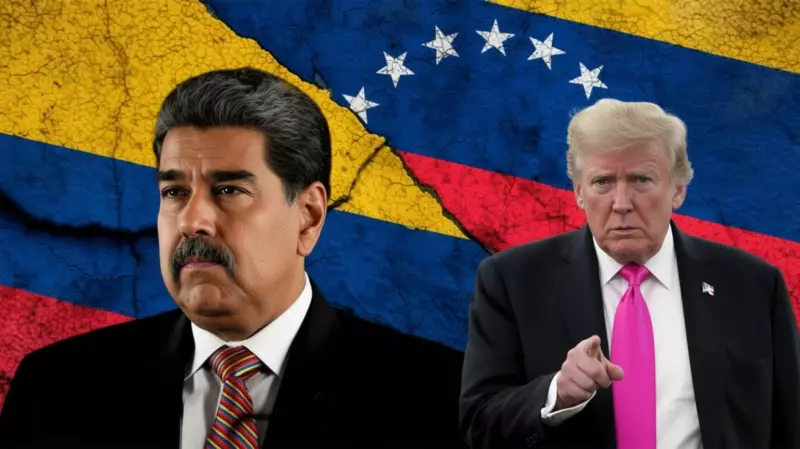
In a bold move to reshape global energy dynamics, US President Donald Trump has directly appealed to the leaders of America's largest oil corporations, urging them to invest heavily in Venezuela's vast petroleum reserves. This high-stakes White House meeting on Friday, January 10, 2026, followed the dramatic capture of Venezuelan President Nicolas Maduro by US forces.
A New Deal for Venezuelan Oil
Addressing a room of top industry executives, President Trump declared that his administration, not the government in Caracas, would now be the ultimate authority deciding which firms get access to Venezuela's resources. "We're going to be making the decision as to which oil companies are going to go in... (we're) going to cut a deal with the companies," Trump stated, arguing that foreign investors had no real protection under Maduro's rule.
He painted a picture of a transformed investment landscape, assuring the executives, "But now you have total security. It's a whole different Venezuela." The President's remarks signaled an intent for US companies to deal directly with Washington, potentially bypassing the oil-rich but cash-strapped Latin American nation in the management of its own primary asset.
Industry Giants Voice Deep Skepticism
Despite the presidential assurances, the reception from the oil majors was marked by caution rooted in bitter experience. ExxonMobil CEO Darren Woods delivered a stark rebuttal, highlighting the company's history of having assets seized twice in Venezuela. "To re-enter a third time would require some pretty significant changes," Woods cautioned. He delivered a blunt assessment of the current situation, stating, "If we look at the legal and commercial constructs and frameworks in place today in Venezuela — today, it's uninvestable."
The meeting was attended by a who's who of energy power, including Vice President JD Vance, Secretary of State Marco Rubio, and Energy Secretary Chris Wright. Executives from Chevron, ExxonMobil, ConocoPhillips, Halliburton, Valero, Marathon, Shell, Trafigura, Vitol Americas, and Repsol were present. A ConocoPhillips spokesman noted their CEO appreciated talks on "preparing Venezuela to be investment ready."
Massive Investment Pledged Amid Daunting Challenges
Following the discussions, President Trump claimed participants had "sort of formed a deal" and that oil firms were prepared to invest "at least 100 Billion Dollars." The stated goal is to rapidly rebuild Venezuela's dilapidated oil industry and boost output by millions of barrels daily.
However, energy analysts quickly poured cold water on the optimism. Rich Collett-White of Carbon Tracker pointed out that Venezuela's 300 billion barrels of proved reserves on paper do not equate to quick or profitable extraction. He cited outdated infrastructure, political instability, the high cost of extracting heavy crude, and a global shift away from fossil fuels as major hurdles.
Energy Secretary Chris Wright, who has stated Washington will control Venezuela's oil industry "indefinitely," admitted post-meeting that rebuilding its crippled infrastructure will "take time."
In a related development, Trump announced on social media the cancellation of a second wave of strikes on Venezuela, citing "cooperation" from the country. Meanwhile, Venezuela's interim President Delcy Rodriguez maintains her government is still in charge, and the state oil company PDVSA has only confirmed it is in negotiations with Washington.
Currently, Chevron is the sole US firm with a license to operate in Venezuela. ExxonMobil and ConocoPhillips left in 2007 after refusing demands from the late President Hugo Chavez to cede majority control to the state. Sanctioned since 2019, Venezuela holds about a fifth of the world's oil reserves but, according to OPEC, produced only around one percent of global crude in 2024 due to years of underinvestment and embargoes. President Trump views access to these reserves as a key to further lowering US domestic fuel prices.




