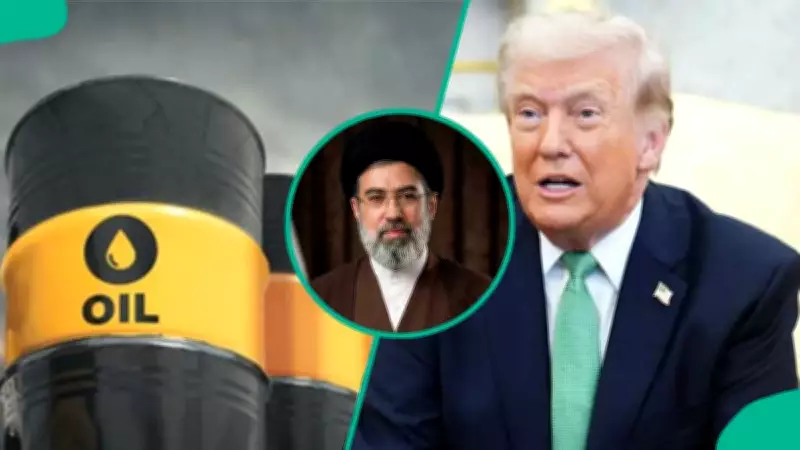
US Grants Temporary Approval for Sale of Stranded Iranian Crude Oil to Address Global Supply Shortages
The United States has taken a significant step to address mounting pressures in global energy markets by issuing a temporary and narrowly defined authorization. This authorization permits the sale of Iranian crude oil that is currently stranded on vessels at sea, with an estimated volume of approximately 140 million barrels expected to enter the market.
Strict Limitations on the Authorization
According to a statement released on Saturday by Scott Bessent, the authorization applies strictly to Iranian-origin oil and petroleum products that have already been loaded onto ships. No approval has been granted for new transactions or production, ensuring that the measure does not relax broader sanctions on Iran. Bessent emphasized that this is a temporary, short-term authorization designed solely to address immediate supply constraints.
He stated, "Today, the Department of the Treasury is issuing a narrowly tailored, short-term authorization permitting the sale of Iranian oil currently stranded at sea. This temporary authorization is strictly limited to oil that is already in transit and does not allow new purchases or production."
Impact on Global Oil Supply and Prices
US officials estimate that releasing these 140 million barrels could provide a significant short-term boost to global oil supply. This comes at a critical time when geopolitical tensions have disrupted key shipping routes, contributing to reduced oil flows and increased energy costs worldwide. Analysts note that this volume represents a substantial injection into the market, potentially helping to moderate rising prices.
The policy is part of broader efforts by Washington to increase global oil availability. The Treasury Department revealed that the administration has already facilitated the introduction of approximately 440 million additional barrels into the market through various measures, including increased domestic production.
Shipping Disruptions and Their Consequences
Recent instability in the Middle East has significantly affected global energy logistics. Critical maritime routes such as the Strait of Hormuz and the Suez Canal have experienced disruptions due to escalating conflict. On March 2, several major container shipping companies suspended operations through these routes, citing security concerns.
Data from the International Energy Agency indicates that crude shipments through the Strait of Hormuz dropped sharply—from around 20 million barrels per day before the conflict to significantly lower levels in recent weeks. This disruption has had a pronounced impact on oil flows, with global oil prices surging to approximately $112 per barrel.
Energy economists highlight that the Strait of Hormuz alone typically handles about one-fifth of the world's oil consumption, making any disruption there particularly consequential for global energy markets.
Continued Pressure on Iran's Economy
Despite the temporary authorization, US officials insist that sanctions on Iran remain firmly in place. Bessent noted that Tehran is expected to face ongoing challenges in accessing revenues generated from the oil sales, as restrictions on its financial transactions persist. The policy is part of a broader US strategy aimed at limiting Iran's ability to leverage its energy exports for geopolitical influence, particularly in sensitive regions like the Gulf.
Officials argue that maintaining pressure on Iran's financial system while stabilizing global oil markets strikes a necessary balance between economic and security priorities. This approach allows the US to address immediate energy market concerns without compromising long-term strategic objectives regarding Iran.
Background and Context
Bessent also pointed out that large volumes of sanctioned Iranian oil have been accumulating, particularly in China, where discounted purchases have continued despite restrictions. By allowing these existing shipments to enter the market, the US aims to ease supply shortages and moderate rising prices that have been affecting consumers and industries worldwide.
The decision comes amid broader global efforts to manage energy supply chains and stabilize markets that have been volatile due to geopolitical tensions and logistical challenges. This temporary measure represents a calculated response to immediate market pressures while maintaining the overall framework of sanctions against Iran.