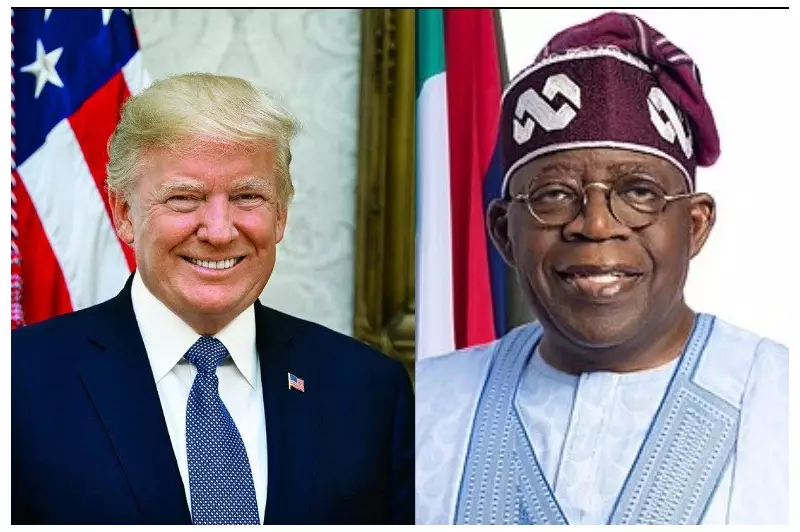
The Federal Government's ambitious N58.18 trillion spending plan for 2026 is facing a severe stress test from unfolding geopolitical events thousands of miles away in Venezuela. The potential return of Venezuelan oil to the global market, following a U.S.-backed military operation and the capture of President Nicolás Maduro, threatens to depress crude prices and blow a massive hole in Nigeria's revenue projections.
Budget Benchmarks Under Threat
Nigeria's 2026 budget is heavily anchored on oil revenue, with projections to produce 1.84 million barrels per day at a benchmark price of $64.85 per barrel. This is expected to generate approximately $43.84 billion in gross oil receipts. However, analysts now warn that crude prices could plummet to around $50 per barrel due to increased global supply from Venezuela.
A drop to $50 per barrel would slash projected revenue to about $33.6 billion, creating a staggering $10.24 billion shortfall. This comes at a time when the country is already grappling with fiscal fragility. The Minister of Finance and Coordinating Minister of the Economy, Wale Edun, recently disclosed a N30 trillion revenue shortfall for 2025, highlighting a persistent gap between budget expectations and actual inflows.
The 2026 budget framework outlines total expenditure of N58.18 trillion, which includes N15.52 trillion for debt servicing, N15.25 trillion for non-debt recurrent expenditure, and N26.08 trillion for capital projects. The projected fiscal deficit stands at N23.85 trillion, or 4.28% of GDP. A significant oil revenue shock would severely undermine this plan, intensifying borrowing pressures and jeopardizing capital projects.
The Venezuelan Factor and Global Supply Glut
The capture of Nicolás Maduro marks a potential political sea change for Venezuela's oil industry. U.S. President Donald Trump has stated that American oil companies would invest billions to rebuild Venezuela's dilapidated oil infrastructure, with a plan to repair damaged facilities using U.S. resources and expertise.
While Venezuela's production capacity won't transform overnight, a gradual easing of sanctions and improved legal certainty could allow its crude to re-enter mainstream global markets. Before U.S. sanctions tightened in 2019, Venezuela exported around 707 million barrels annually, with the U.S. buying about 32% of that volume.
Eight major OPEC+ producers, including Saudi Arabia and Russia, have already reaffirmed their commitment to market stability, citing a steady global economic outlook. However, the addition of significant Venezuelan barrels into an already fragile demand environment could overwhelm these efforts, particularly if global economic growth remains subdued.
Dire Consequences for Nigeria's Economy
The implications for Nigeria extend far beyond budget arithmetic. A former Chairman of the Chartered Institute of Bankers of Nigeria (CIBN), Prof. Segun Ajibola, warned that the situation is already becoming stressed at the current price of about $60.8 per barrel. "If a price war ensues, as could be triggered by increased supply from Venezuela, it will affect Nigeria’s projections for 2026," he stated.
The fallout would be multi-faceted:
- Foreign Exchange Crisis: Crude oil sales remain Nigeria's primary source of dollar inflows. Lower oil receipts would reduce dollar supply, exerting renewed downward pressure on the Naira, which gained N100/$ last year.
- Investment Diversion: Petroleum economics expert, Dr. Kaase Gbakon, noted that a de-risked Venezuelan operating environment could divert crucial investment capital away from Nigeria and other African producers, slowing efforts to arrest production decline.
- Market Competition: Nigeria and Venezuela sell similar crude grades to overlapping markets like the U.S., India, and China. Partner at Kreston Pedabo, Olufemi Idowu, explained that "Venezuela and Nigeria both sell crude oil to similar markets, which makes them competitors." A shift in U.S. demand towards Venezuelan crude would create stiffer competition for Nigeria's medium and light sweet grades.
Renowned petroleum economist, Prof. Wunmi Iledare, clarified that the immediate risk for Nigeria is not a loss of market share but greater downside risk to oil prices. He described the 1.84 million barrels per day production target as "aspirational" given Nigeria's persistent structural constraints like oil theft and pipeline vandalism.
With general elections scheduled for 2027, stakeholders expect increased fiscal pressures and higher demand for foreign exchange as political activities intensify. This political calendar heightens the risk, as the government will have limited room to maneuver amid revenue shocks.
Experts are urging immediate caution. Certified financial education instructor, Kalu Aja, argued that the $64.85 per barrel benchmark now appears generous. "Nigeria should be preparing an austerity budget, not an optimistic one," he tweeted. Prof. Emmanuel Nwosu, an economist at the University of Nigeria, emphasized that while OPEC interventions could stabilize prices, evolving geopolitical alignments, particularly between the U.S. and Saudi Arabia, must be closely monitored.
The consensus among analysts is clear: without more conservative budgeting, stronger non-oil revenue mobilization through the newly implemented tax reforms, and tighter spending discipline, the N58.18 trillion 2026 budget faces significant implementation challenges that could further stress Nigeria's fragile economy.