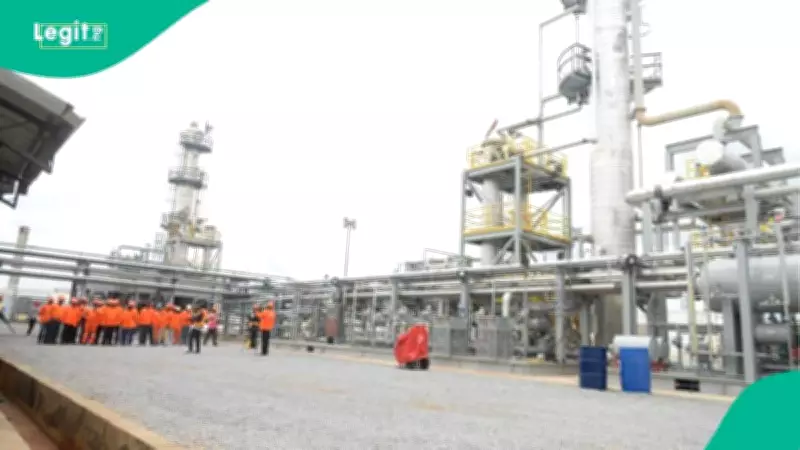
Nigeria has achieved a milestone in its quest for energy self-sufficiency as Waltersmith Petroman Oil Limited announced the expansion of its refinery capacity to 10,000 barrels per day (bpd), according to reports from The Sun. The development was revealed during an inspection visit by the Nigerian Midstream and Downstream Petroleum Regulatory Authority (NMDPRA) and the Nigerian Content Development and Monitoring Board (NCDMB) to the company's Phase 2 facility in Ibigwe, Imo State.
Regulatory Inspection Confirms Upgrade
The delegation, led by NMDPRA Chief Executive Saidu Mohammed, assessed the operational readiness of the upgraded plant. The regulators confirmed that the Phase 2 expansion increases Waltersmith's refining capacity from 5,000 bpd to 10,000 bpd, positioning the facility as a growing contributor to Nigeria's domestic refining capacity. Mohammed described the development as a significant achievement, highlighting the ability of local operators to play a leading role in the midstream segment of the oil and gas industry.
Company Highlights Value Addition and Policy Alignment
Chairman of Waltersmith, Abdulrazaq Isa, stated that the expansion aligns with national energy policies focused on value creation and local refining. He explained that the project supports Nigeria's transition from a crude oil export-driven model to one centered on domestic processing and industrial growth. The upgraded refinery will produce additional products, including Premium Motor Spirit (PMS) and Aviation Turbine Kerosene (ATK), which are expected to improve supply for the transportation and aviation sectors.
Licence Approval Underway as Compliance Checks Continue
Regulatory approval for full commercial operations is nearing completion, with the inspection serving as a final stage before the issuance of a Licence to Operate (LTO). The NMDPRA said the facility complies with provisions of the Petroleum Industry Act and commended its operational standards.
Partnership and Financing Support Project Growth
A key feature of the project is the partnership with the NCDMB, which holds a 30% equity stake in the refinery. A representative of the board, Naboth Onyesoh, said the collaboration has helped boost local content development, create jobs, and strengthen Nigeria's capacity to reduce reliance on fuel imports. The project is also backed by funding from institutions such as the Africa Finance Corporation and the Bank of Industry, reflecting a mix of private and institutional investment.
Expansion Plans Target Industrial Hub Development
Looking ahead, Waltersmith plans to extend its operations through the development of an industrial and innovation park within a Free Trade Zone, supported by gas-to-power infrastructure. The initiative is expected to attract petrochemical and manufacturing companies, in line with Nigeria's gas development strategy. Isa said the long-term vision is to build a self-sustaining industrial hub that contributes to national energy security and economic growth.
Context: Petrol Imports Rise Despite Increased Local Production
Legit.ng earlier reported that petrol imports into Nigeria rose sharply in March 2026, increasing by about 96.7% compared to February, according to official data released by the NMDPRA. The regulator disclosed this in its March 2026 fact sheet, which showed that daily import volumes climbed from 3.0 million litres in February to 5.9 million litres in March, signaling renewed reliance on foreign supply. Local supply grew from 30.5 million litres per day to 34.2 million litres per day within the same period, largely driven by output from domestic refiners, including the Dangote Petroleum Refinery.