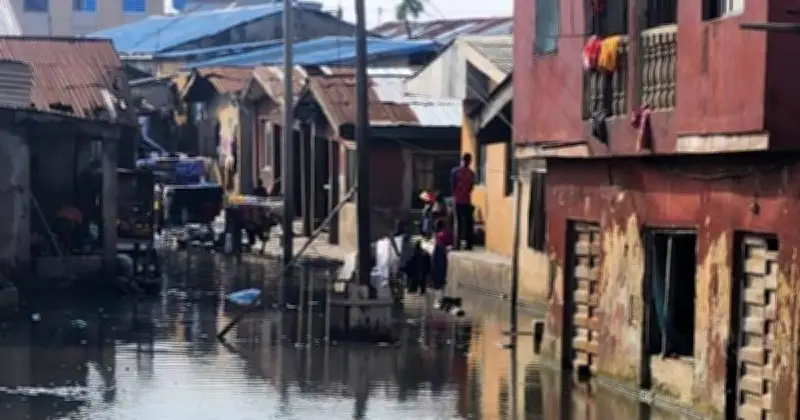
Flooding has affected several Lagos neighbourhoods during this year's rainy season. Planning to rent a house? Here are five simple ways to check if a neighbourhood may be prone to flooding before signing a tenancy agreement.
Check the drainage system around the property
Before agreeing to view an apartment seriously, take a walk around the immediate area and look at the drainage channels. Are they open and flowing, or blocked with refuse and dirt? A large percentage of Lagos flooding incidents stem not from rainfall volume alone, but from poor or obstructed drainage that prevents water from draining away quickly. If the gutters around a property are already clogged during a dry visit, that's a strong sign of what to expect once the rains return.
Look at how the property sits relative to the road
Ground level matters more than most renters realise. A compound that sits noticeably lower than the road, or land that feels soft, swampy or waterlogged even outside the rainy season, is a clear warning sign. Several areas built on reclaimed wetlands across Lagos, including parts of Ajegunle, Makoko and Iwaya, are known for this kind of terrain, and properties in low-lying sections of these areas tend to flood faster and more severely than surrounding streets.
Ask neighbours or nearby shop owners about past flooding
This is one of the simplest, most reliable checks available, and it costs nothing but a conversation. People who have lived or worked in an area for years will usually know exactly how bad flooding gets, and how often it happens. Local shop owners, security guards, and long-term tenants nearby are often more honest about this than agents or landlords, who may be more focused on closing a deal than disclosing a recurring problem.
Check proximity to canals, rivers or the lagoon
Properties situated close to canals, rivers, or along the Lagos lagoon front face a structurally higher flood risk during heavy rainfall, since these waterways often overflow when rainfall is heavy or drainage is poor. Areas around the Oshodi-Isolo axis, as well as parts of Lekki, Ajah and VGC near canal networks, have recorded repeated flooding linked to their proximity to water channels. Knowing how close a potential home is to any of these waterways can offer a useful early signal.
Look for visible flood marks or water stains
Physical evidence often tells the truth even when no one else will. Tide lines, discoloured paint, or water stains along compound walls, fences, or the lower sections of a building are signs that floodwater has reached that height before, sometimes more than once. Even if an agent insists an area "doesn't flood," visible water marks on the property itself can quietly confirm otherwise.
Flooding in Lagos has become an increasingly seasonal concern, with several areas experiencing disruption to daily life, property damage, and displacement during peak rainy months. While no single check can guarantee complete safety from flooding, combining these five steps gives prospective tenants a much clearer picture of the risks tied to a specific property before committing to a lease.