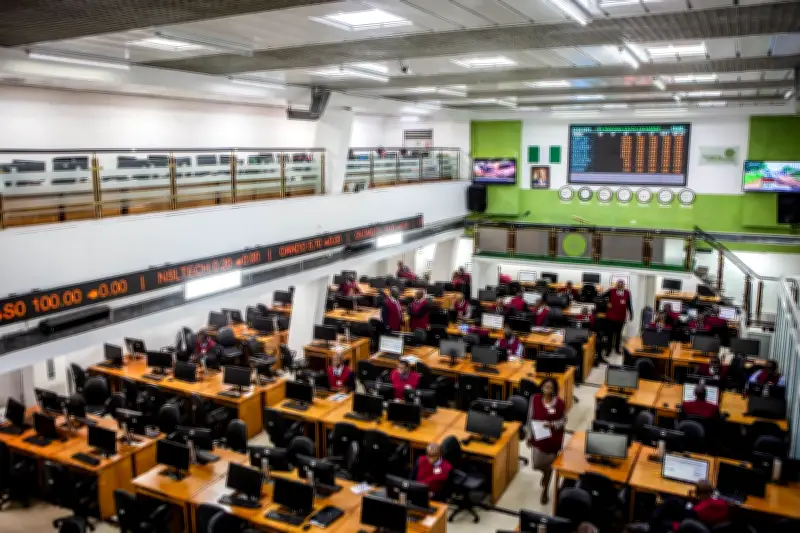
The Nigerian Exchange Group (NGX) has emerged as Africa's second-best performing stock market in the first half of 2026, delivering a remarkable 47.4% return to investors. This performance places Nigeria behind only Zimbabwe's stock market, which led the continent with a 67.8% return, according to a report by African Markets, a leading financial data provider.
Performance Highlights and Key Drivers
The NGX's impressive showing was driven by strong gains in banking, consumer goods, and industrial stocks. The All-Share Index (ASI) climbed from 102,345.67 points at the start of the year to 150,893.21 points by June 30, 2026, reflecting sustained investor confidence. Market capitalisation also surged, crossing the N70 trillion mark for the first time, reaching N72.4 trillion.
According to the report, the top-performing stocks on the NGX included MTN Nigeria, which gained 62.3%, Dangote Cement up 55.1%, and Zenith Bank rising 48.9%. The banking sector index led sectoral gains with a 58.2% return, followed by the consumer goods index at 43.7%.
Comparison with Other African Markets
Across Africa, the Johannesburg Stock Exchange (JSE) ranked third with a 32.1% return, while the Nairobi Securities Exchange posted a 28.5% gain. The Egyptian Exchange (EGX) returned 22.3%, and the Ghana Stock Exchange recorded a 19.8% increase. The pan-African index compiled by African Markets showed an average return of 31.2% for the continent's top ten exchanges.
"The NGX's performance underscores the resilience of the Nigerian economy and the growing attractiveness of its capital market to both domestic and foreign investors," said Temi Ogunyemi, Head of Research at African Markets. "Policy reforms in the banking sector and improved corporate earnings have been key catalysts."
Impact on Investors and Market Outlook
The strong first-half performance has boosted investor sentiment, with many analysts projecting continued gains in the second half of 2026. Foreign portfolio inflows into the NGX increased by 34% year-on-year in H1, reaching $1.2 billion, according to data from the Nigerian Exchange. Domestic institutional investors also increased their holdings, with pension funds allocating more to equities.
However, some analysts caution that the pace of gains may moderate due to valuation concerns and potential profit-taking. The NGX's price-to-earnings ratio has risen to 15.8x from 11.2x at the start of the year, indicating that some stocks may be overbought.
Government and Regulatory Support
The federal government's economic reforms, including the unification of exchange rates and removal of fuel subsidies, have been credited with improving market fundamentals. The Securities and Exchange Commission (SEC) also implemented measures to enhance market transparency and investor protection, which have boosted confidence.
In a statement, the CEO of NGX, Mr. Jude Chiemeka, said: "We are delighted with this recognition, which reflects the collective efforts of all market participants. We remain committed to deepening the market and providing a platform for capital formation."
Looking ahead, the NGX is expected to benefit from continued economic growth, with the International Monetary Fund projecting Nigeria's GDP to expand by 3.5% in 2026. The upcoming listing of several state-owned enterprises and new tech startups could further energize the market.