
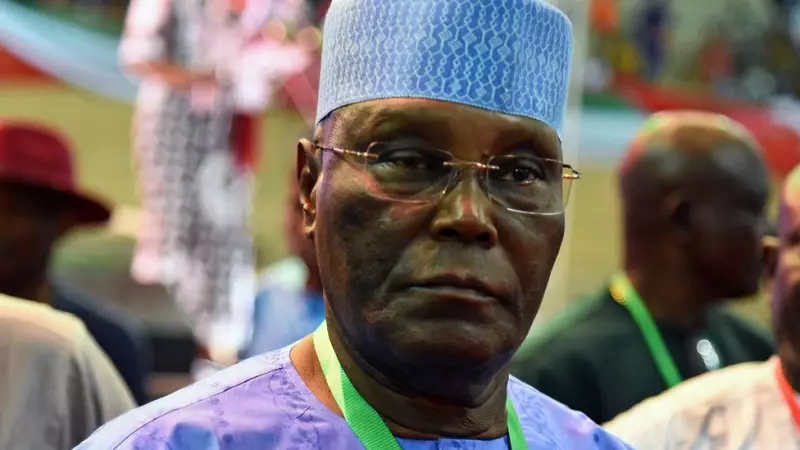
Former Vice President Atiku Abubakar has levelled a serious accusation against the Nigerian Presidency, describing alleged unauthorized changes to newly passed tax legislation as an act of "treason against the Nigerian people." The claim, made in a statement on Tuesday, December 23, 2025, has ignited public outrage and a constitutional debate.
Alleged Illegal Alterations and Constitutional Breach
Atiku's statement centers on what he claims are discrepancies between the tax bills passed by the National Assembly and the version later gazetted for implementation. He asserts that substantive provisions were unlawfully inserted after parliamentary approval, which he says is a clear violation of Sections 4 and 58 of the 1999 Constitution.
According to the former presidential candidate, these inserted clauses grant sweeping new powers to tax authorities without the necessary legislative consent. The alleged additions include:
- Powers of arrest and property seizure without a court order.
- Authority to garnish accounts and conduct enforcement sales without judicial oversight.
- A mandatory 20% security deposit required before a citizen can appeal a tax assessment.
- Imposition of compound interest on tax debts.
- Forced dollar-based computation for petroleum operations.
"These provisions effectively transform tax collectors into quasi-law enforcement agencies, stripping Nigerians of due process protections," Atiku argued.
Removal of Oversight and Heavier Financial Burden
Beyond the new enforcement powers, Atiku further accused the government of systematically removing key accountability mechanisms from the law. He listed the deletion of requirements for quarterly and annual reporting to the National Assembly, the elimination of strategic planning submission rules, and the removal of ministerial supervisory provisions.
"By stripping away oversight mechanisms, the government has insulated itself from accountability while expanding its powers — a hallmark of authoritarian governance," he stated.
He contended that the cumulative effect of these changes is to place a heavier financial and bureaucratic burden on already struggling Nigerian citizens and businesses. He linked this to the country's high poverty rate, rising unemployment, and persistent inflation, warning that such measures would only worsen the economic situation.
Calls for Action and Suspension of Implementation
In response to these alleged violations, Atiku Abubakar issued a multi-pronged call to action. His primary demand is for the executive arm of government to immediately suspend the implementation of the tax law, which is scheduled to take effect on January 1, 2026, to allow for a thorough investigation.
He also urged the National Assembly to urgently correct the alleged illegal alterations through proper legislative procedures and hold those responsible accountable. Furthermore, he called on the judiciary to strike down any unconstitutional provisions and reaffirm the sanctity of the legislative process.
In a significant move, Atiku called on the Economic and Financial Crimes Commission (EFCC) to investigate and prosecute anyone found culpable in the alleged illegal alteration of the laws. He urged civil society and all Nigerians to resist what he termed an assault on democratic principles.
"What the National Assembly did not pass cannot become law. This fundamental principle must be defended, or we risk descending into arbitrary rule where constitutional safeguards mean nothing," Atiku concluded, framing the issue as a pivotal moment for Nigeria's constitutional democracy.




