
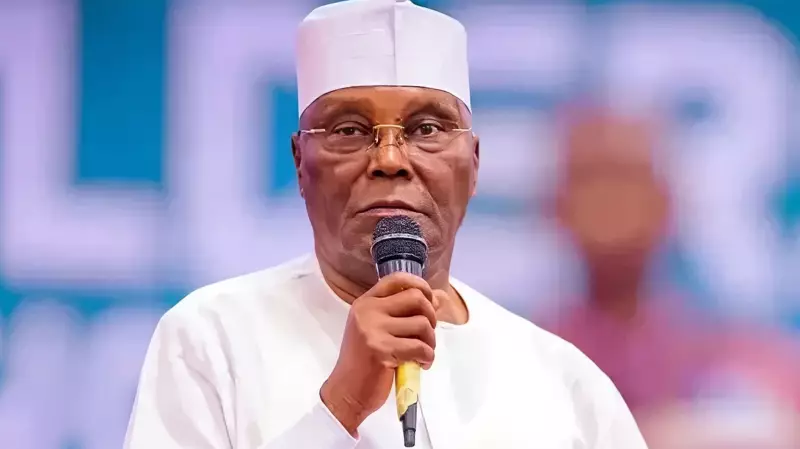
Former Vice President Atiku Abubakar has levelled a severe accusation against the Federal Government, branding the alleged illegal alteration of President Bola Tinubu's tax reform legislation as an act of treason against the Nigerian people. In a strongly-worded statement released on Tuesday, 23 December 2025, via his X (formerly Twitter) account, the former presidential candidate warned that the purported changes violate the nation's Constitution and undermine democratic principles.
Constitutional Breach and Unauthorised Changes
Atiku asserted that provisions which were never passed by the National Assembly were inserted into the tax bills after they had received legislative approval. He stated that this action contravenes Sections 4 and 58 of the 1999 Constitution, which clearly vest law-making powers in the legislature and outline the process for a bill to receive presidential assent. According to him, this move weakens the supremacy of the parliament and dangerously tilts the balance of power in favour of the executive arm of government.
The former Vice President detailed specific alterations he finds particularly egregious. He cited the alleged introduction of new coercive powers for tax authorities, including:
- Powers of arrest without warrant.
- Authority to seize property and conduct enforcement sales without obtaining court orders.
"These provisions transform tax collectors into quasi-law enforcement agencies, stripping Nigerians of due process protections that the National Assembly deliberately included," Atiku argued.
Increased Financial Burden and Removed Oversight
Beyond enforcement powers, Atiku claimed the amended law imposes a heavier financial load on citizens and businesses. He highlighted measures such as a mandatory 20 per cent security deposit required before appealing a tax assessment, the application of compound interest on tax debts, additional reporting requirements, and compulsory dollar-based computations for petroleum operations.
"These changes erect financial barriers that prevent ordinary Nigerians from challenging unjust assessments while increasing compliance costs for businesses already struggling in a difficult economy," he stated.
Furthermore, Atiku alleged that crucial accountability mechanisms were stripped from the final legislation. These reportedly removed provisions include requirements for quarterly and annual reporting to the National Assembly, strategic planning submissions, and specific ministerial oversight clauses. "By stripping away oversight mechanisms, the government has insulated itself from accountability while expanding its powers," he concluded.
Calls for Action and Broader Economic Concerns
Placing the controversy in a wider context, Atiku criticised the government's policy approach, suggesting it focuses more on revenue extraction than economic empowerment. He noted the persistent challenges of poverty, unemployment, and inflation, arguing that sustainable tax revenues should stem from economic growth, not punitive measures.
In response to the allegations, Atiku issued a multi-pronged call to action:
- He urged the executive to suspend the implementation of the tax law, which is scheduled to take effect on 1 January 2026, pending a full investigation.
- He called on the National Assembly to immediately rectify the illegal alterations through proper legislative processes and hold those responsible accountable.
- He appealed to the judiciary to strike down any unconstitutional provisions.
- He asked civil society organisations and the public to reject this "assault on democratic principles."
- He called on the Economic and Financial Crimes Commission (EFCC) to investigate and prosecute anyone found culpable.
"What the National Assembly did not pass cannot become law. This fundamental principle must be defended, or we risk descending into arbitrary rule where constitutional safeguards mean nothing," Atiku warned, framing the issue as a critical test for Nigeria's democracy.




